Imported Oil Painting | The Grand Opening of A Retrospective Exhibition Of The Maksimov Oil Painting Training Program At CAFA(1955-1957)

1763879637828084.jpg

1763879684528760.jpg

1763879713583485.jpg

1763881403749410.jpg

1763881432199848.jpg


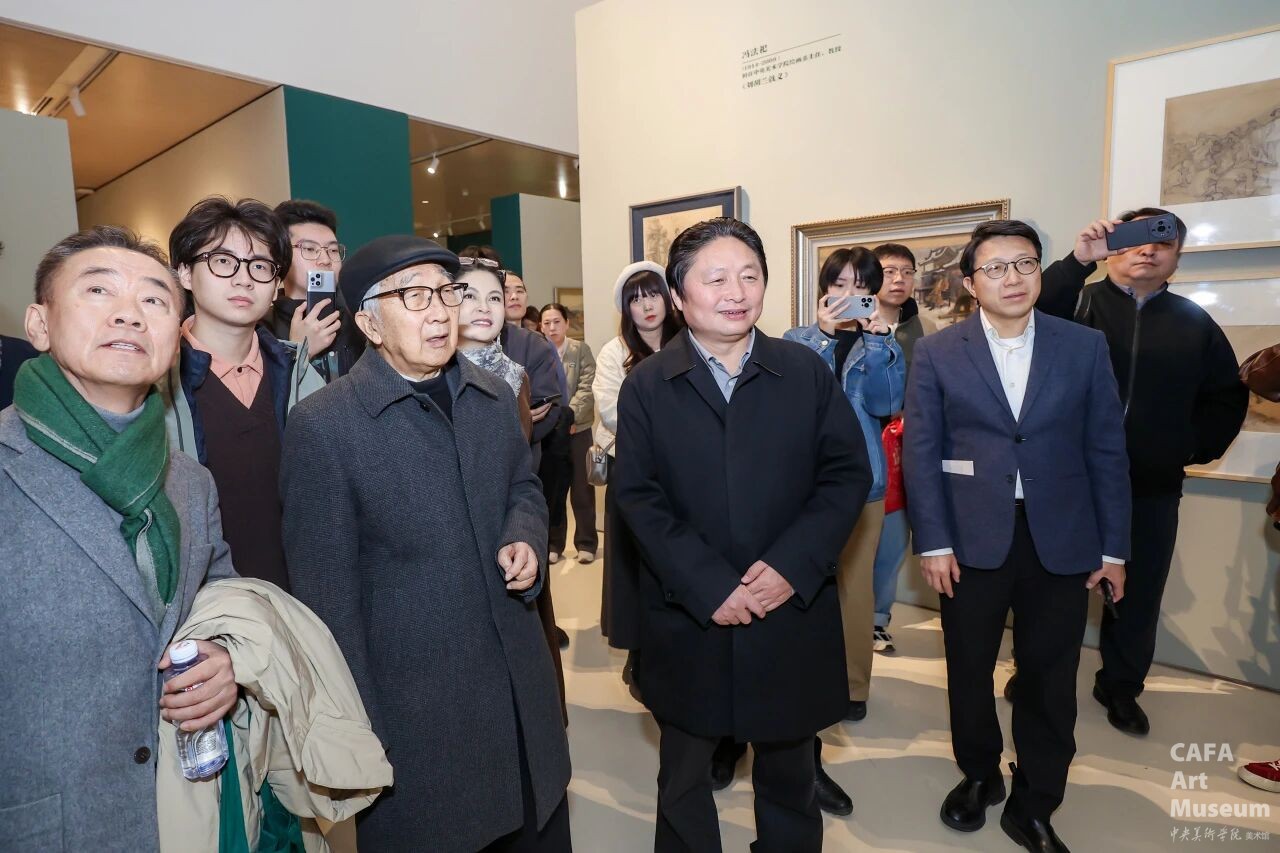
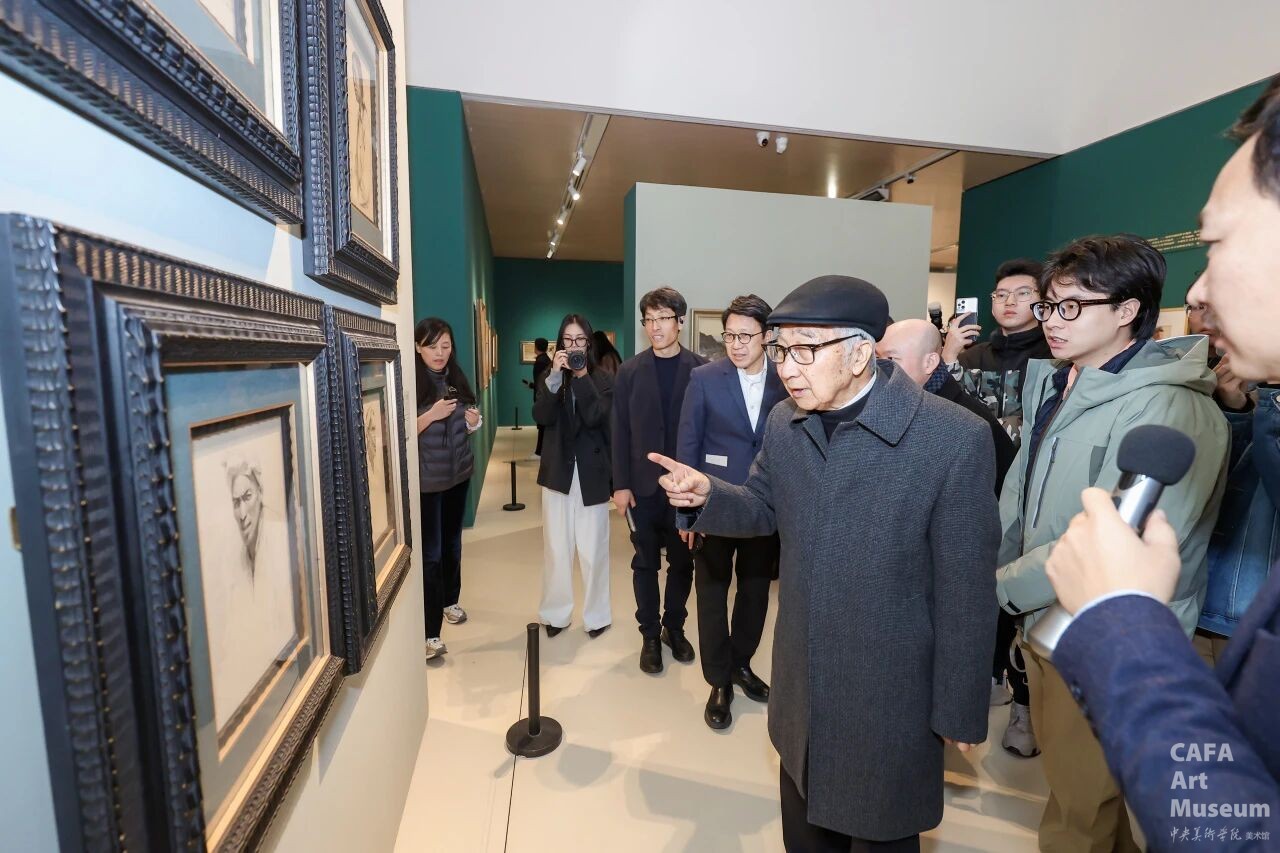
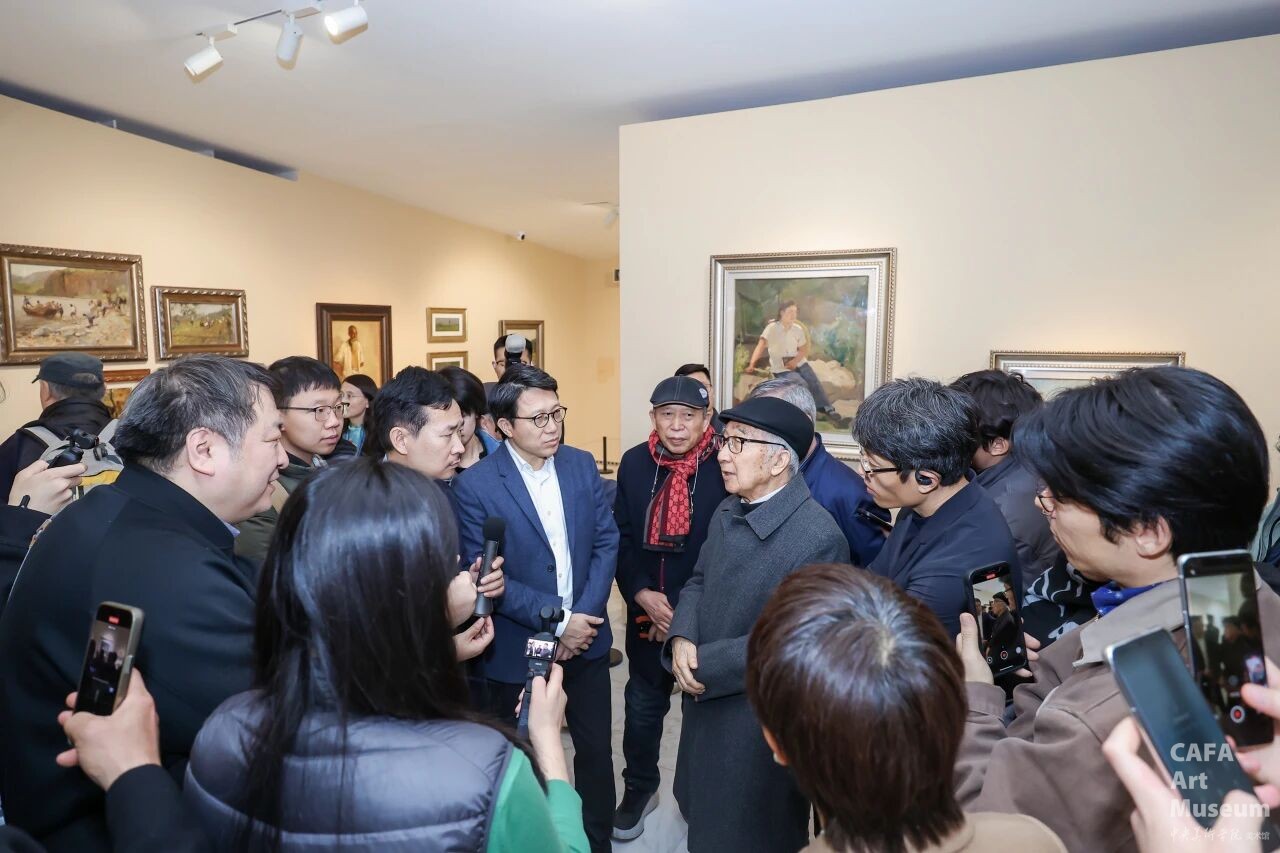
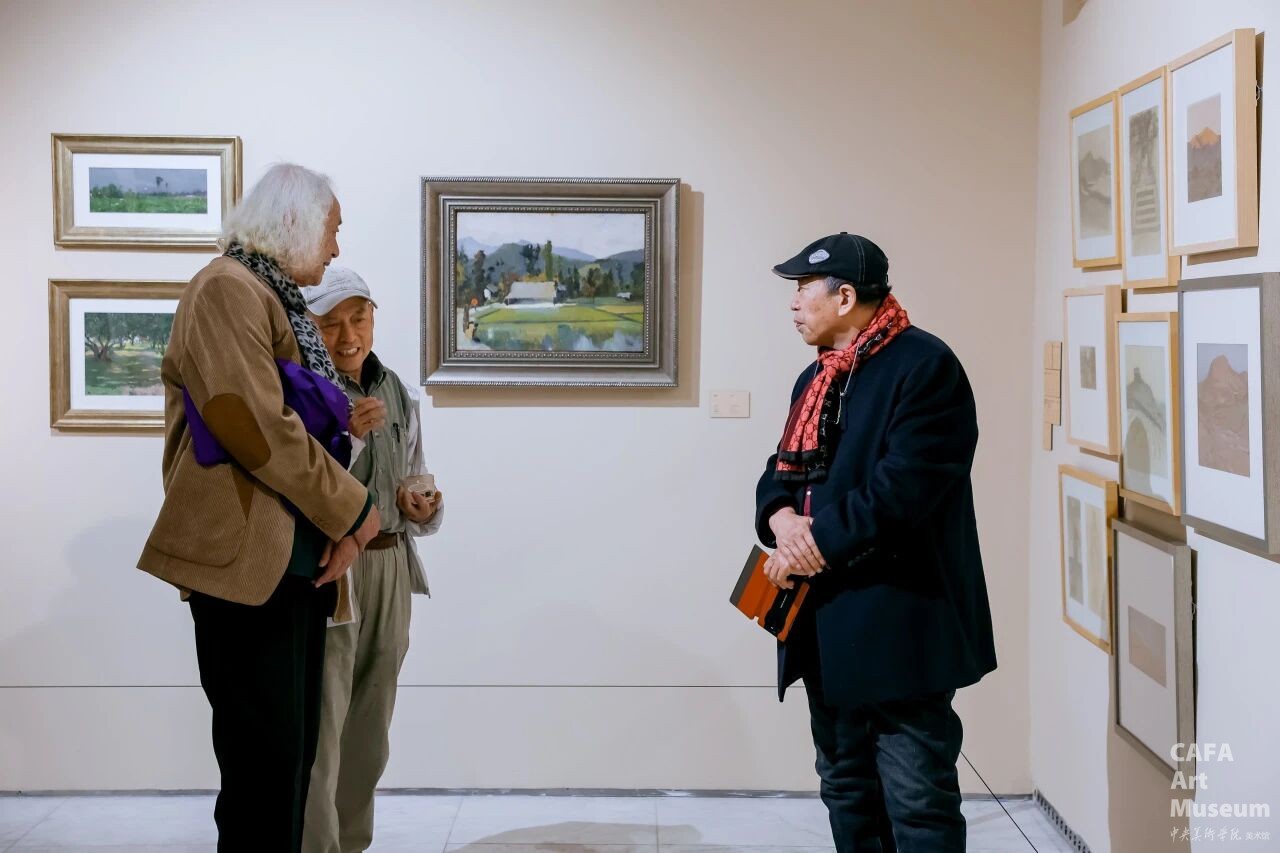
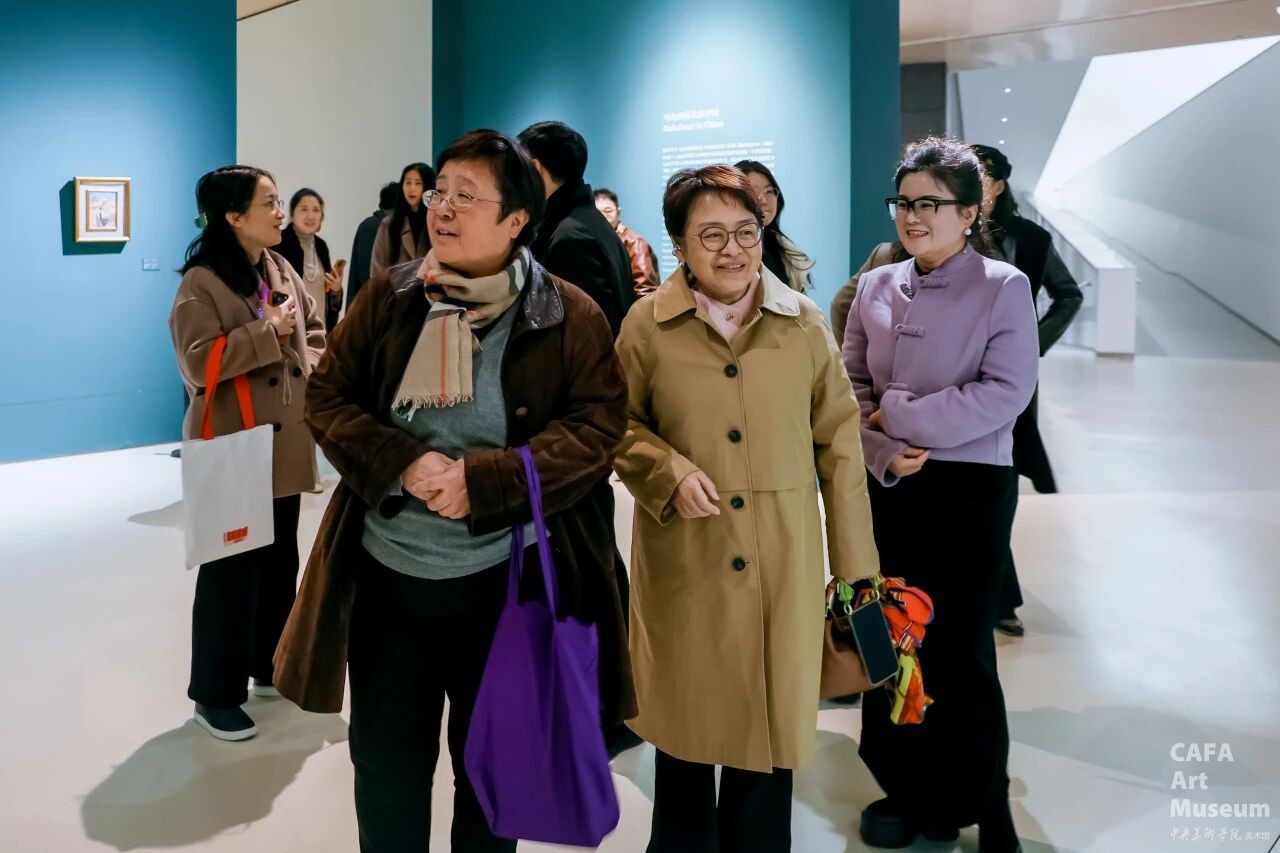
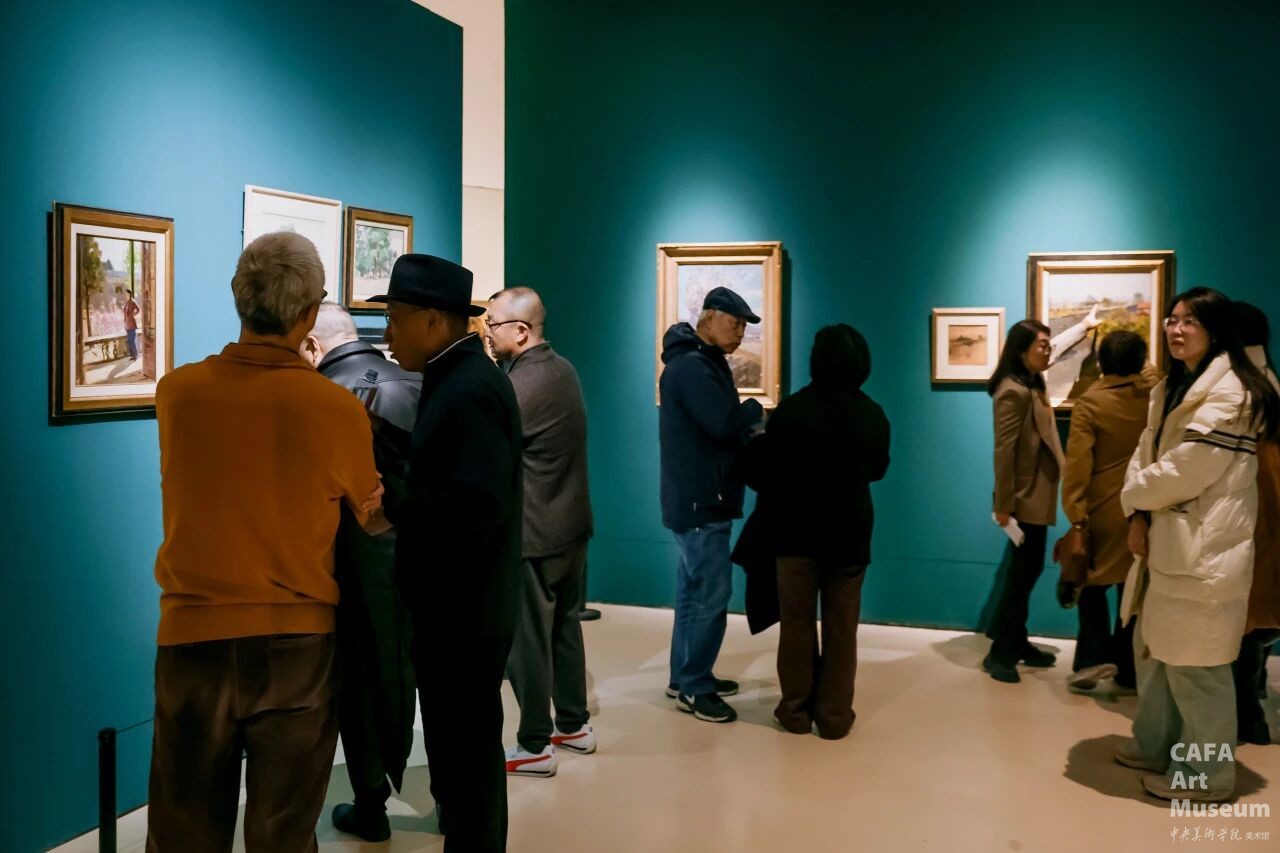
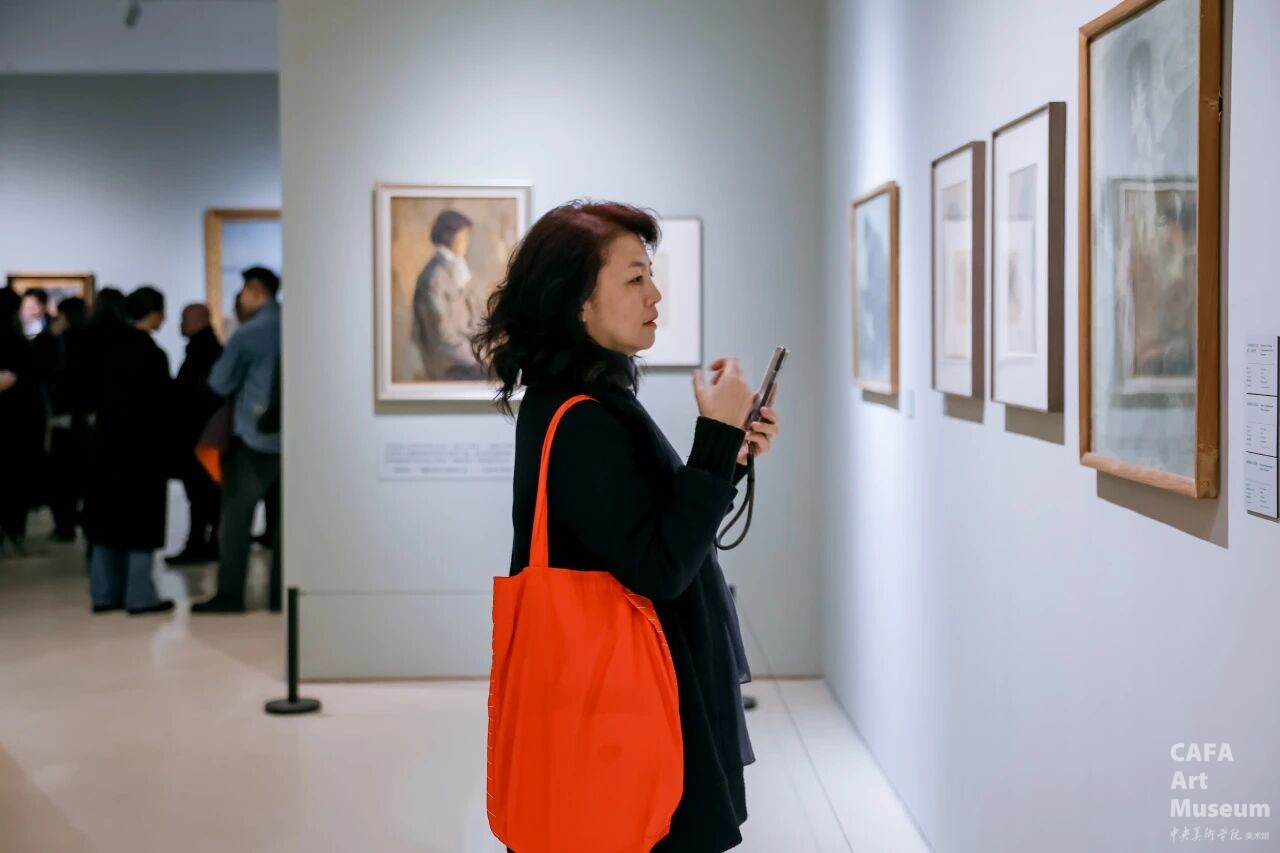
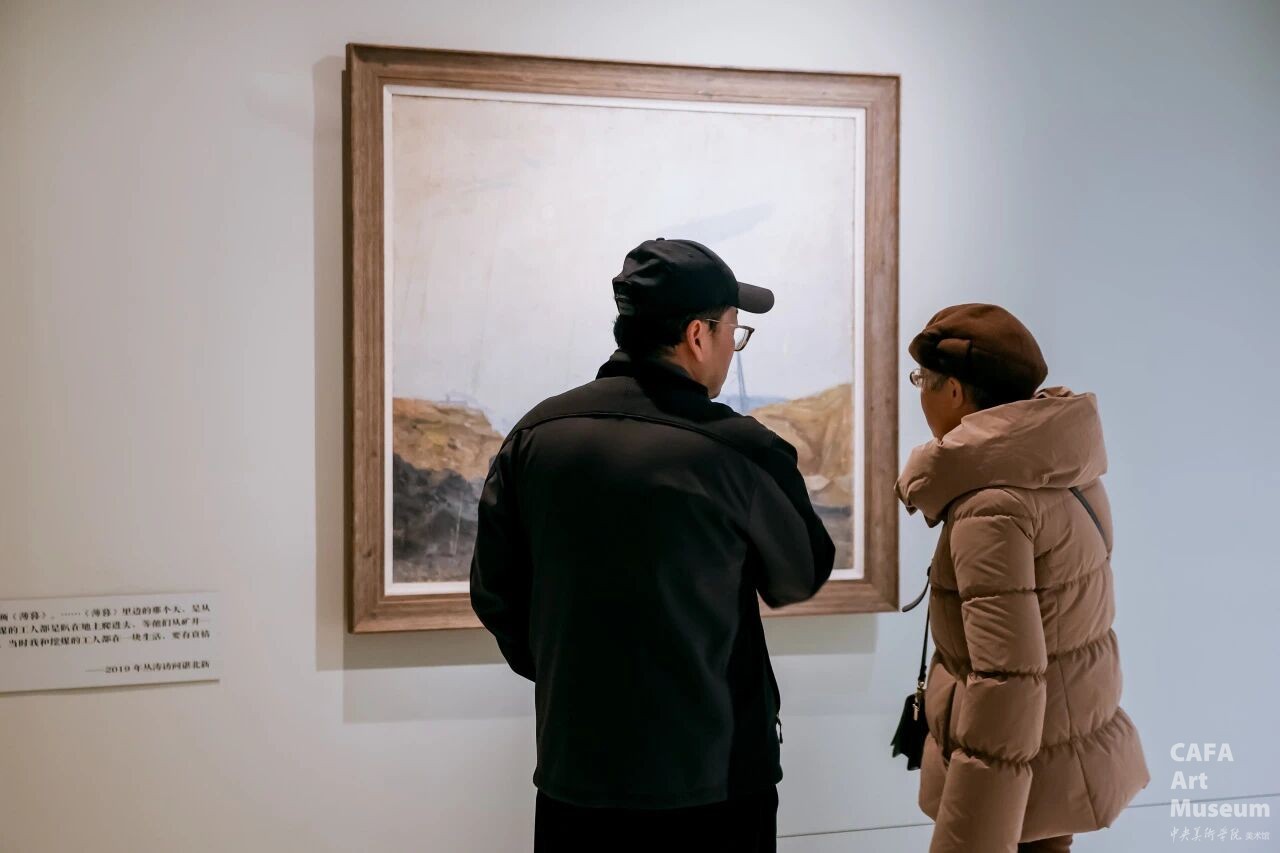
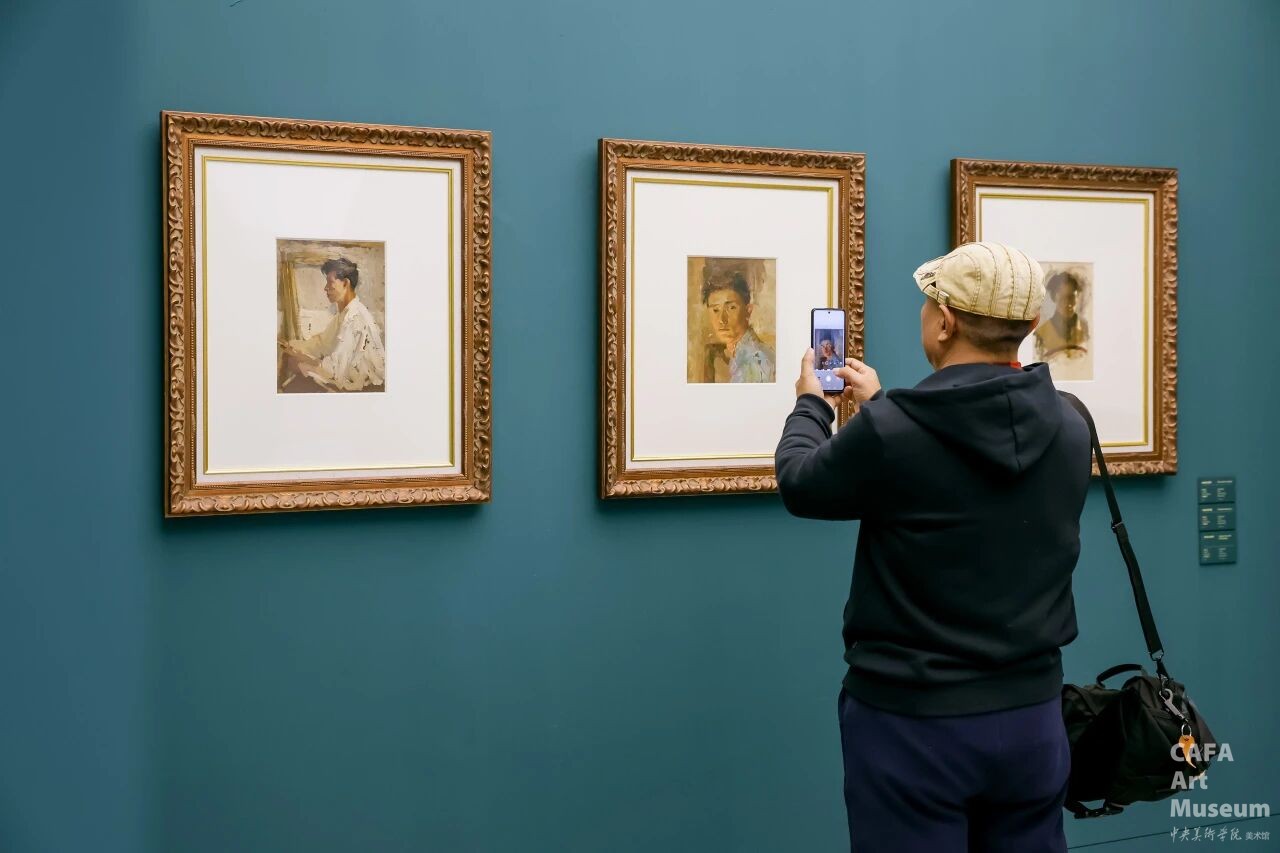
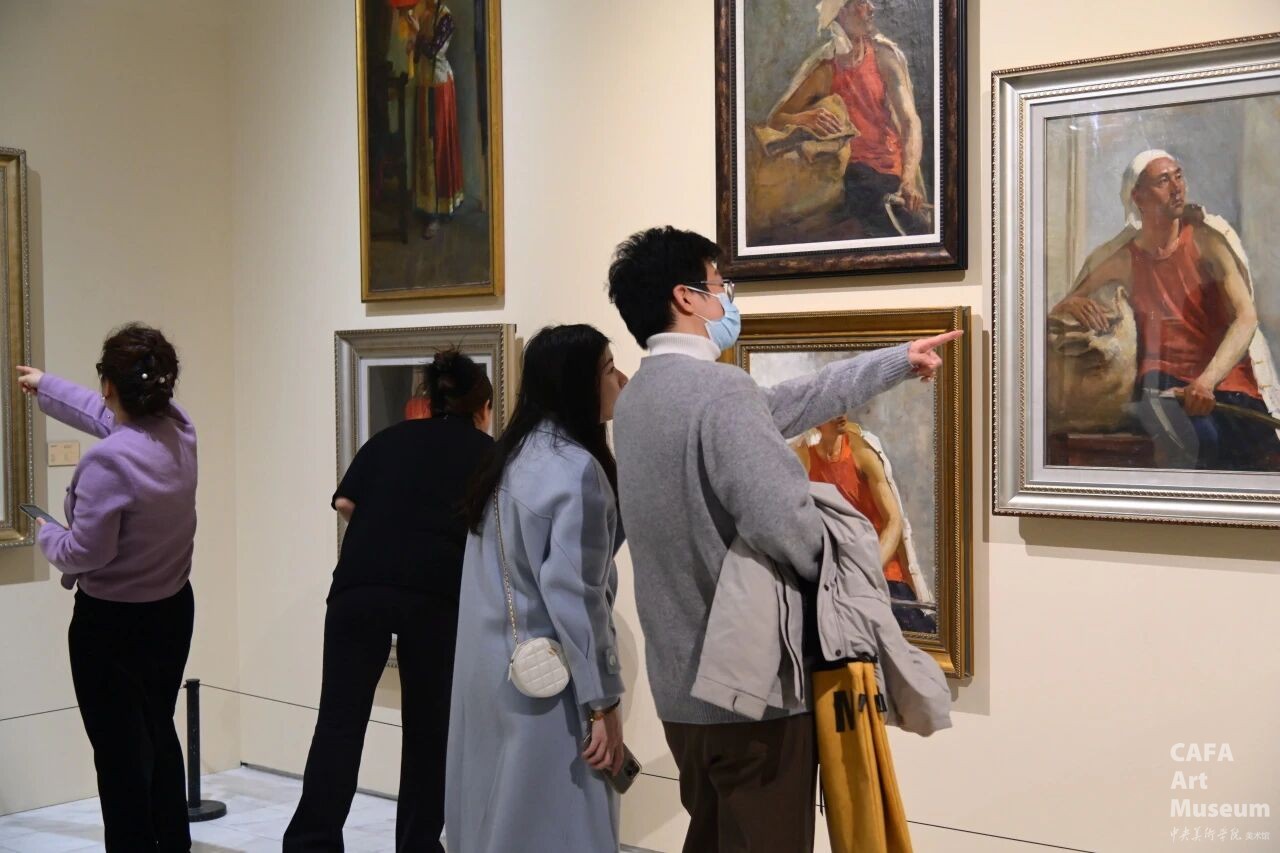
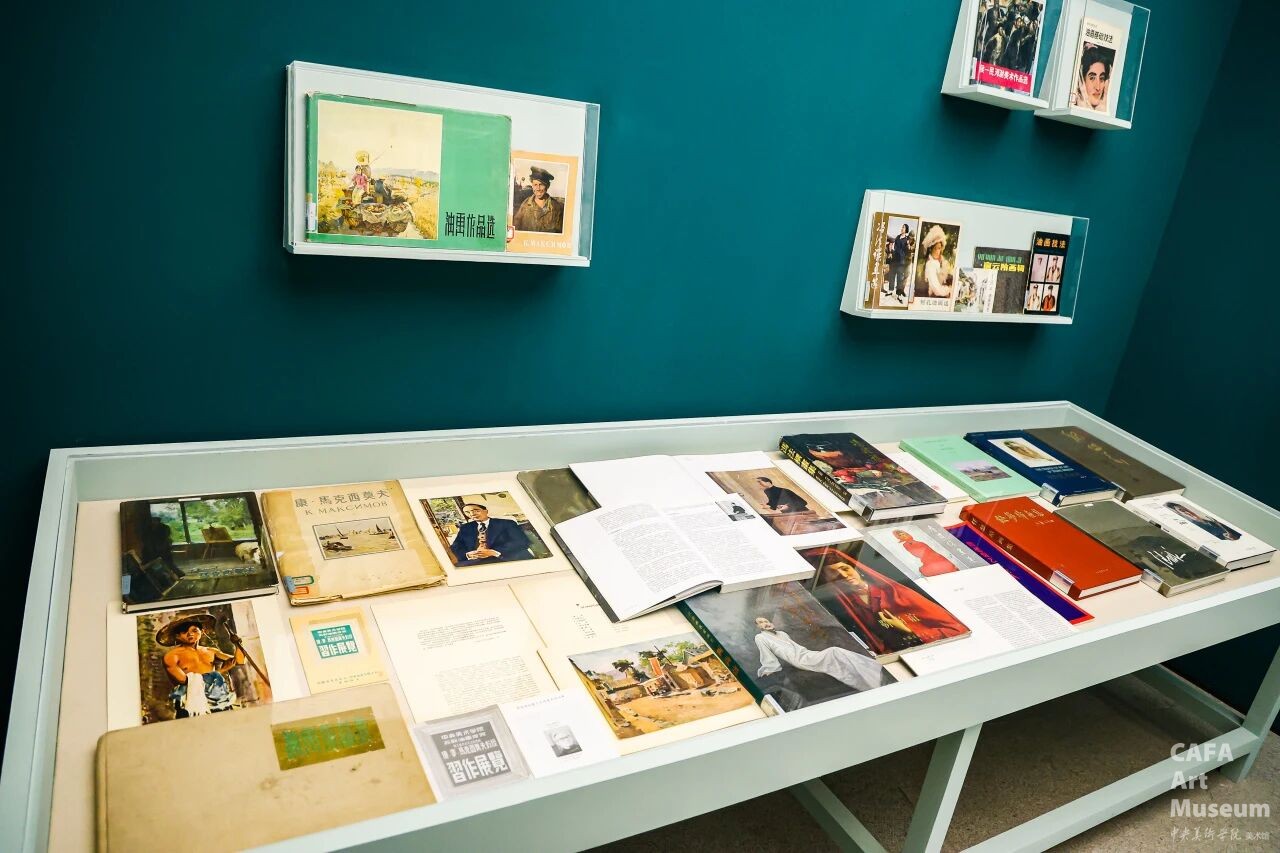
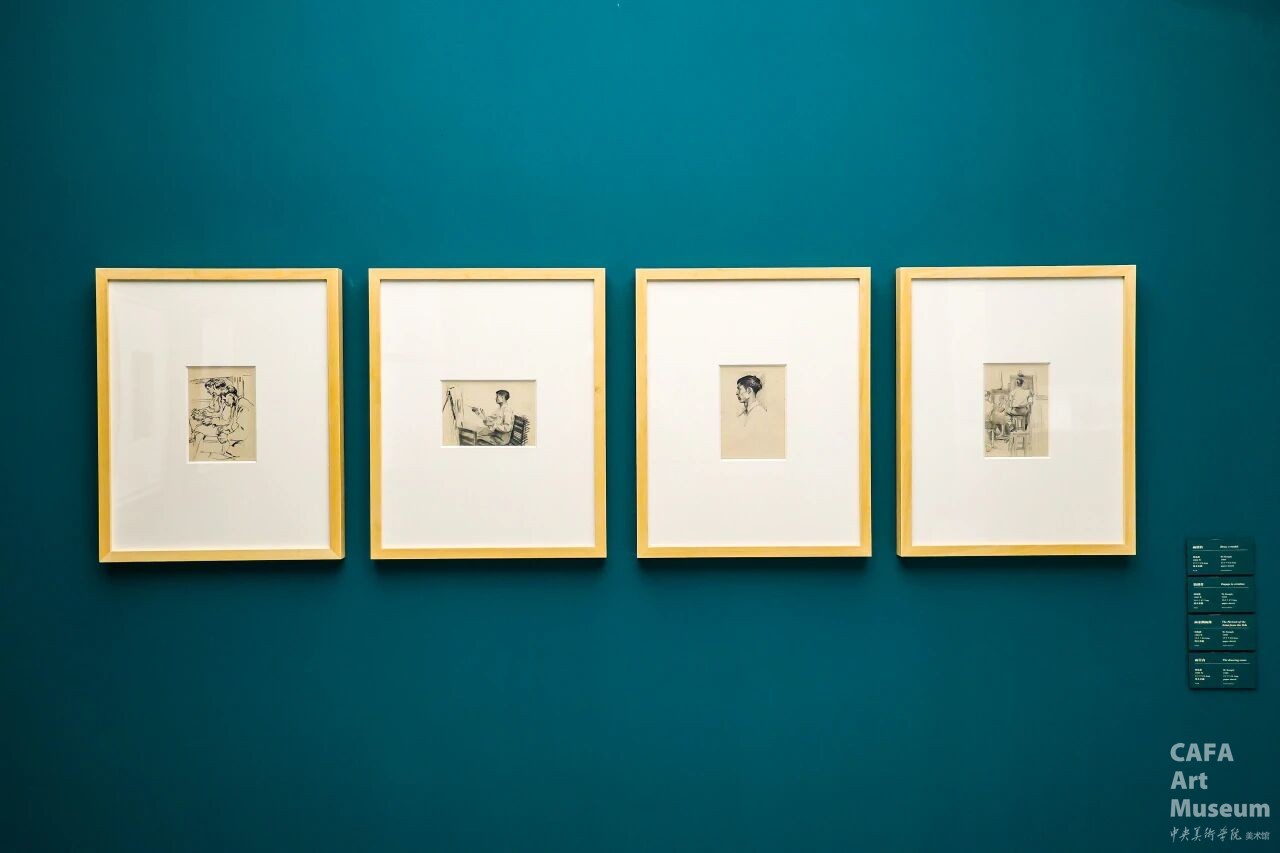
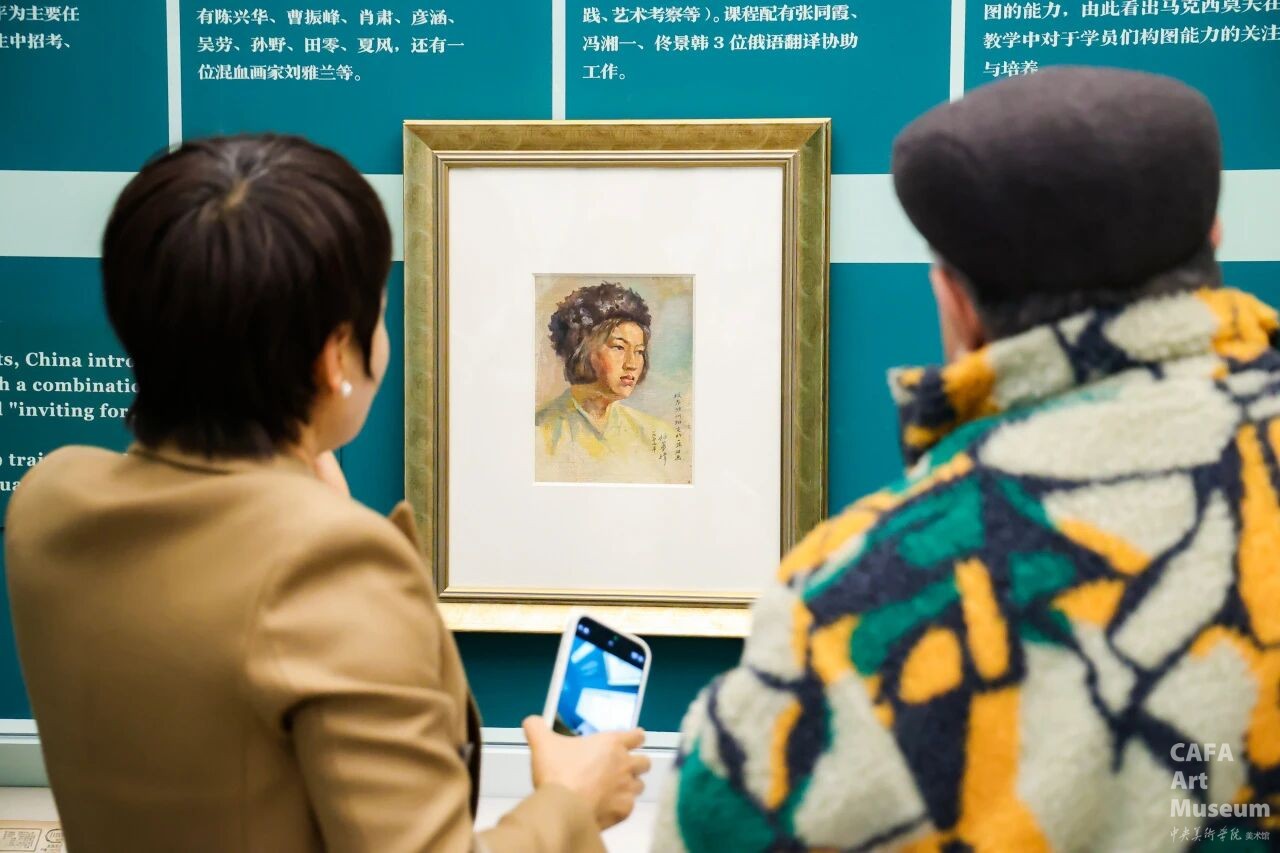
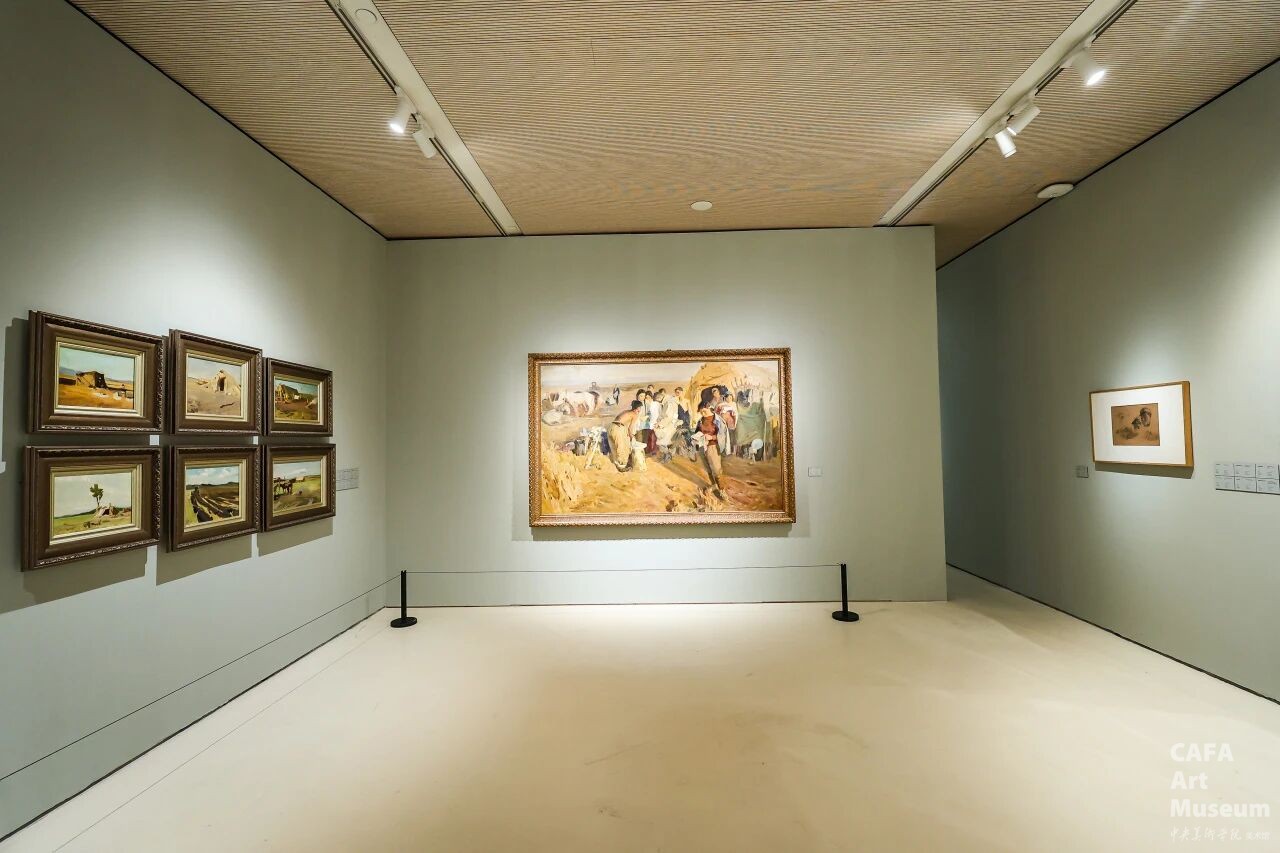
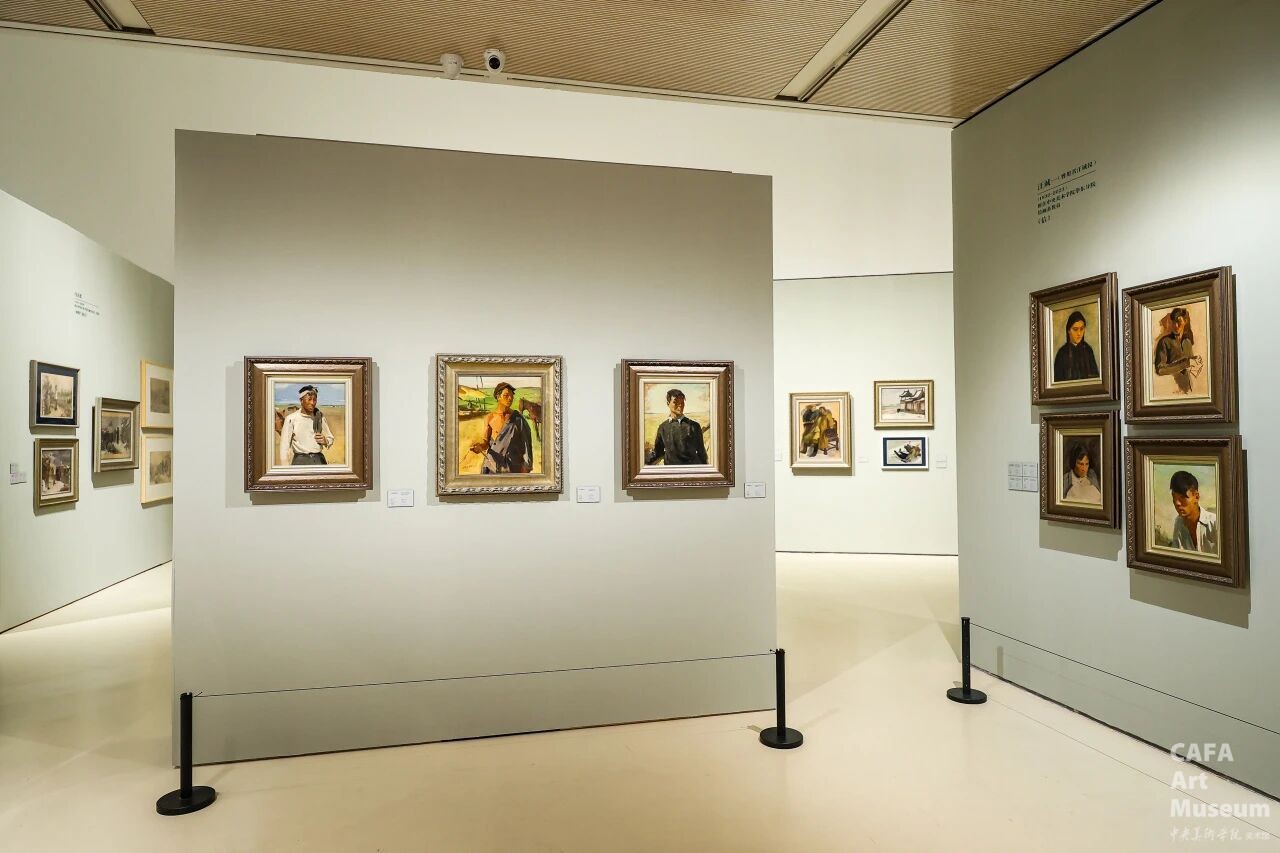
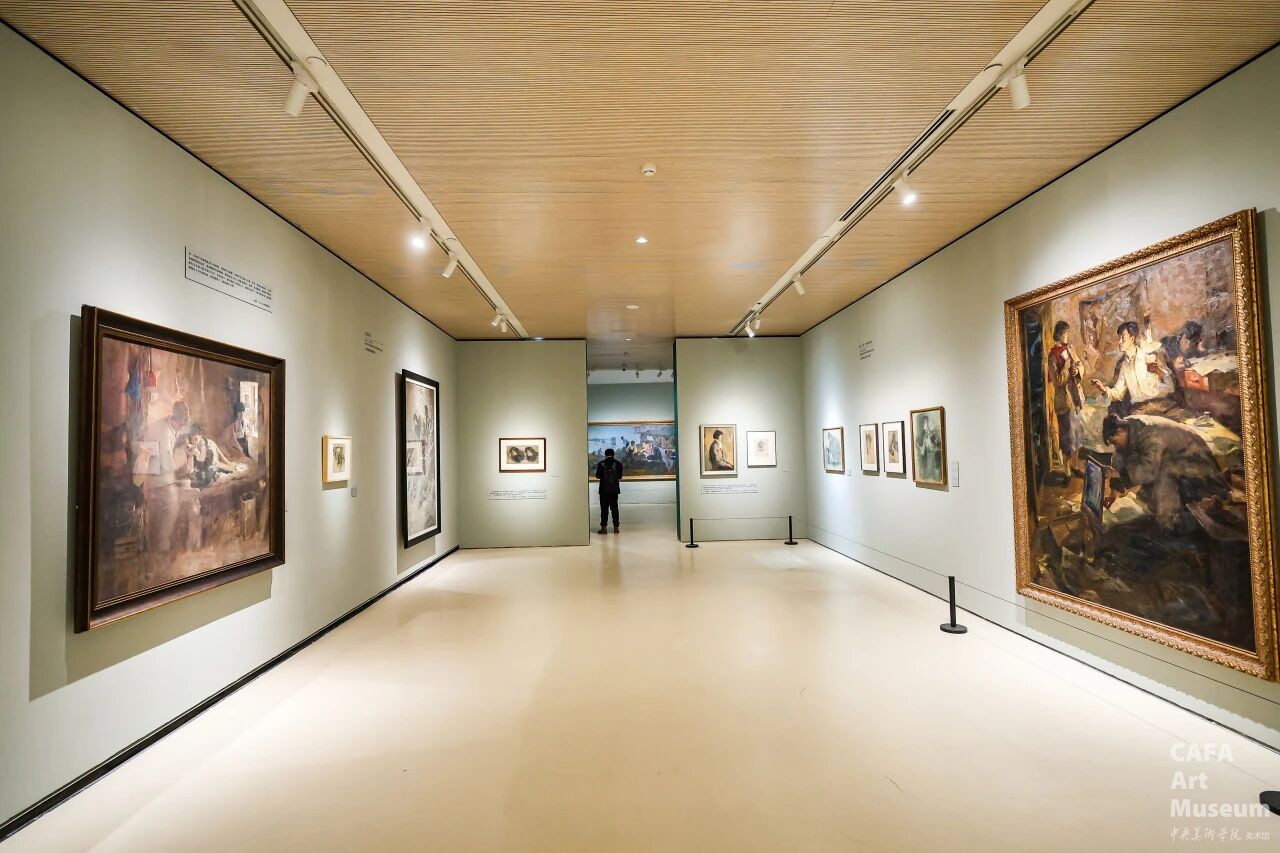
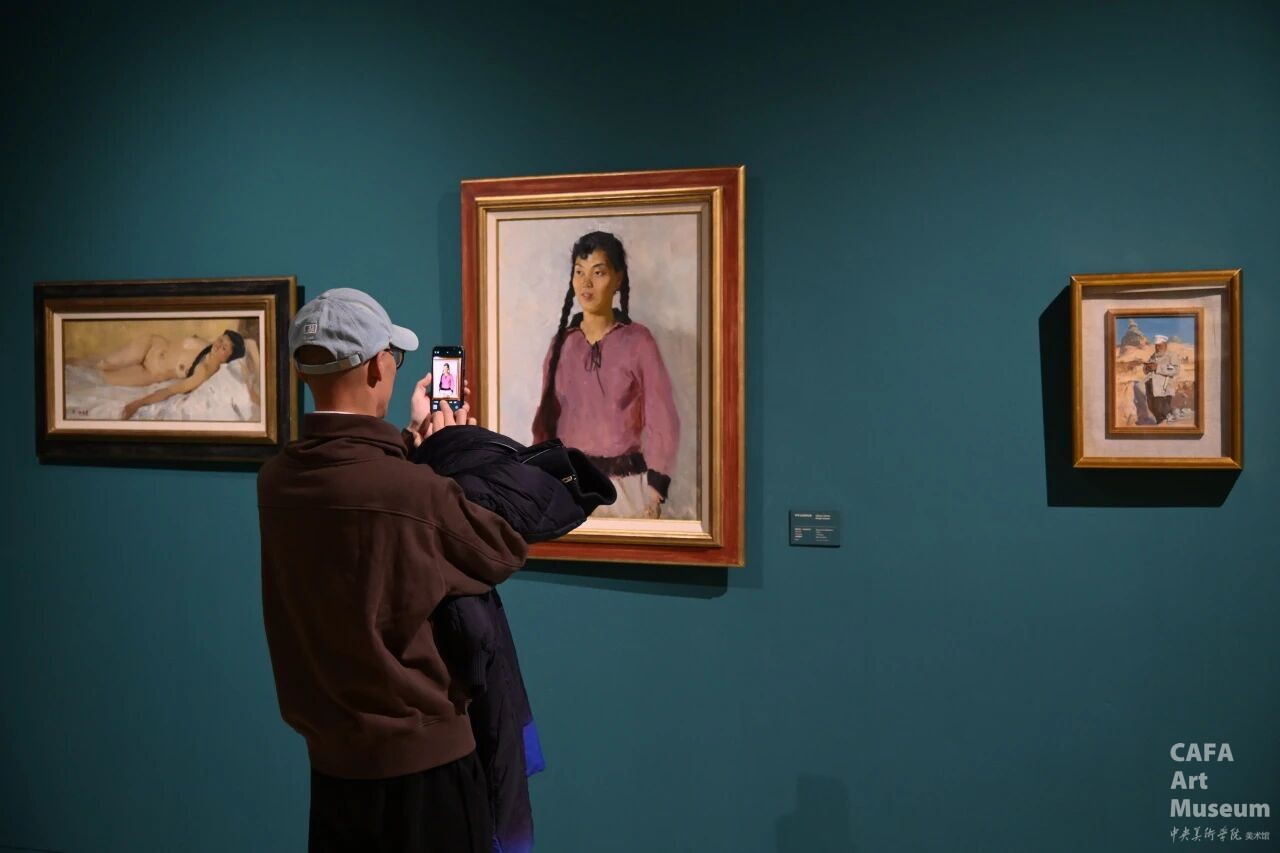
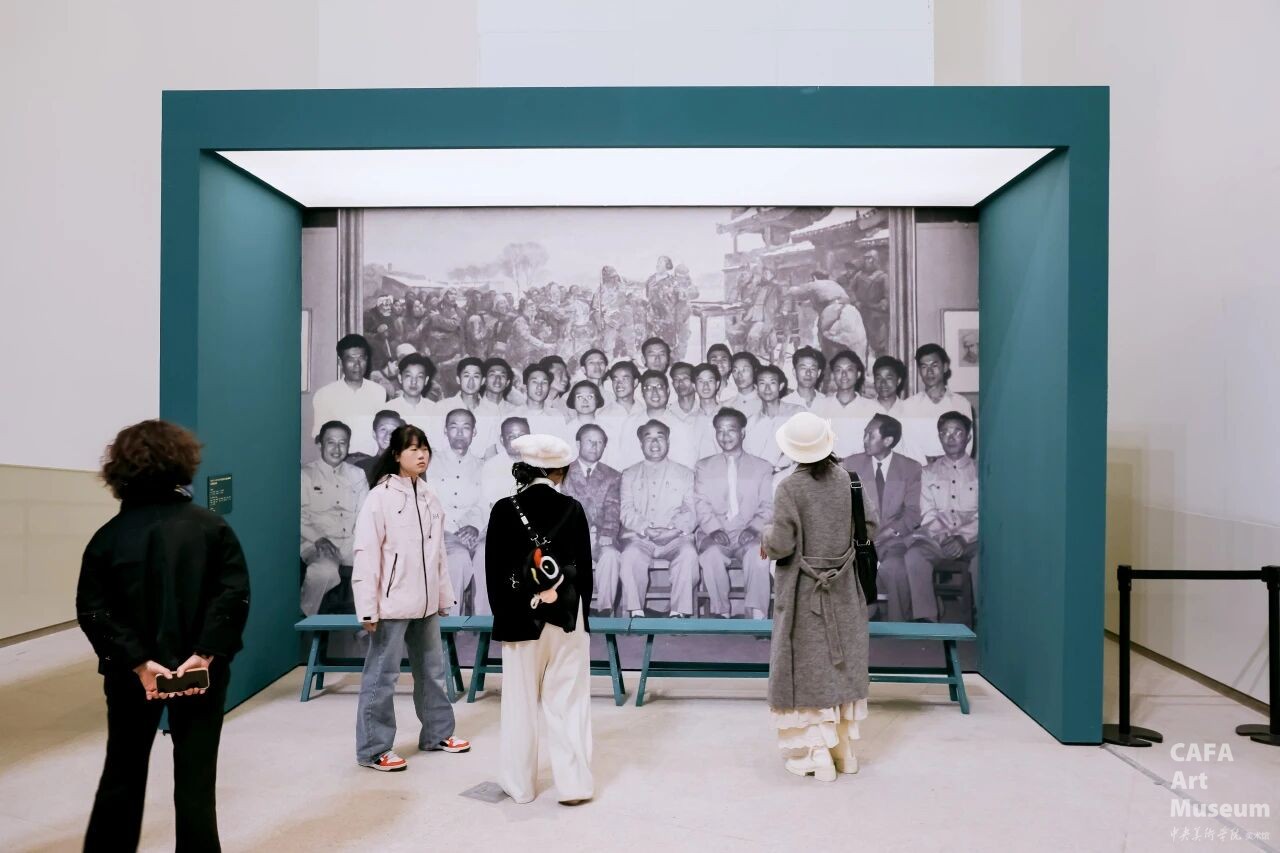
On November 21st, the opening ceremony of the exhibition "Imported Oil Painting -- A Retrospective Exhibition Of The Maksimov Oil Painting Training Program" was grandly held at the CAFA Art Museum. Hosted by the Central Academy of Fine Arts, this exhibition is co-organized by CAFA Art Museum and the China-Russia Art Exchange Center of CAFA, with support from the National Art Museum of China, Shanghai Art Museum, and China Academy of Art. The exhibition brings together more than 240 works created during the "Maksimov Training Class" period, along with a wealth of documentary materials, historical photos, and over a hundred publications, comprehensively presenting the teaching achievements of the Maksimov Oil Painting Training Class.


Looking back at the history of Chinese art education and the history of art academies, seventy years ago, the launch of the Maksimov Oil Painting Training Class marked the beginning of an important chapter in the development of Chinese oil painting in the 20th century, nurturing a large number of outstanding talents for Chinese oil painting art. Today, seventy years later, the Central Academy of Fine Arts reviews this historical journey through an exhibition. This is not only a tribute to history, but also a practice of artistic inheritance. The exhibition bears a profound yet unadorned name – "Teaching Achievements Report Exhibition". However, these few words go beyond the scope of an oil painting exhibition or a documentary exhibition; they represent the finest review of that period of history, as well as the history of Chinese art education and the development history of oil painting education.


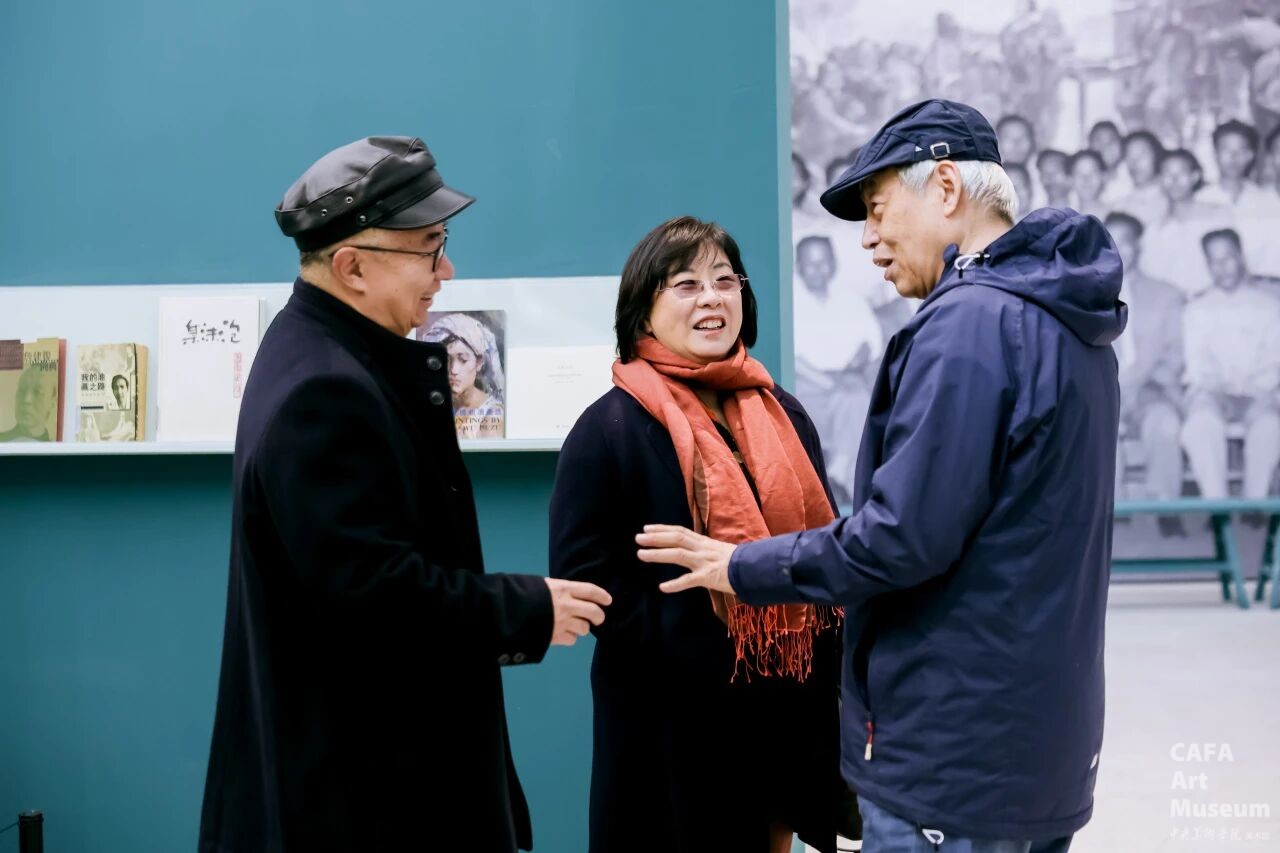
Present at the opening ceremony were: artists and educators from the Central Academy of Fine Arts: Jin Shangyi, Sun Jingbo, Dai Shihe, Chen Weihe, Ren Shimin, Gao Tianxiong, Ding Yilin, Ma Lu, Liu Bo, and Jin Rilong. Lin Mao, president of CAFA; Pan Chenghui, assistant to the president of CAFA; Daria Kuznetsova,director of the Beijing Russian cultural center and counselor of the embassy of the russian federation in China; Han Xuemei, chief consultant of the Beijing Russian cultural center, and Vasily Kukosa distinguished artist of the russian federation. Other guests: Wang Zhong, Former Editor-in-Chief of Art Magazine; Yang Feiyun, Honorary Dean of the Oil Painting Academy of the Chinese National Academy of Arts; An Yuanyuan, Former Secretary of the Party Committee of the National Art Museum of China; Hu Yanyan, Director and President of China Guardian Auctions Co., Ltd.; Wang Yuan, Editor-in-Chief of People's Fine Arts Publishing House; Lin Hong, Vice President of Li Keran Art Academy; Liu Mingcai, Vice Dean of the School of Arts, Renmin University of China; Fu Jun, Director of the Art Museum of Shanghai Oil Painting and Sculpture Institute; Zhang Shuguang, Secretary-General of the Chinese Oil Painting Society and Professor of Minzu University of China; Xiao Ge, Editor-in-Chief of Phoenix Art and Director of the Phoenix Center; Ouyang Xing, Director of Shijingshan Zhongchong Art Museum; Exhibition organizers from CAFA: Jin Jun, curator of this exhibition and director of the CAFA art museum; Cao Qinghui, professor of the school of humanities, CAFA; Han Wenchao, exhibition planning director and secretary of the directly affiliated party branch of the CAFA art museum;family representatives of the Maksimov oil painting training class alumni: Feng Shiguang, family member of Feng Fasi, former monitor of the training class; Wang Xueqing, family member of Wang Dewei; Ren Ping, Ren Menghu, Ren Mengxiong, Xie Ying, Zhu Shaofang, Zhang Yingxue, Ren Mengqiang, family members of Ren Mengzhang; Song Hong,  family member of Wang Chengyi, Yu Li, family member of Yu Yunjie; Gao Tianxiong, family member of Gao Hong; Chen He, family member of Chen Beixin; Wu Yongfan, family member of Wu Dezu; as well as representatives from social organizations, collection institutions, and collectors; media representatives; and heads of various teaching departments, research institutions, and administrative departments of CAFA. Yu Yang, director of the research department of CAFA, served as the host of the opening ceremony.

1764052097672233.png

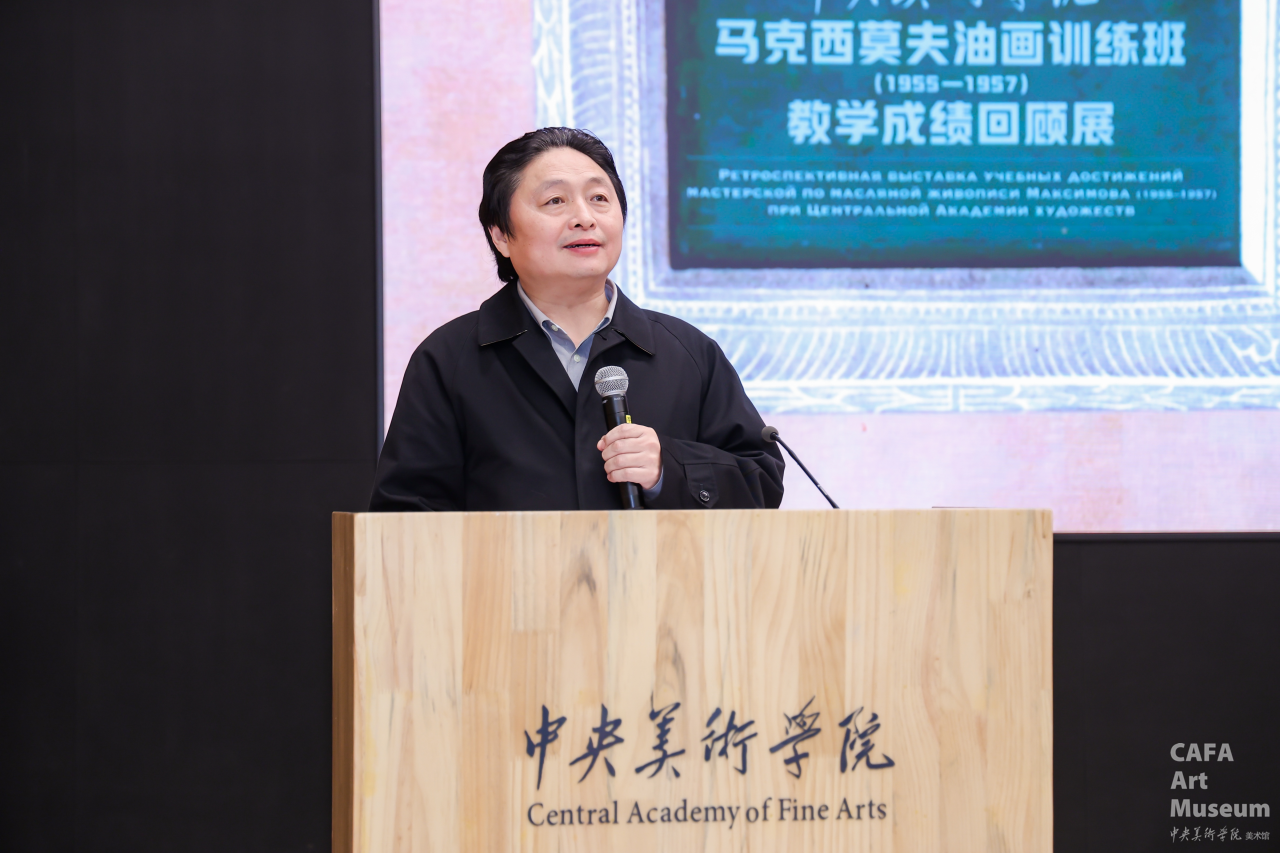
Speech by Lin Mao, President of the Central Academy of Fine Arts


In his speech, Lin Mao, President of the Central Academy of Fine Arts, stated that the grand opening of this exhibition aims to commemorate the 70th anniversary of the launch of the Maximov Oil Painting Training Class—a pivotal moment in the history of China’s modern fine arts education. In the 1950s, when the People’s Republic of China was striving to rebuild and develop after years of upheaval, the Ministry of Culture adopted the "bringing-in" initiative to invite Soviet expert Konstantin Maximov to China to teach. In 1955, Maximov established an oil painting training class at CAFA, where he systematically introduced the modeling system and teaching methods of Soviet realistic oil painting. This program nurtured a group of artists and educators who would later become the backbone of Chinese fine arts, including Jin Shangyi, Zhan Jianjun, and Hou Yimin. Their achievements laid a profound and solid foundation for the establishment of China’s modern fine arts education system.


Every study and artwork on display is not only a trace of art, but also an imprint of the era. They record the exploration process of that generation of artists, who integrated oil painting techniques with Chinese reality and national spirit. The teaching philosophy advocated by the Maximov Training Class—"valuing life drawing, orienting to real life, and attaching equal importance to technical skills and artistic cultivation"—has been deeply integrated into CAFA’s academic tradition and continues to influence the development of Chinese oil painting. Against the backdrop of the new era, the Central Academy of Fine Arts will keep in mind General Secretary Xi Jinping’s instruction to "uphold moral education and cultivate people, root in the life of the times, and carry forward the spirit of Chinese aesthetic education". It will fulfill its mission of nurturing students with a great love for education and creating timeless works with superb artistic skills, while adhering to upholding fundamental principles and breaking new ground, and advancing with the times. In doing so, CAFA aims to cultivate more and more outstanding high-end artistic talents for Chinese fine arts in the new era.

1764052567641605.jpg

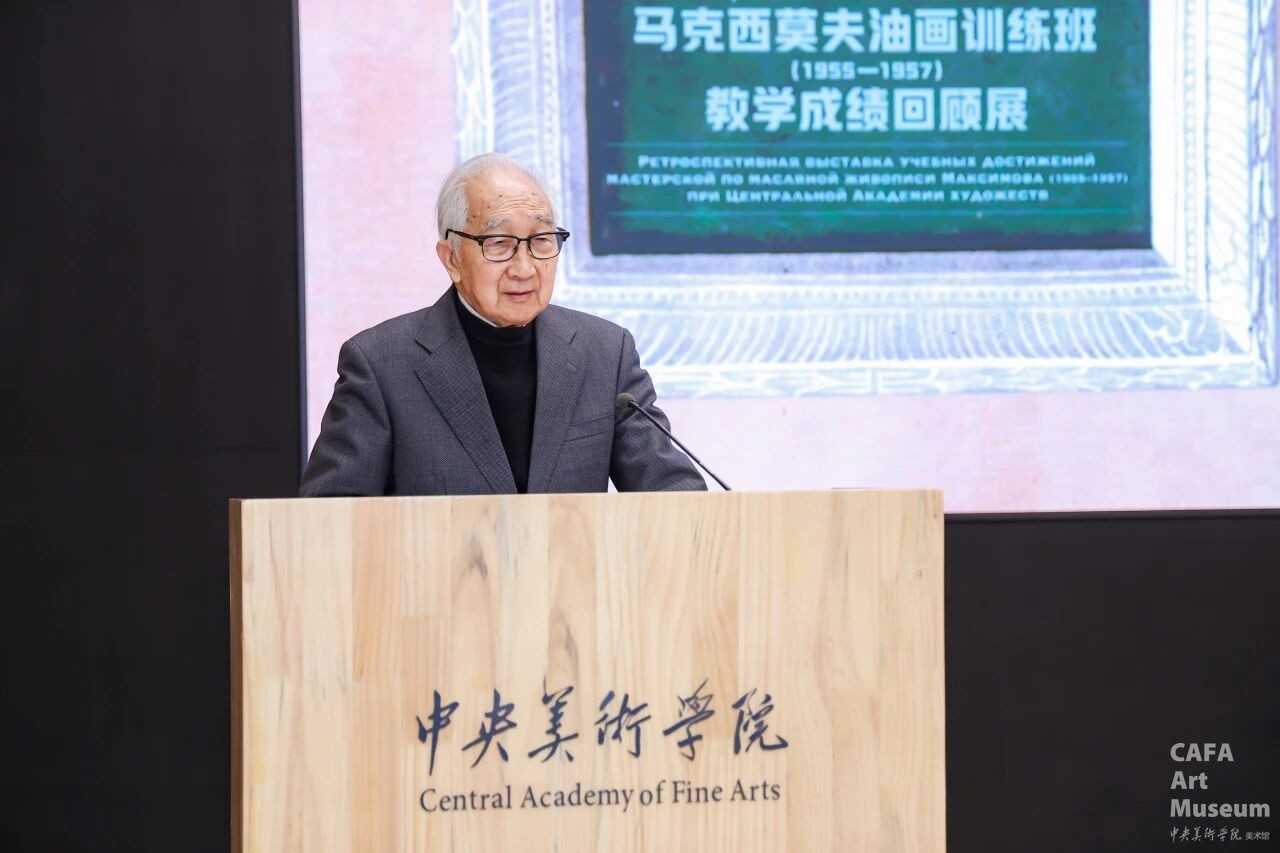
Speech by Jin Shangyi, Former President of the Central Academy of Fine Arts and Representative of the 

students of the Maximov Oil Painting Training Class


Jin Shangyi, former President of the Central Academy of Fine Arts and representative of the students from the Maximov Oil Painting Training Class, shared the special significance of the "Maximov Class" from the perspective of a first-hand witness, focusing on two aspects: historical review and contemporary reflection. He recalled the reality of China’s underdeveloped economy and culture, as well as the weak foundation of oil painting in the early days of the People’s Republic of China. He emphasized that against the backdrop of "Sino-Soviet friendship" at that time, Soviet experts assisted China in establishing teaching systems such as the "Oil Painting Training Class," which provided enormous support for the initial development of China’s literary and artistic undertakings. He also referred to the 1950s and 1960s as the "golden age" of China’s rapid artistic development. Building on this, he shifted his focus to the present, pointing out that the world has undergone tremendous changes in the past seventy years, and the thinking and creative environment of current oil painting students are completely different from those of the past. Taking this exhibition as an opportunity, he put forward a core topic: after reviewing history, we must address the practical and crucial question of how Chinese oil painting should develop in the contemporary era. He inspired everyone to compare the past and the present, and jointly explore the path forward.

1764052951571925.jpg

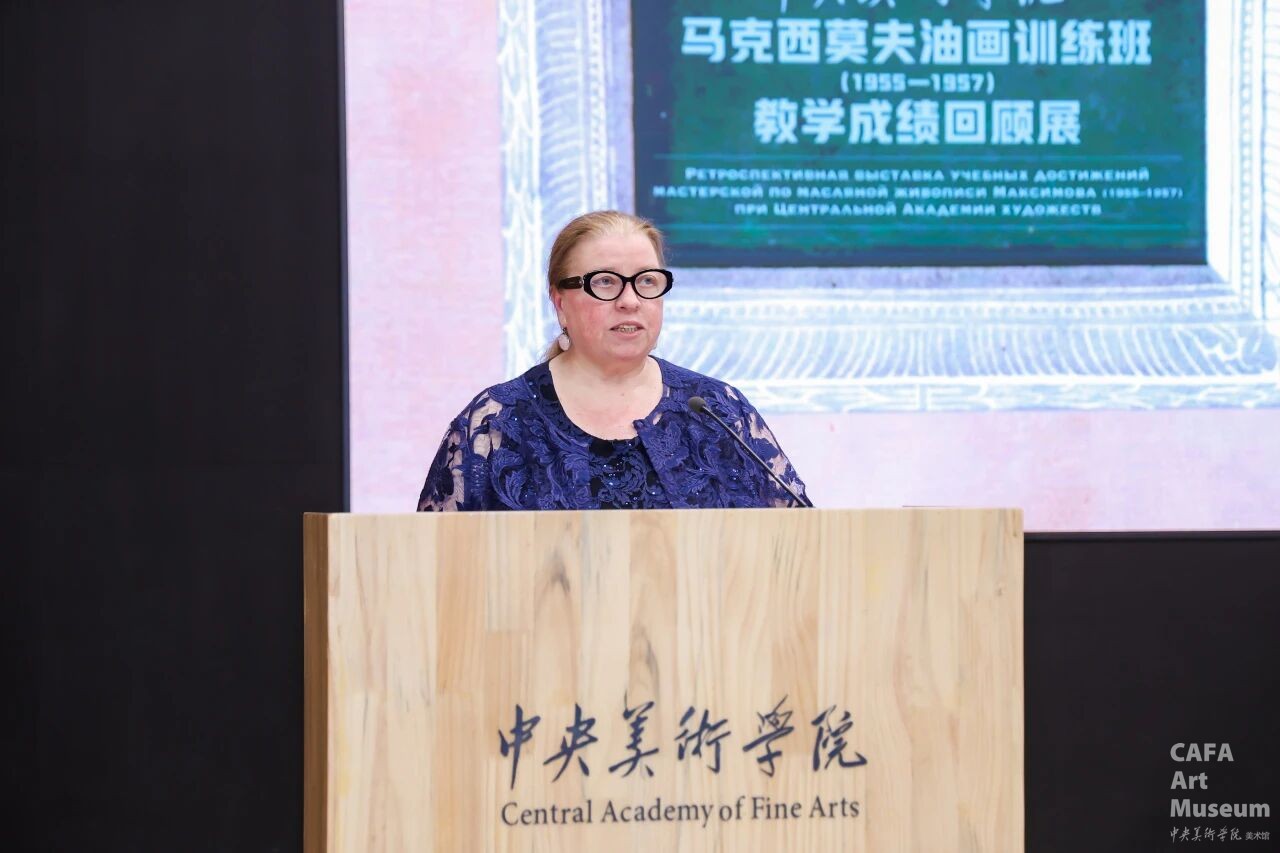
Dana Vasilieva, Counselor of the Embassy of the Russian Federation in the People's Republic of China 

and Director of the Beijing Russian Cultural Center


On behalf of the Russian Cultural Center, Dana Vasilieva, counselor of the embassy of the Russian Federation in the People's Republic of China and director of the Beijing Russian Cultural Center, congratulated the successful launch of the events marking the 70th anniversary of the Maximov Oil Painting Training Class and the China-Russia Year of Cultural Exchange. She spoke highly of Professor Maximov’s historic contributions, noting that the master artists he nurtured not only laid the foundation for China’s oil painting education system, but also built an enduring bridge for artistic exchanges between China and Russia. She mentioned the scale of the exhibits in this exhibition, emphasizing that these works are not only artistic teaching materials, but also a testament to China-Russia friendship. She pointed out that the "Maximov Class" symbolizes the successful practice of Russian fine arts education in China and embodies the two countries’ shared pursuit of beauty. This exhibition is not only a heartfelt look back at history, but also a new starting point for future cooperation. The Russian Cultural Center will, as always, support in-depth cooperation between art institutions of the two countries, enabling the movement of China-Russia cultural exchanges to play a more touching melody in the new era.

1764053638817694.jpg

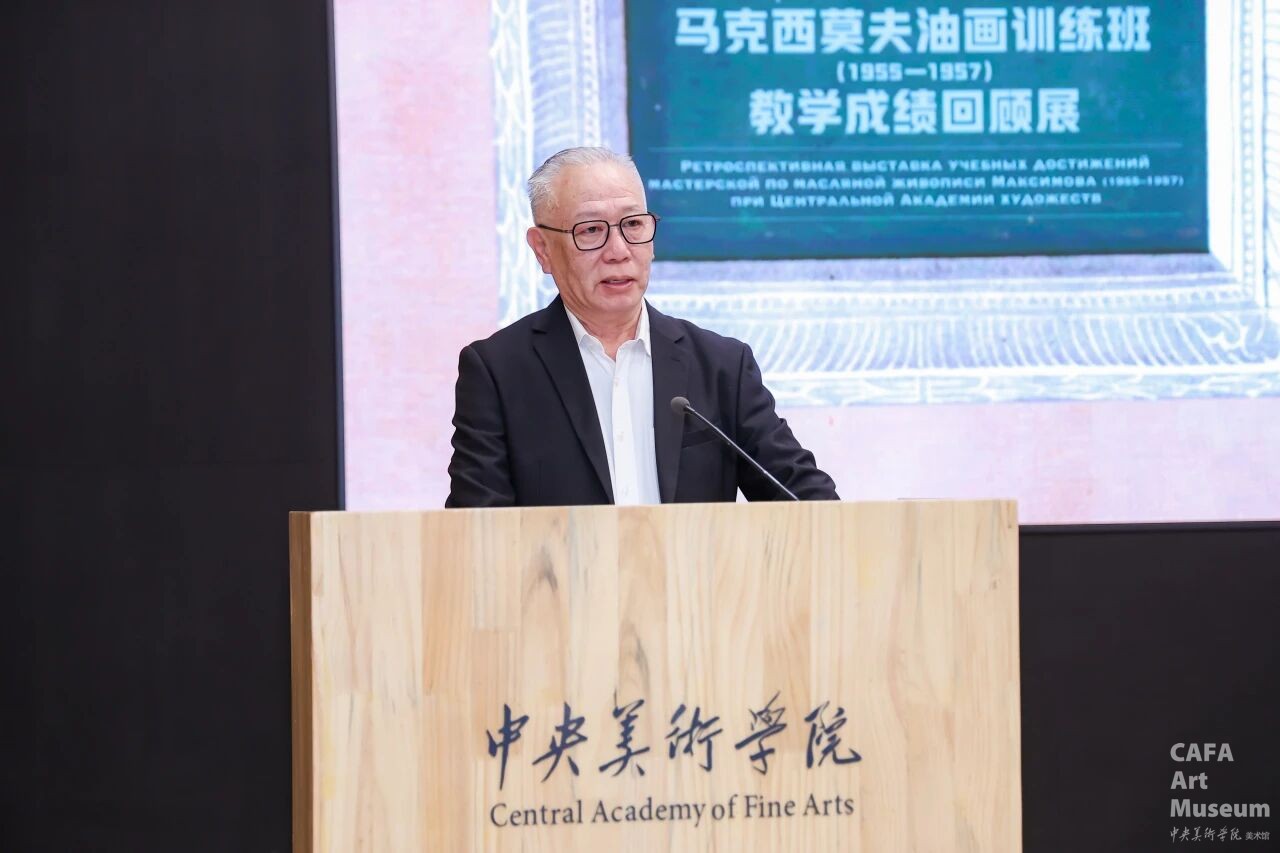
Speech by Feng Shiguang, Son of Feng Fasi 


Feng Shiguang, the son of Feng Fasi who served as the monitor of Maximov's Oil Painting Training Class, looked back on the history of how Professor Maximov systematically introduced the Russian-Soviet oil painting system to China 70 years ago. He pointed out that the "Maximov Class" was a successful example of the strategy of "going out and bringing in". Its teaching achievements have become the mainstream system of Chinese oil painting education and a milestone in its development. As a descendant, he emotionally recalled the profound friendship forged between the older generation during that period, and expressed his hope that future generations would carry on this friendship. Finally, he emphasized that the educational experience of the Maximov Training Class remains an indispensable system to this day. He also spoke highly of the current exhibition, stating that it is not merely a commemoration, but more importantly, an objective and calm sorting out and summary of history. He further noted that the exhibition holds historical and academic significance equally important to the inauguration of the "Maximov Class" back in the day.

1764054247374227.jpg

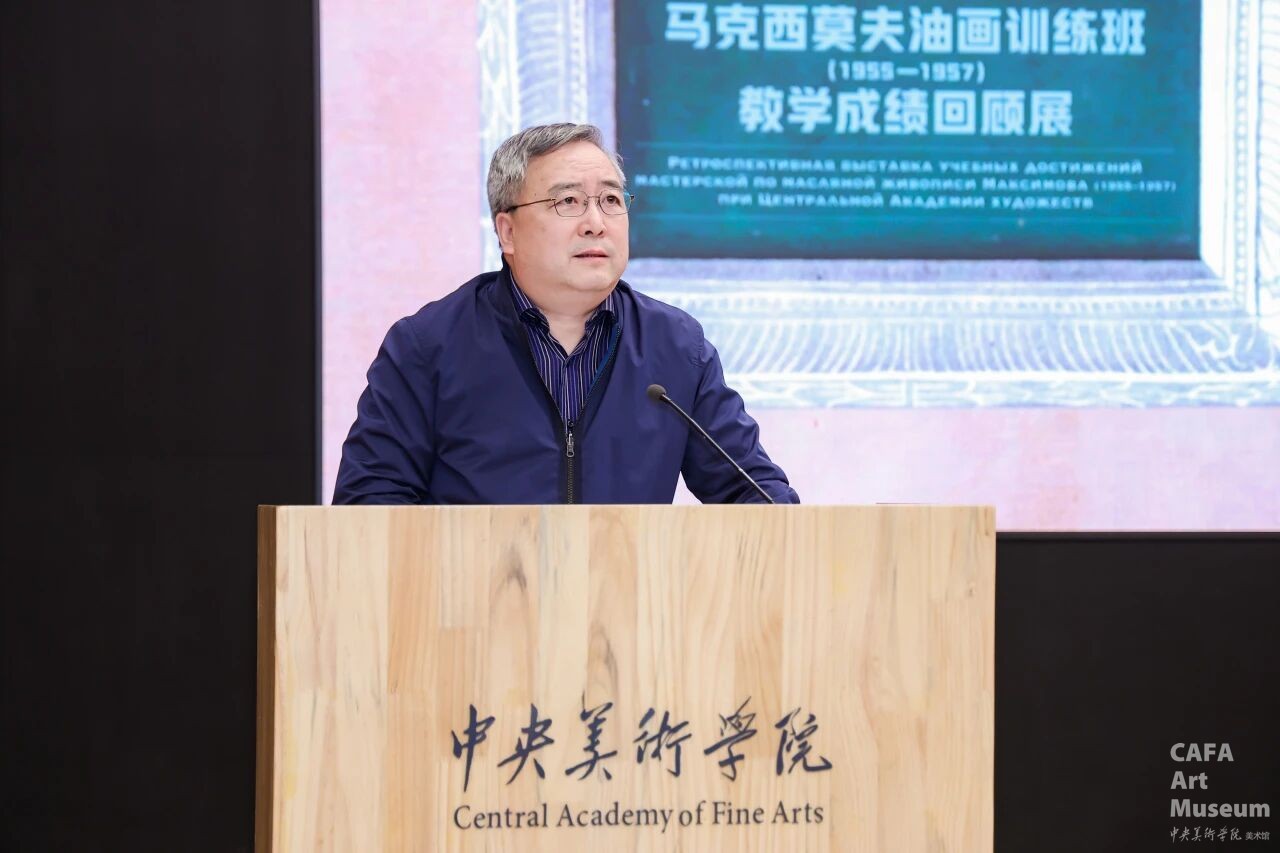
Speech by Cao Qinghui, Professor at the School of Humanities, Central Academy of Fine Arts, and curator of this exhibition


From the perspective of the curatorial team, Professor Cao Qinghui—who is from the School of Humanities at the Central Academy of Fine Arts and serves as the curator of this exhibition—delivered an in-depth elaboration on the motivation, positioning, and specific concepts behind the organization of this exhibition. There are three inherent driving forces for this exhibition: First, the accumulation of collections related to the "Maximov Class" by the CAFA Art Museum over the past decade during its collection inventory work; second, the solid achievements that have been made in academic research on this training class; third, the clear sense of inheritance responsibility held by the curatorial team. Based on these, the exhibition is clearly defined as a "Retrospective of Teaching Achievements" that focuses on the teaching process itself from 1955 to 1957, aiming to trace back how the students "learned, what they learned, and how they improved and created." To this end, the curatorial team made a special effort to collect and exhibit a large number of the students’ daily studies, sketch drafts, and other works, rather than just their well-known graduation creations—with the expectation of presenting a comprehensive picture of the training class’s teaching.

He pointed out that the core contribution of the "Maximov Class" lies in its "method": it solved the problem of how ideological concepts could be translated into specific oil painting technical expressions, making it an "advanced course on oil painting methods." This teaching model, which centers on creation, emphasizes artists’ sense of responsibility and technical methods, and goes beyond illustrative expression, has exerted a profound and far-reaching influence.

1764055131981924.jpg

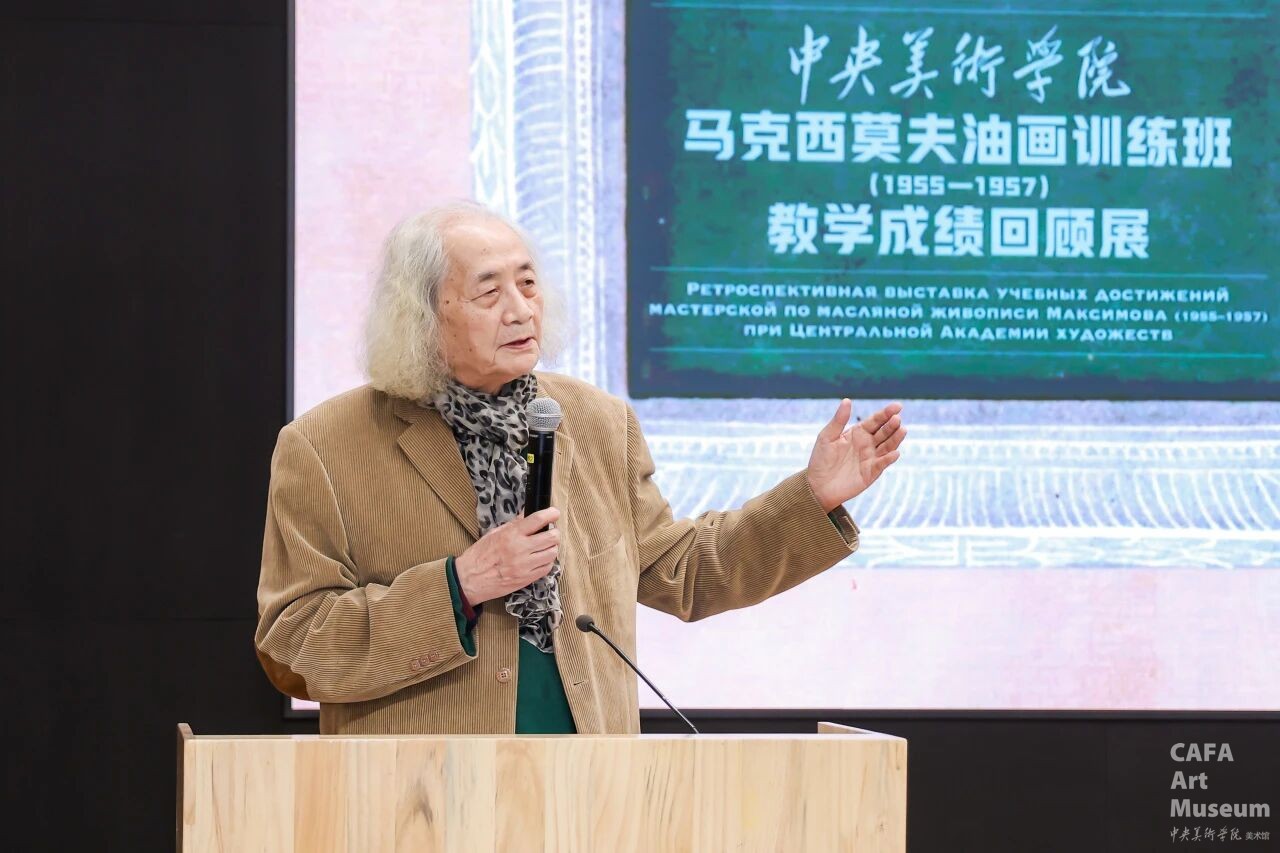
Speech by Wang Zhong, Former Editor-in-Chief of Art Magazine


Wang Zhong, former Editor-in-Chief of Art Magazine, shared precious memories related to the "Maximov Training Class" . As a child of a CAFA family, he personally witnessed how artists like Mr. Feng Fasi created works in line with the principle of "being loyal to life and loyal to life drawing"—a principle emphasized by Maximov. Taking the painting Liu Hulan’s Martyrdom as an example, he vividly described details such as how the artist meticulously collected materials, drew sketches, and even used salt as a substitute for snow in the creative process. These details demonstrated the solid and rigorous creative style of artists of that generation.

He echoed Mr. Jin Shangyi’s view, stating that the practical significance of this exhibition lies in inspiring reflections on contemporary issues in Chinese oil painting. He proposed that the core issues of oil painting art ultimately boil down to basic elements such as form, color, and composition, and expressed the hope that this exhibition would provide a positive impetus for contemporary creative practice.
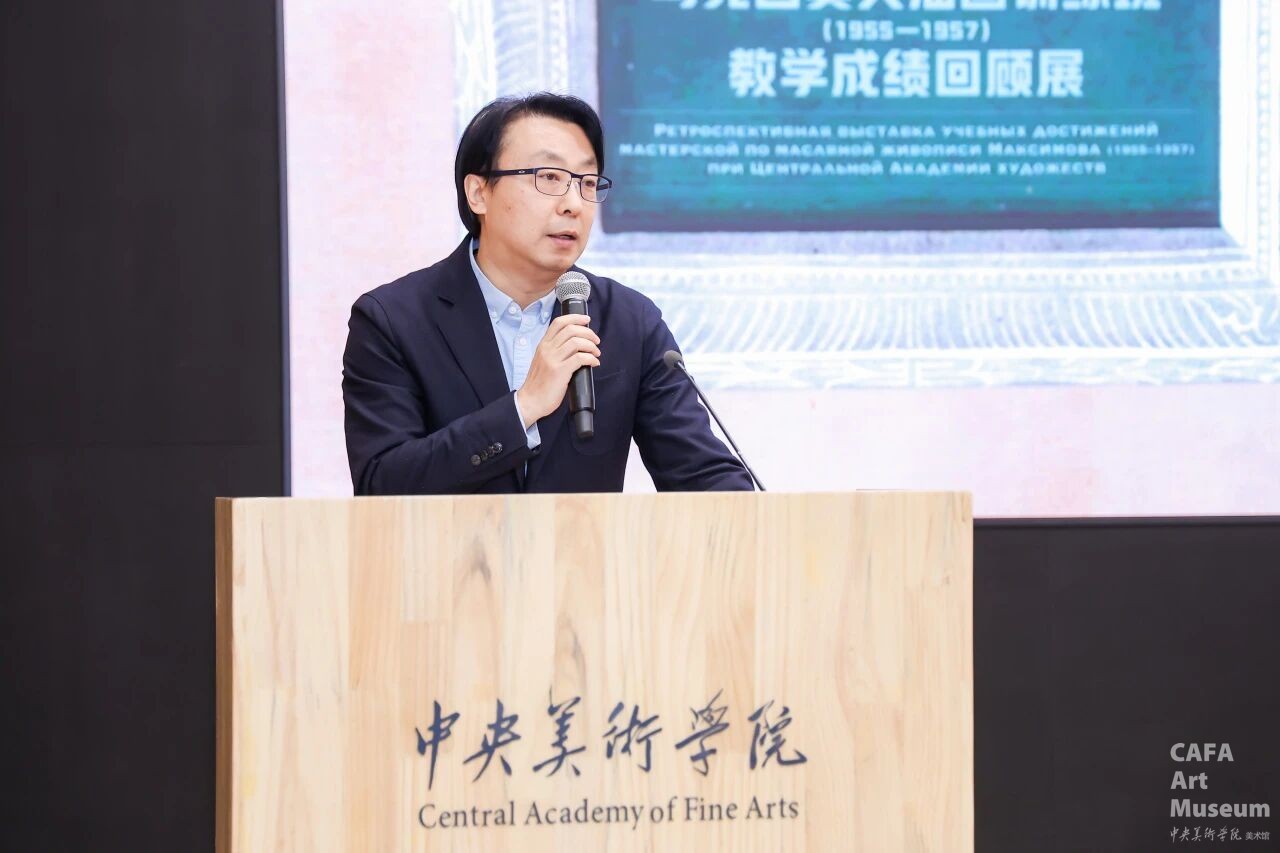

1764055422977602.jpg

Yu Yang, director of the research department of the central academy of fine arts, served as the host of the opening ceremony


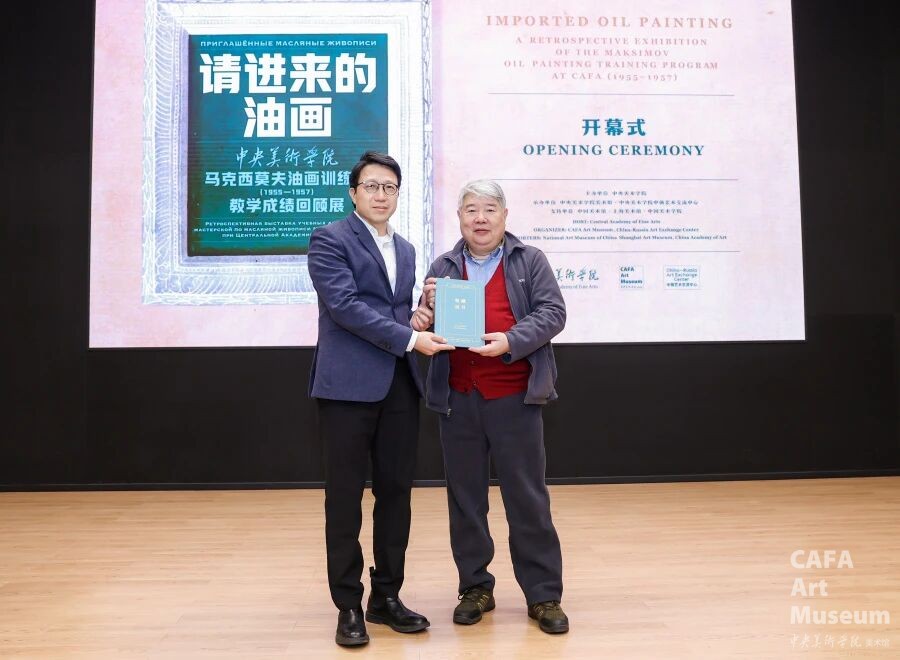
Notably, during the preparation of the exhibition, the family members of Mr. Yu Yunjie provided great support and donated Mr. Yu’s representative works. This not only enriches the collection sequence of the art museum, but also provides precious material evidence for subsequent academic research. Their generous act and original aspiration for art are the best response to the inheritance spirit embodied in this exhibition. It is also hoped that this can gather more artistic strength and promote the passing down of the legacy of Chinese oil painting.

1764055749813278.jpg

Jin Jun, director of the CAFA Art Museum, presented a donation certificate to Mr. Yu Li, son of Yu Yunjie the donor of the artworks

1764055984330484.jpg

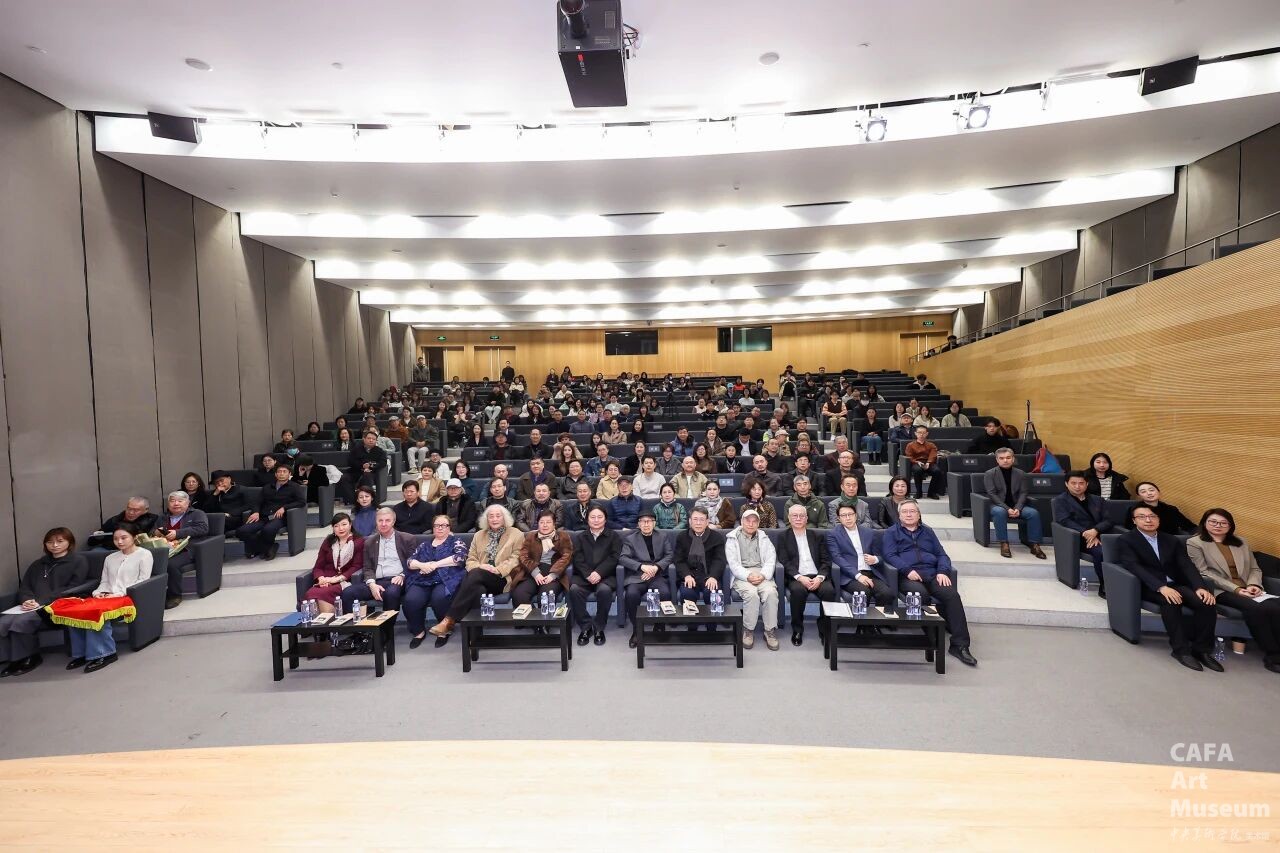
group photo of the guests


1764056973458968.jpg

1764057001916728.jpg

1764057006123899.jpg

1764057147819945.jpg

1764057181439581.jpg

1764057207328782.jpg

1764057254345318.jpg

1764057293580634.jpg

1764057312896130.jpg

1764057335117975.jpg

1764057391666380.jpg

1764057410435437.jpg


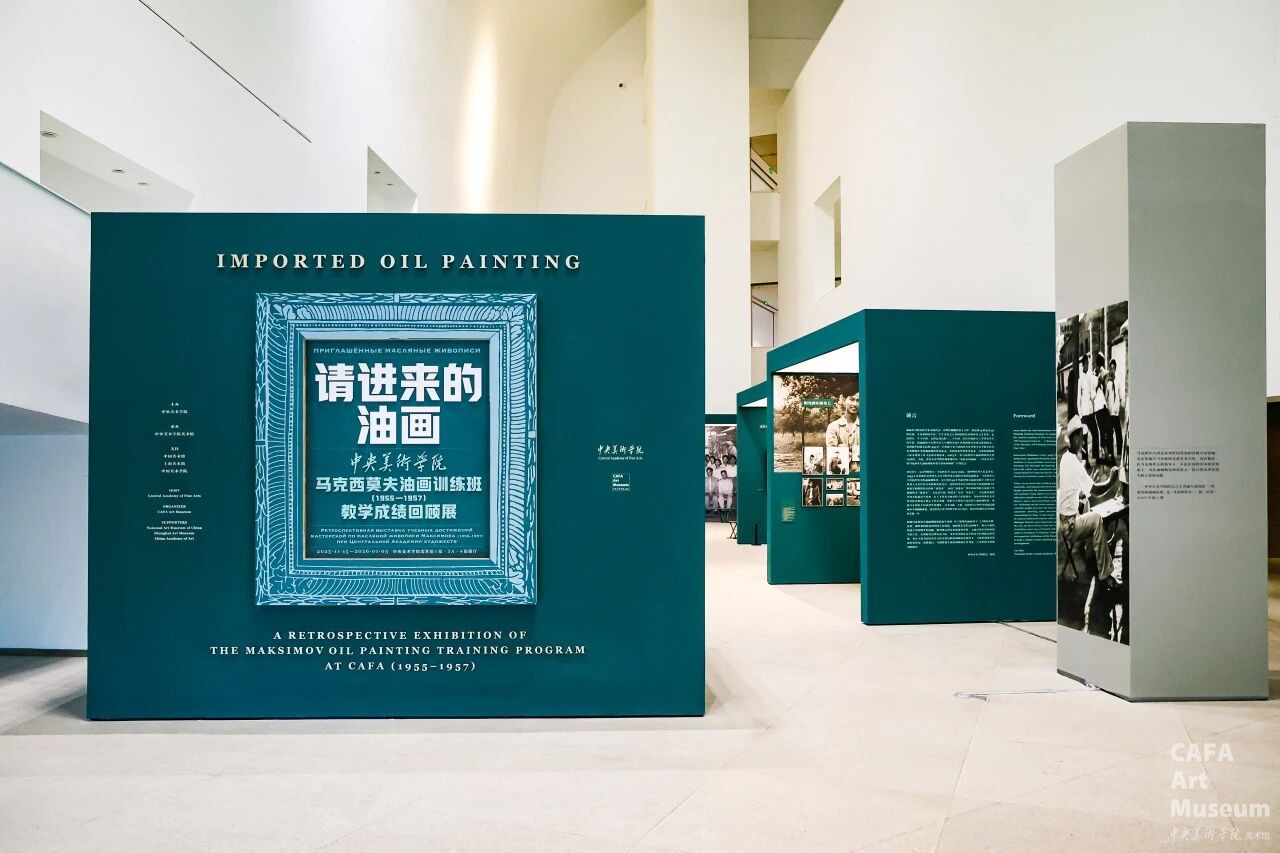
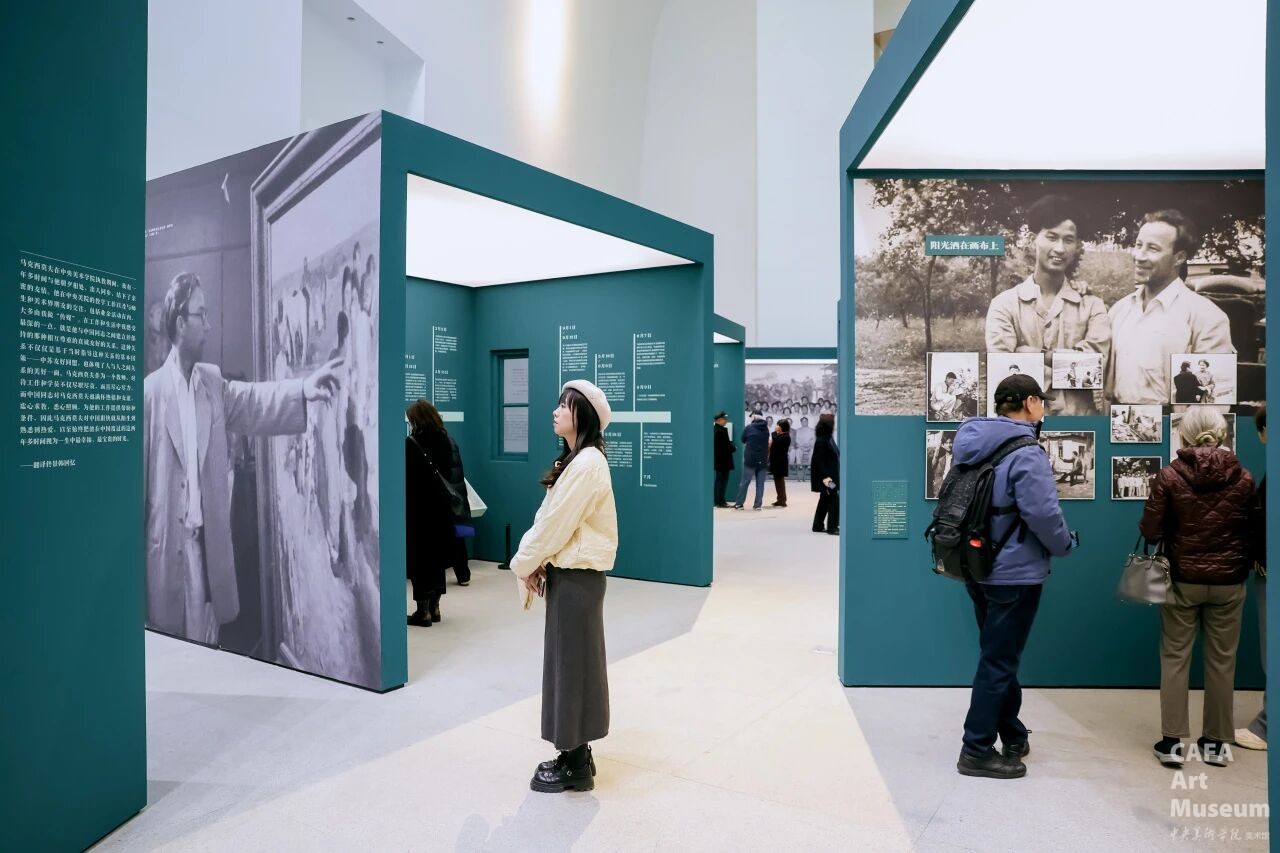
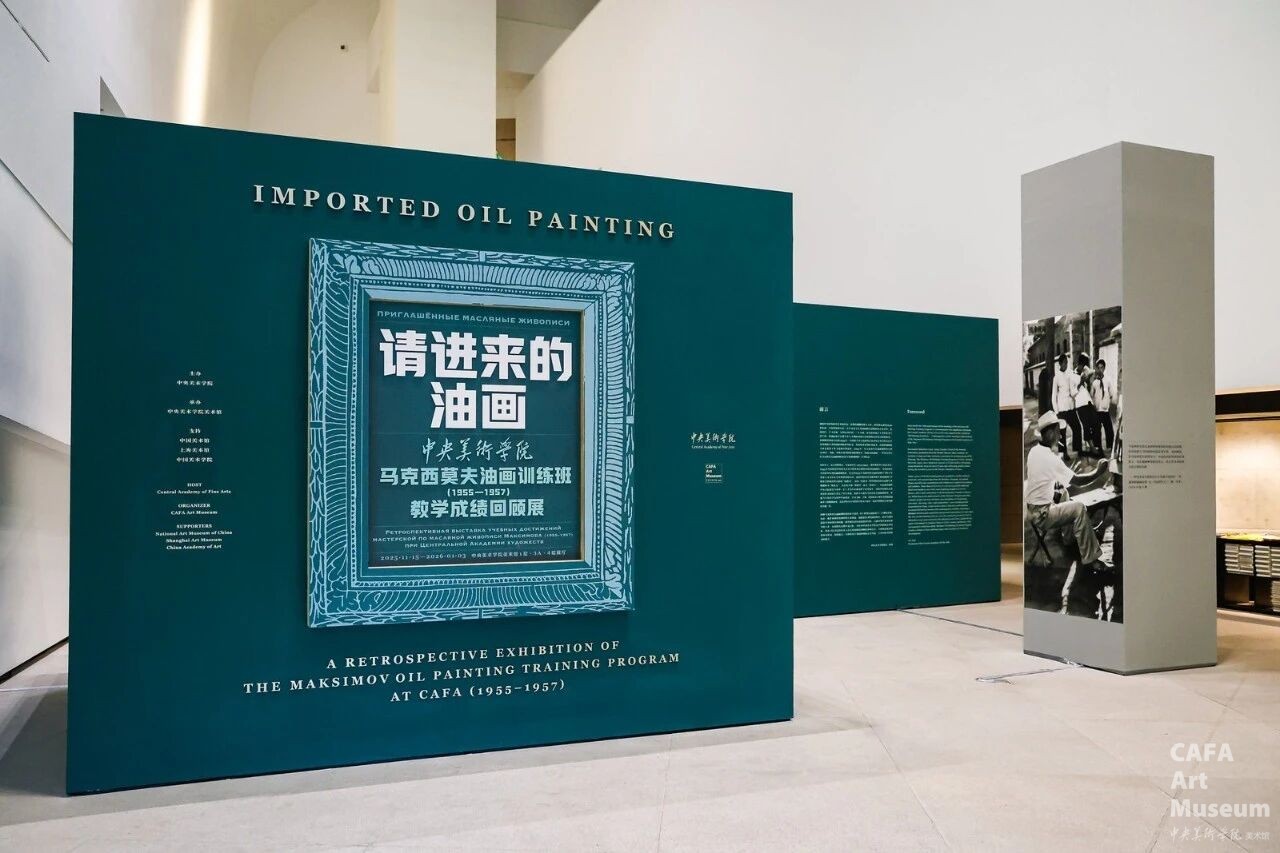
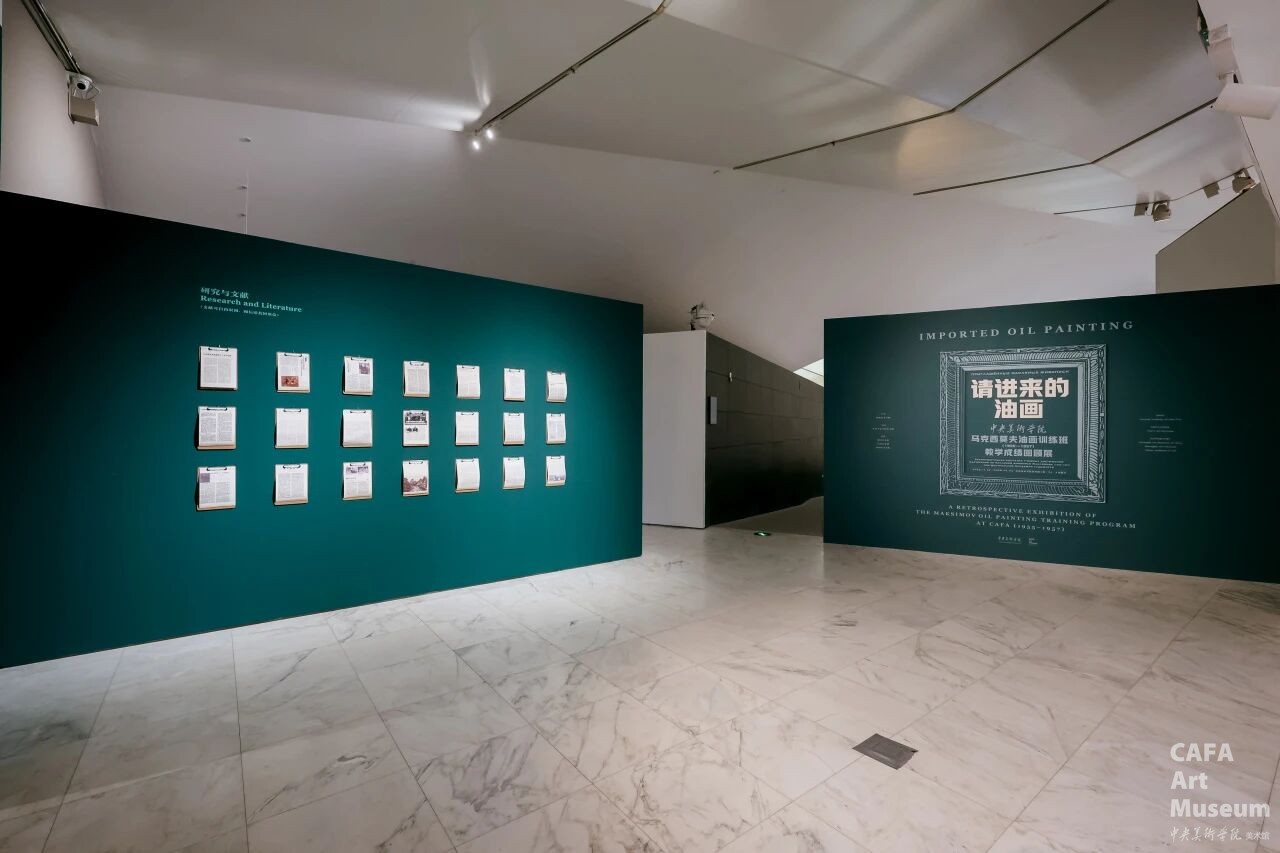
This exhibition is divided into three sections, with the first section located in the lobby on the first floor of the art museum. Within a specially designed scenic space, this section centers on historical materials such as historical photos, documents, and archival texts, tracing back the learning journey of the Maximov Class.
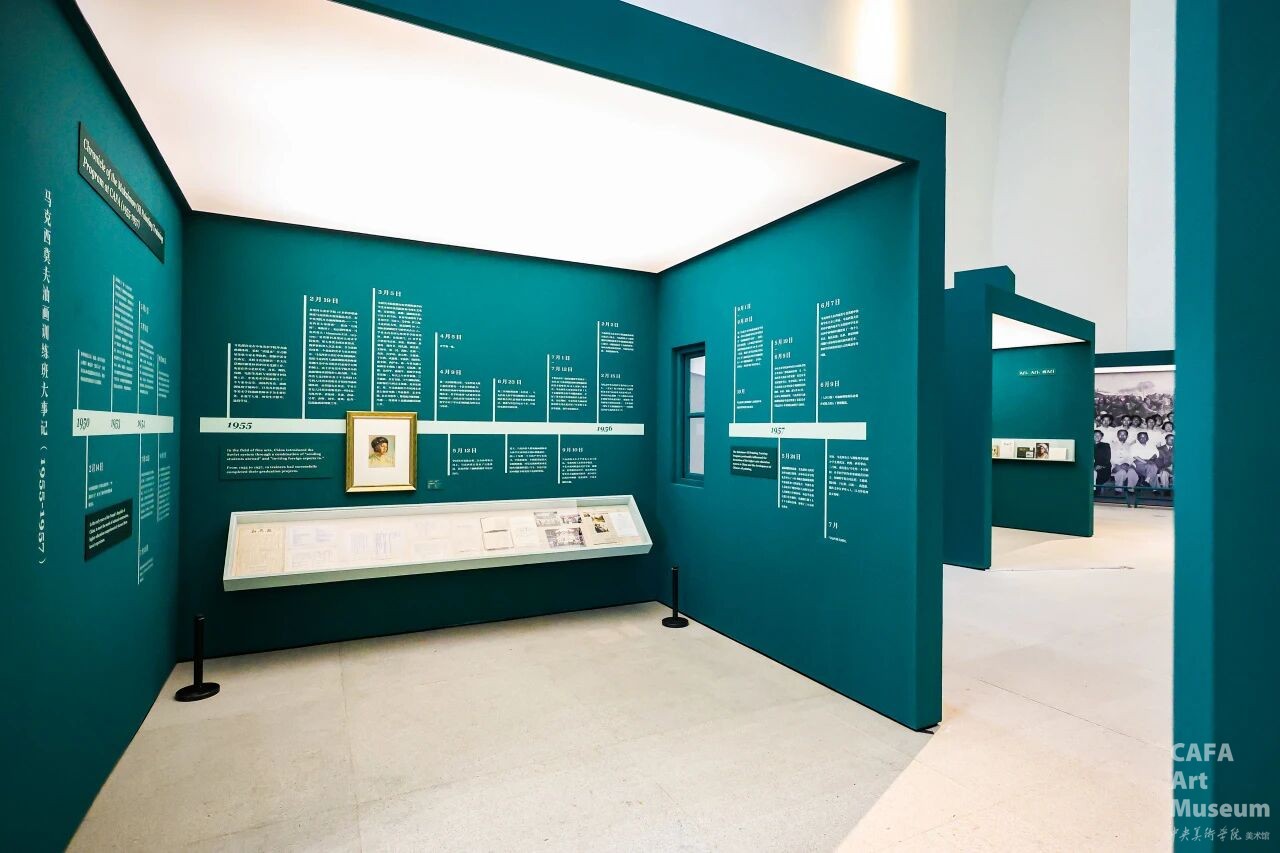
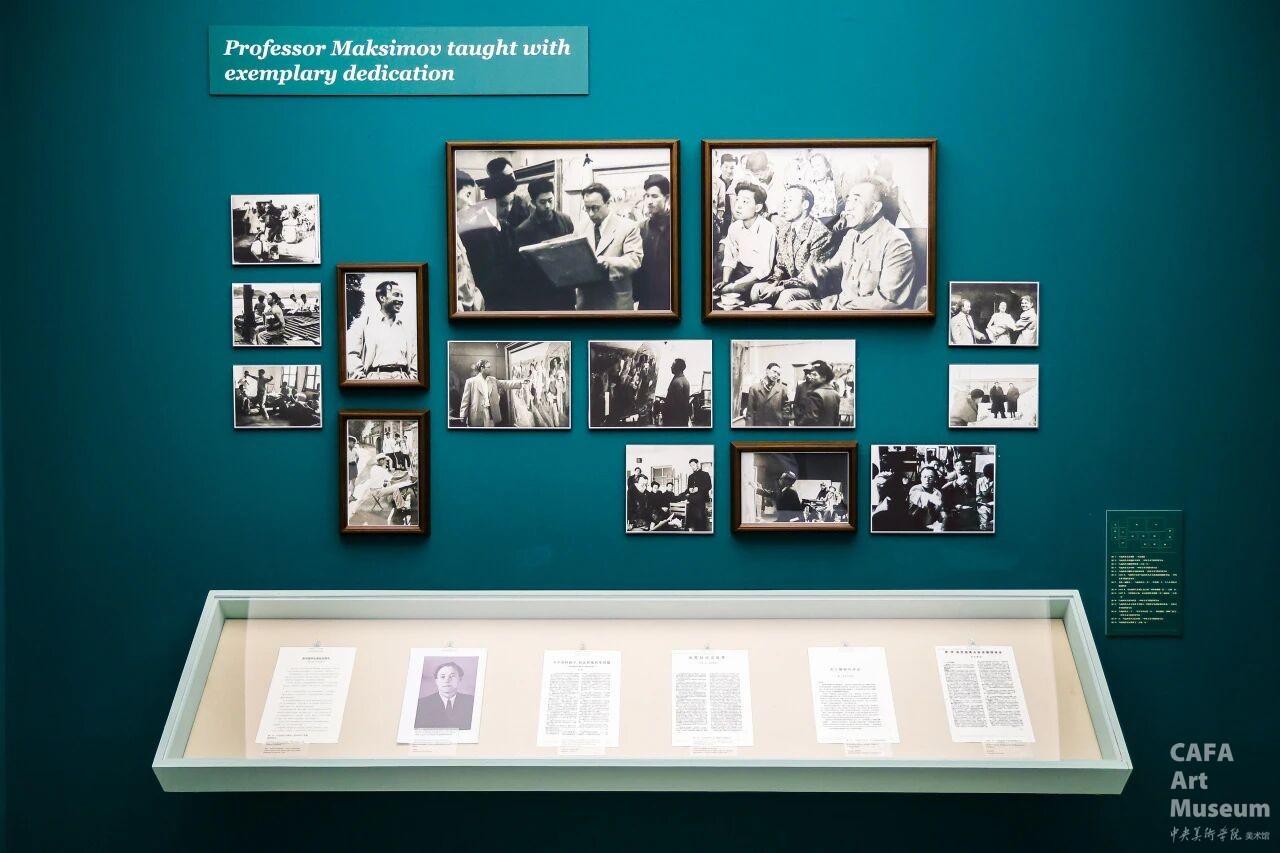
1764057482826064.jpg

1764057502708860.jpg

1764057522988295.jpg

1764057548788203.jpg

1764057608614535.jpg

1764057635300510.jpg


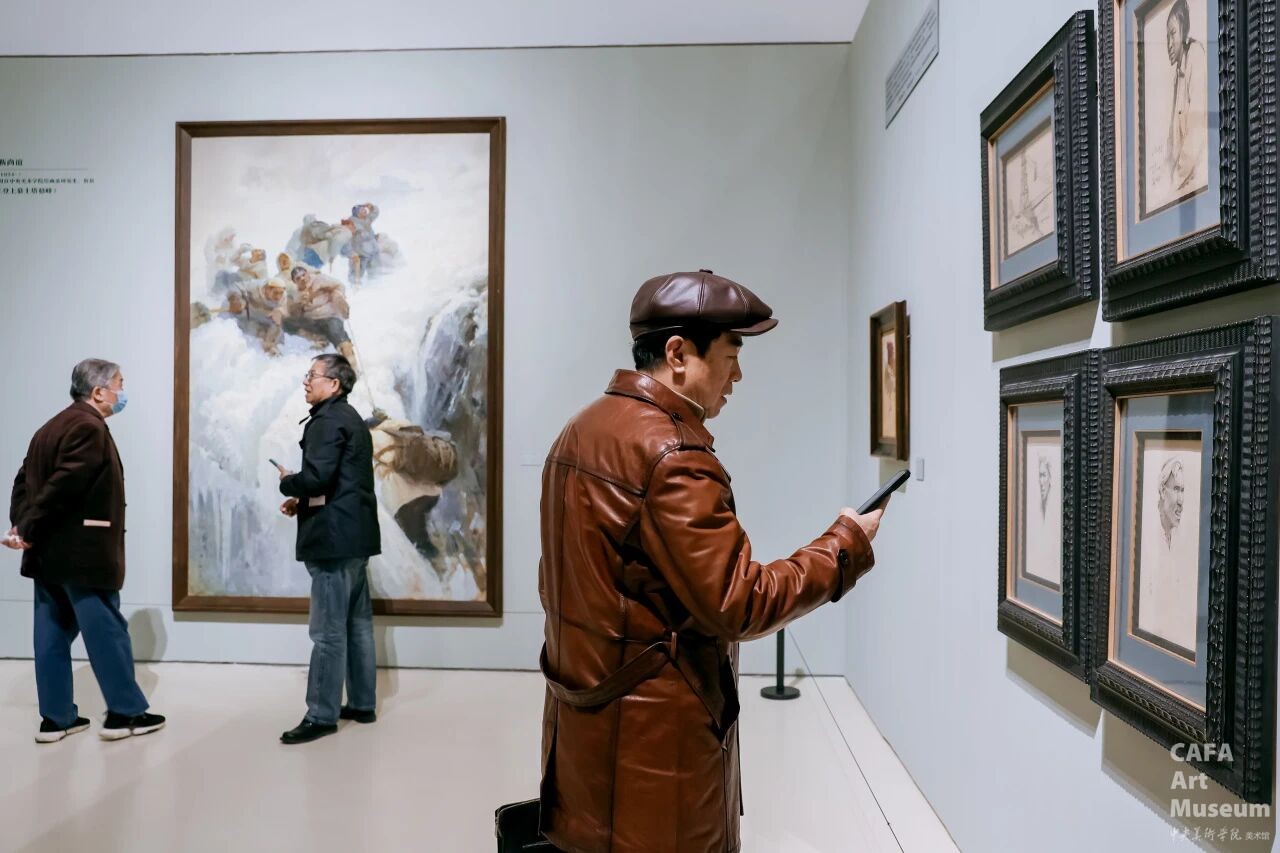
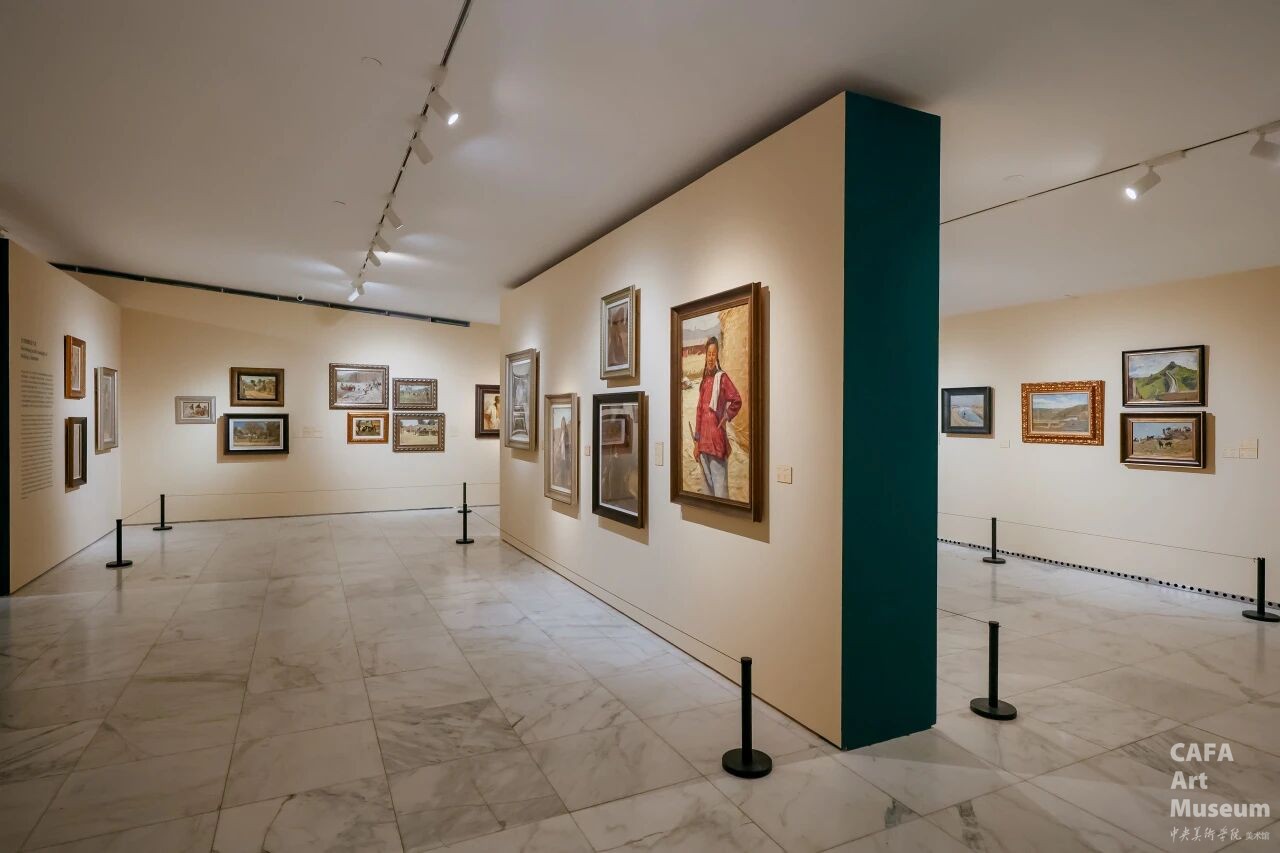
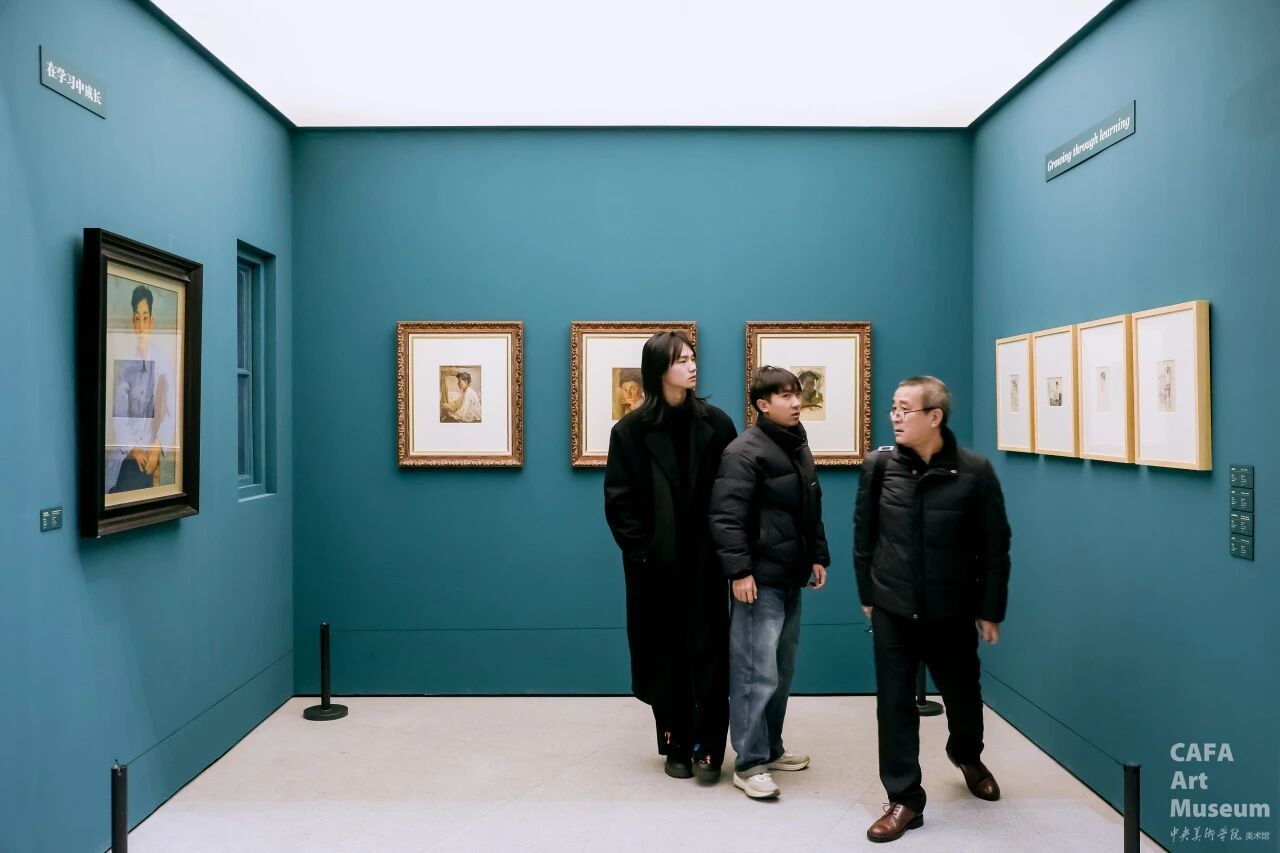
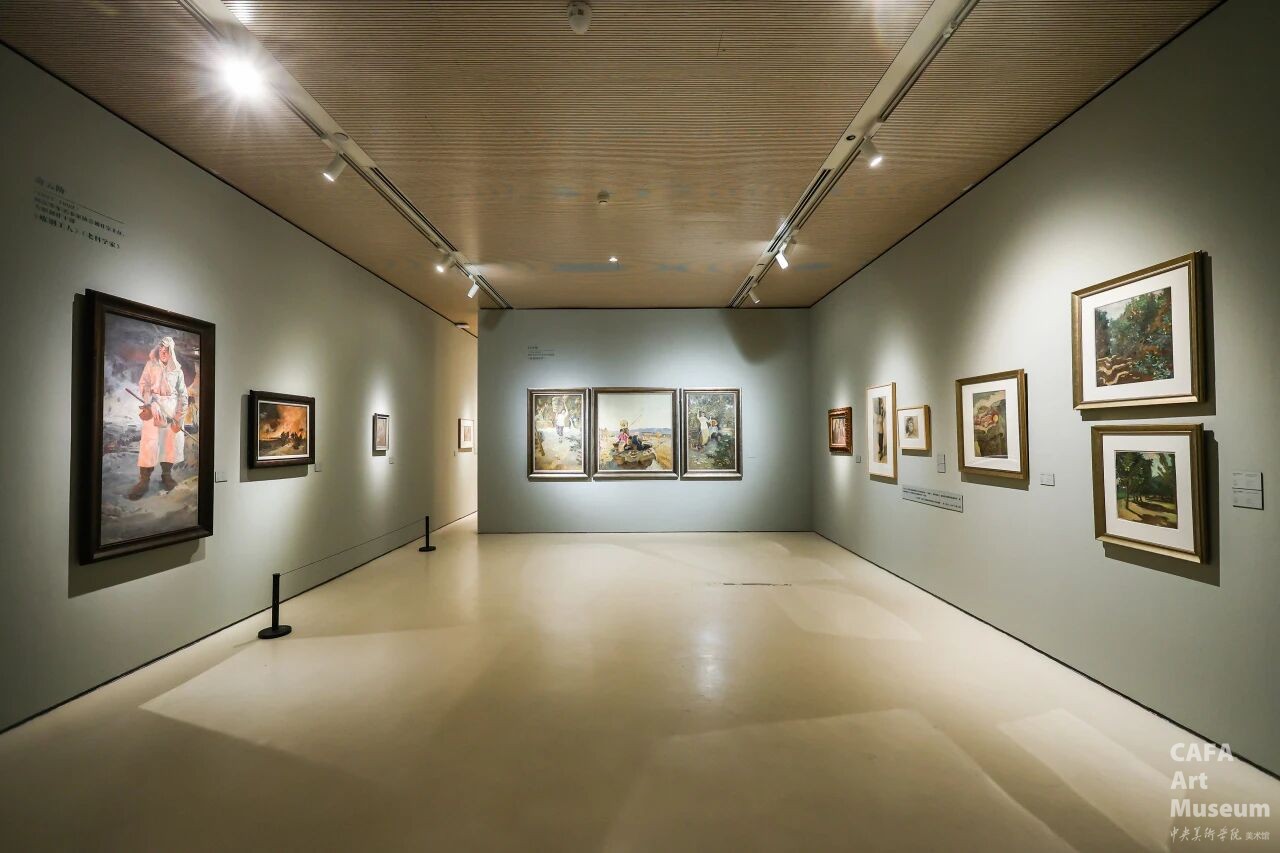
The second section is situated in Gallery 3A of the art museum. As the highlight and core of the exhibition, it consists of two parts—"Maximov in China" and "Graduation Creations and Manuscripts of the Maximov Class"—offering an in-depth look into the learning days of the Maximov Class. Through the collaborative efforts of all parties involved, the exhibition has finally brought together over 120 works from the Maximov Class era, including some pieces that were exhibited in Maximov’s 1957 personal exhibition, as well as graduation creations and manuscripts by the training class students. After nearly 70 years, these works are being displayed again in this retrospective exhibition, creating an atmosphere akin to a "reappearance of history."
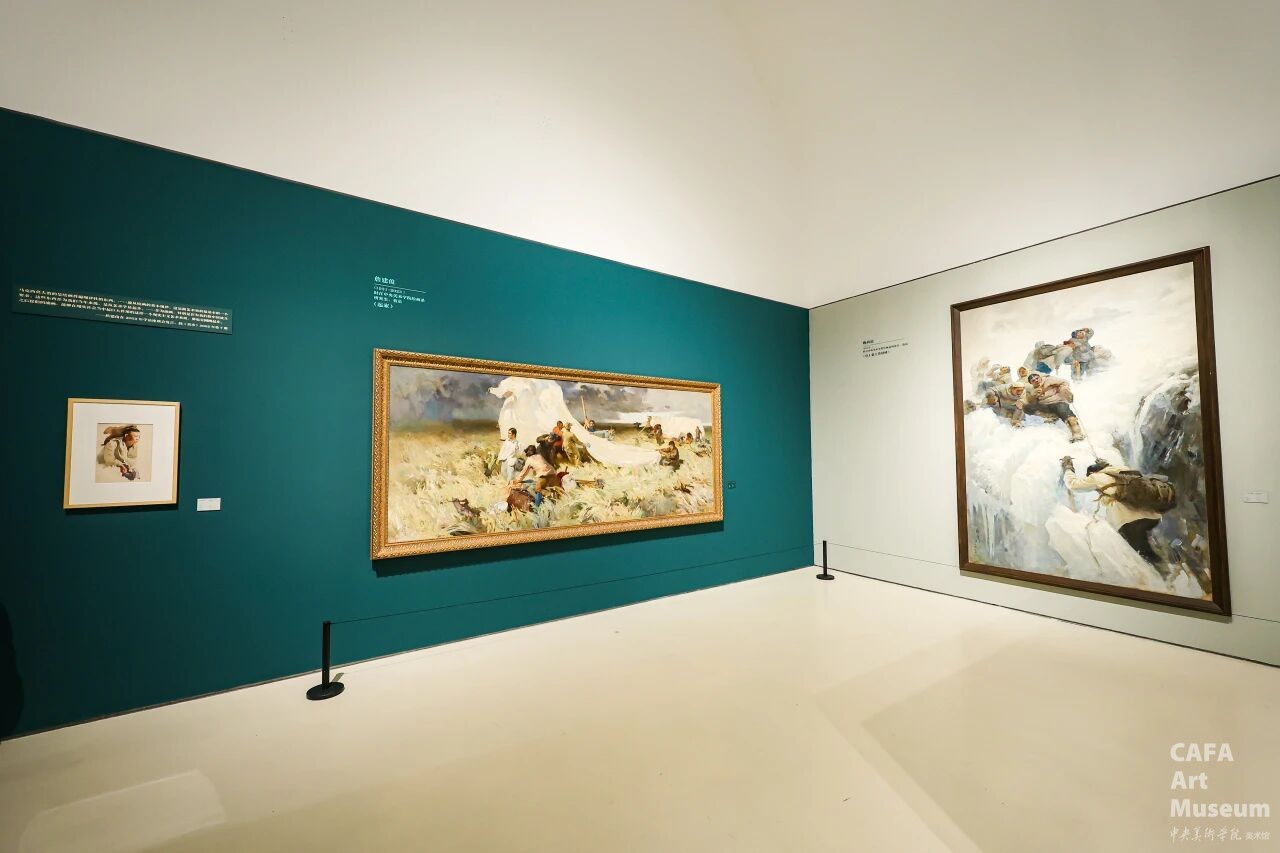
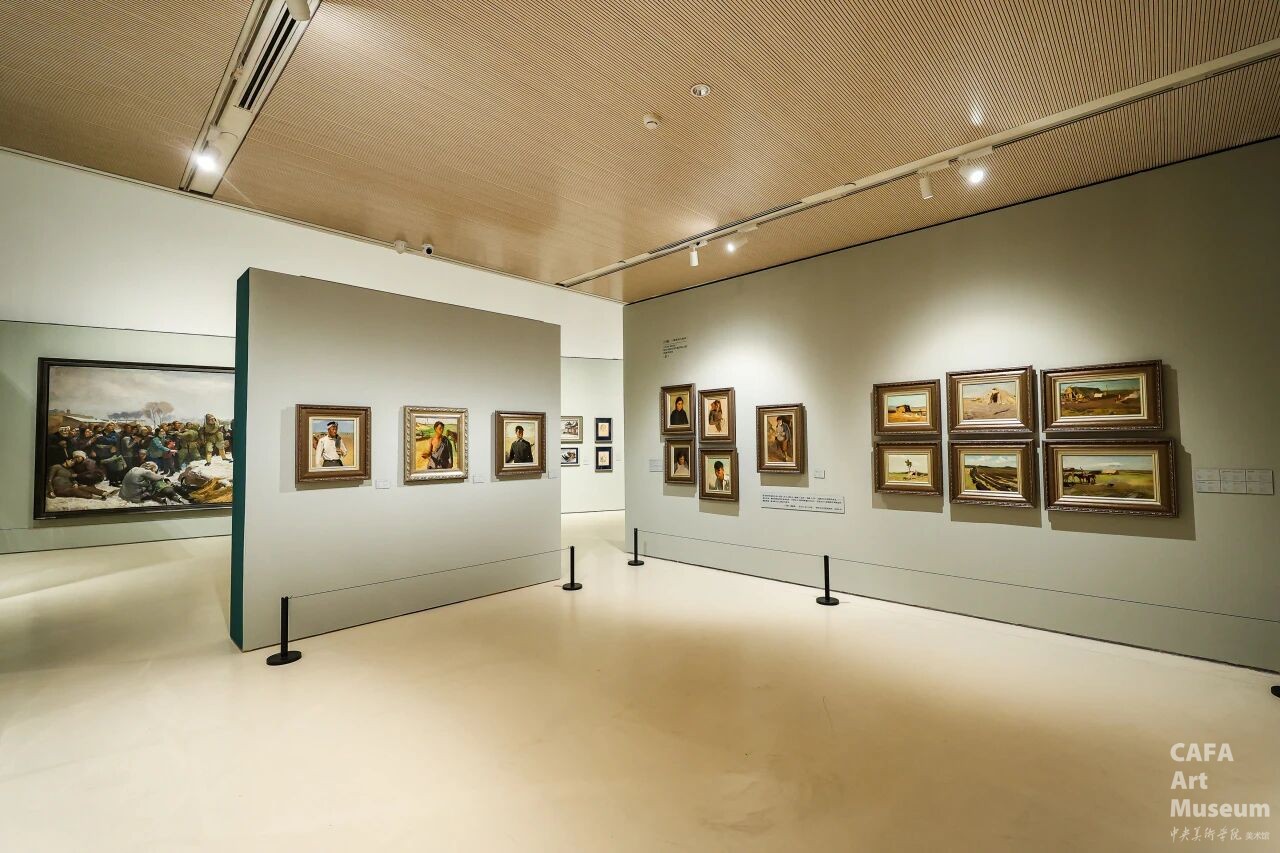
1764057705625763.jpg

1764057737438716.jpg

1764057743631335.jpg

1764057751625286.jpg

1764057795809799.jpg

1764057803101560.jpg


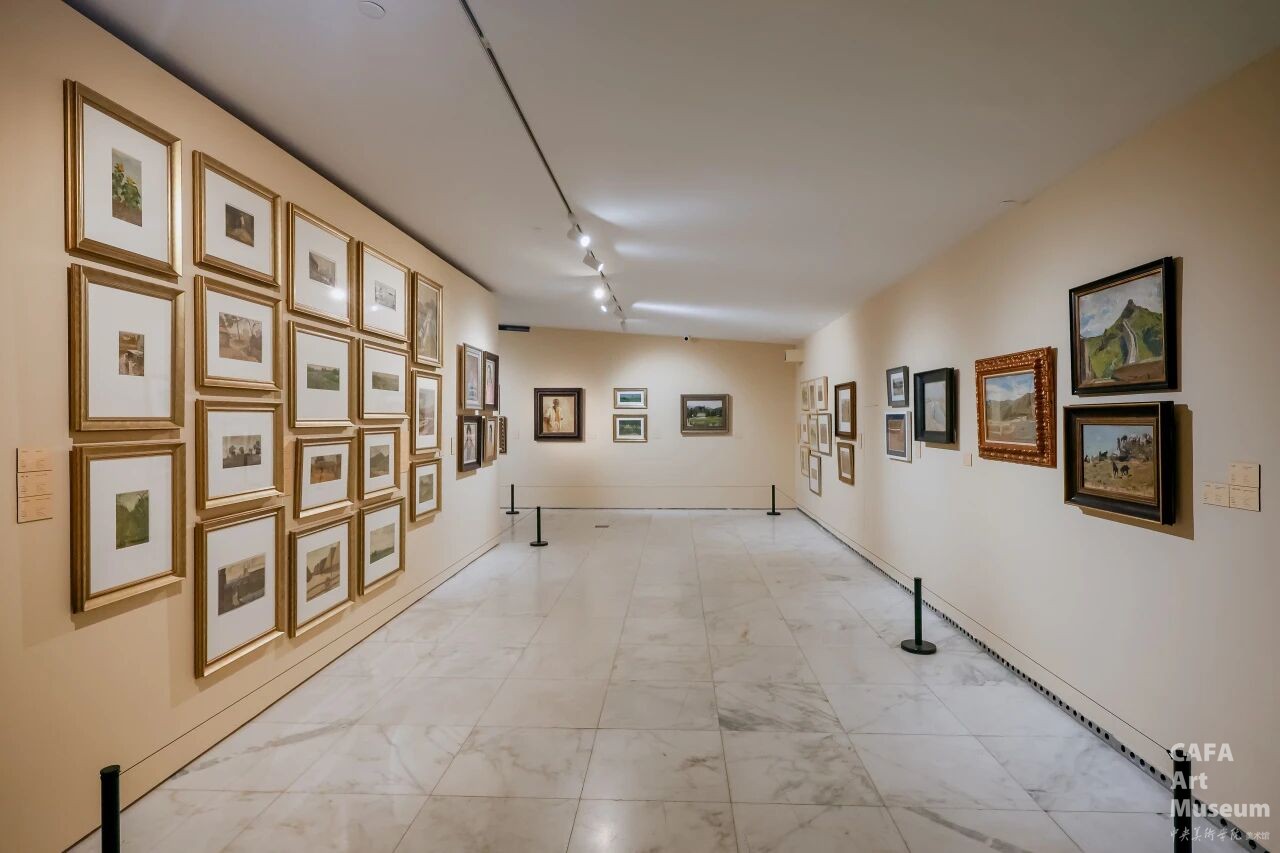
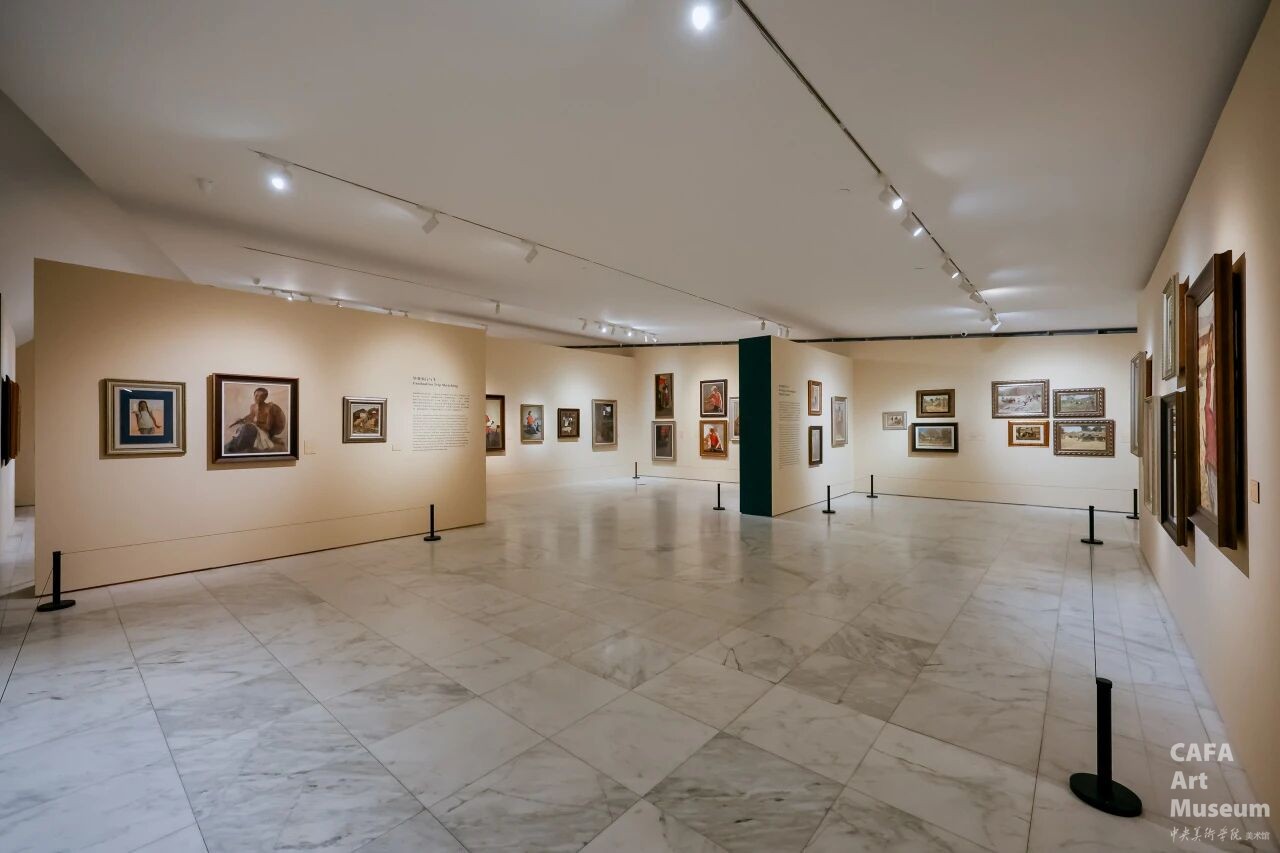
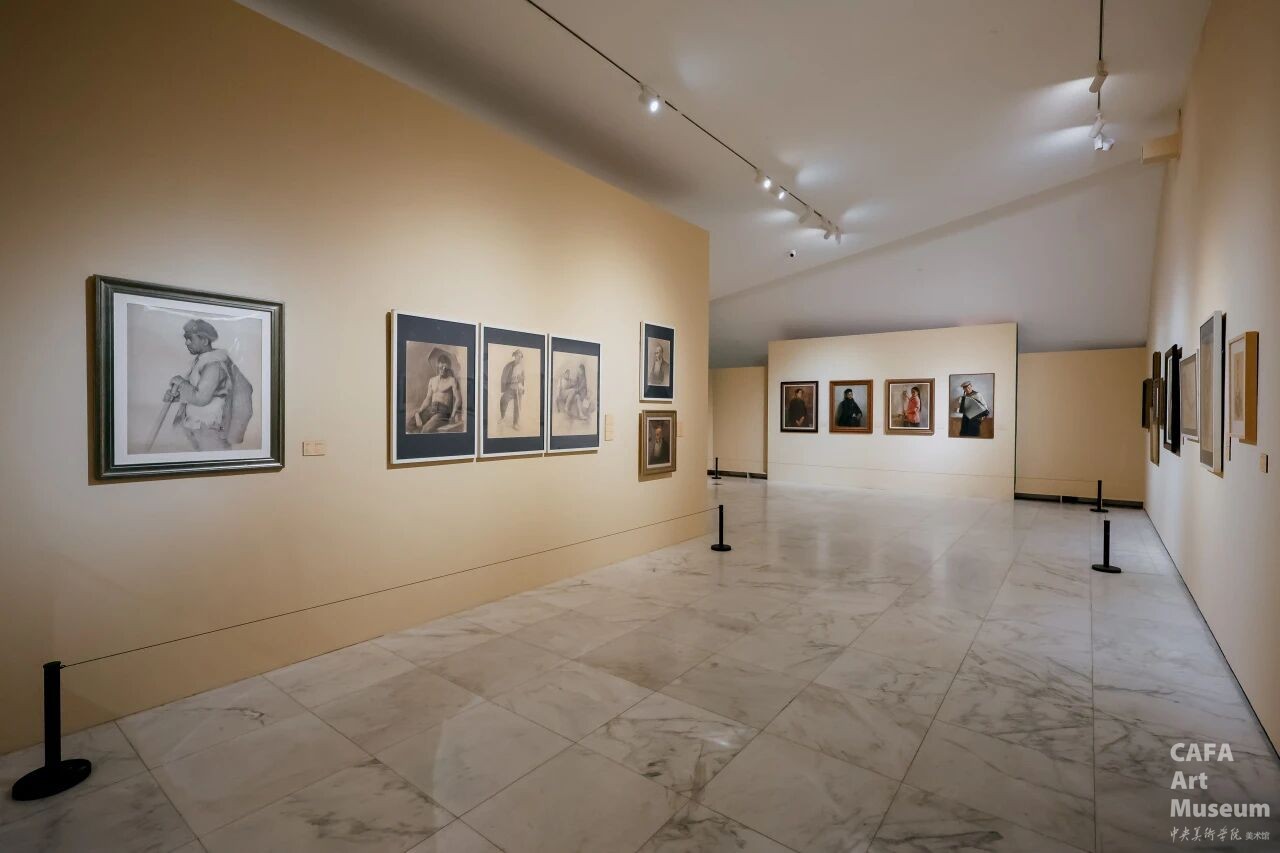
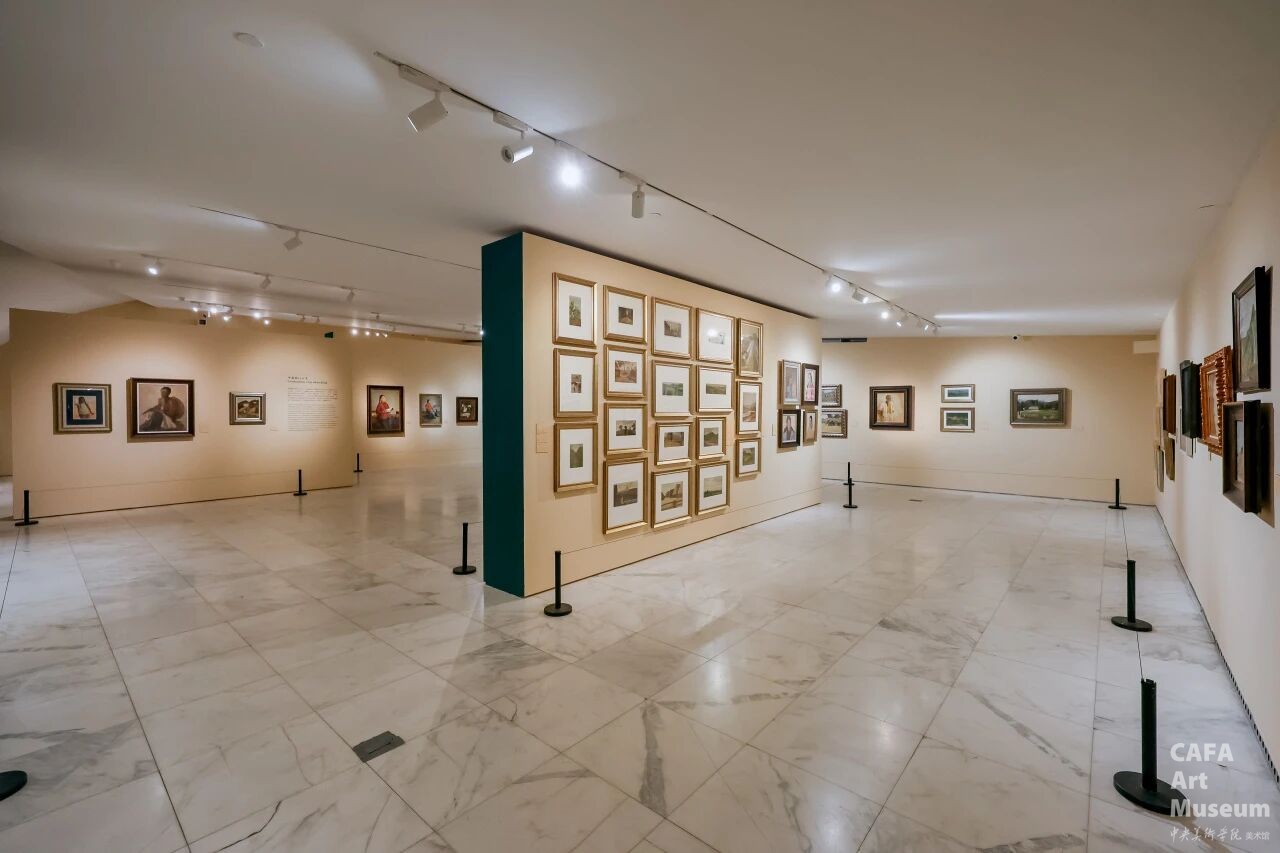
The third section is located in the exhibition hall on the 4th floor of the art museum. Comprising three segments—"Indoor Life Drawing in the U-Shaped Building," "Outdoor Life Drawing in the Sunlight of Beijing’s Suburbs," and "Life Drawing During Graduation Trips"—this section gathers more than 120 basic teaching assignments and outdoor life drawing studies created during the Maximov Class period. These works reflect the growth and achievements of the students, who received systematic foundational art education enlightenment—covering structure, outdoor light, composition, and even painterliness—under Maximov’s guidance.
1764057869740291.jpg

1764057904208849.jpg

1764057926260959.jpg

1764057950588715.jpg

1764057967879419.jpg

1764058010766630.jpg


This exhibition will run until January 3, 2026. We look forward to welcoming visitors to join us in stepping into the "time tunnel" of this 70-year historical context and exploring the foundational years of China’s modern oil painting education!
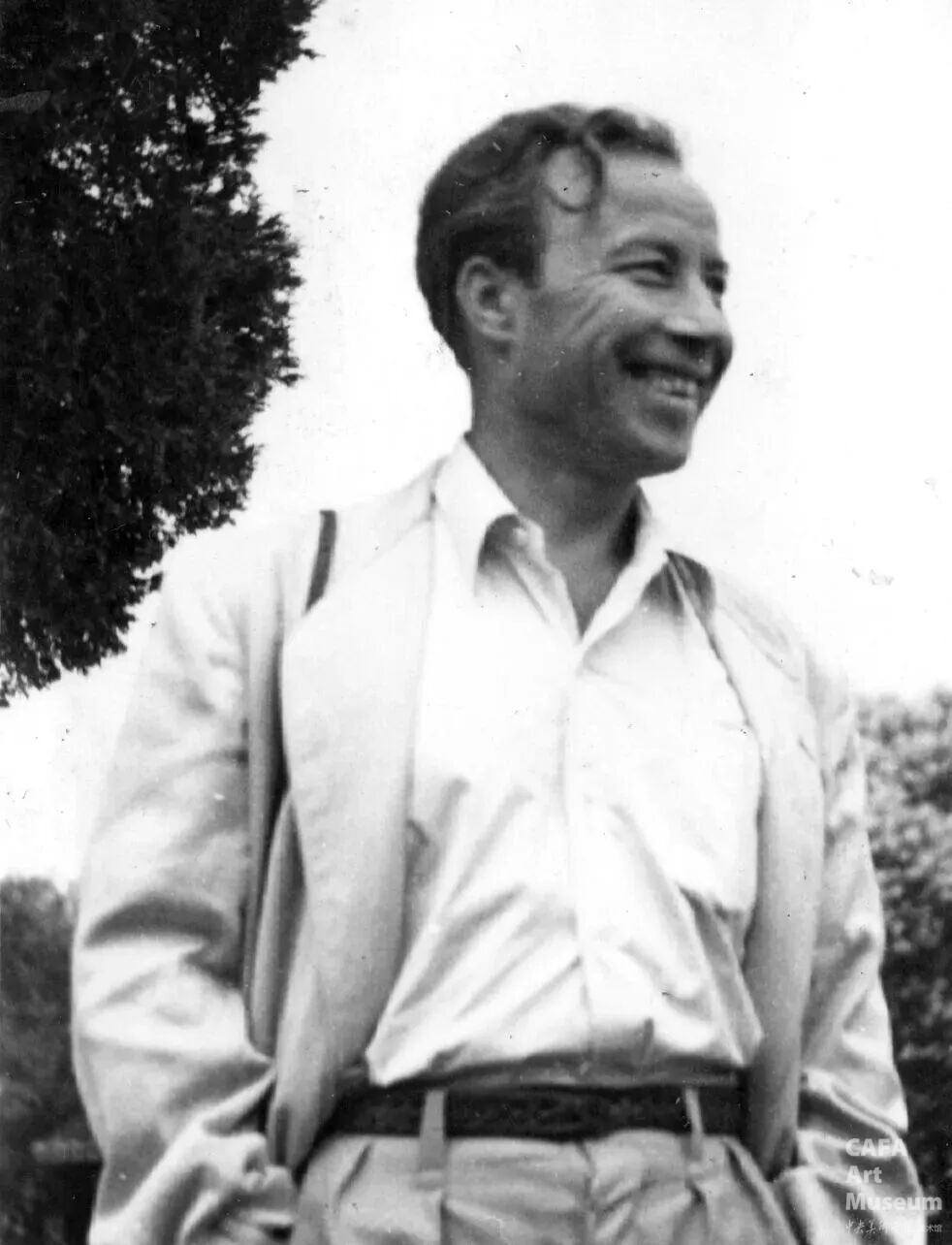

1764058106433775.jpg

Maximov in China (housed in the archives of the Central Academy of Fine Arts)
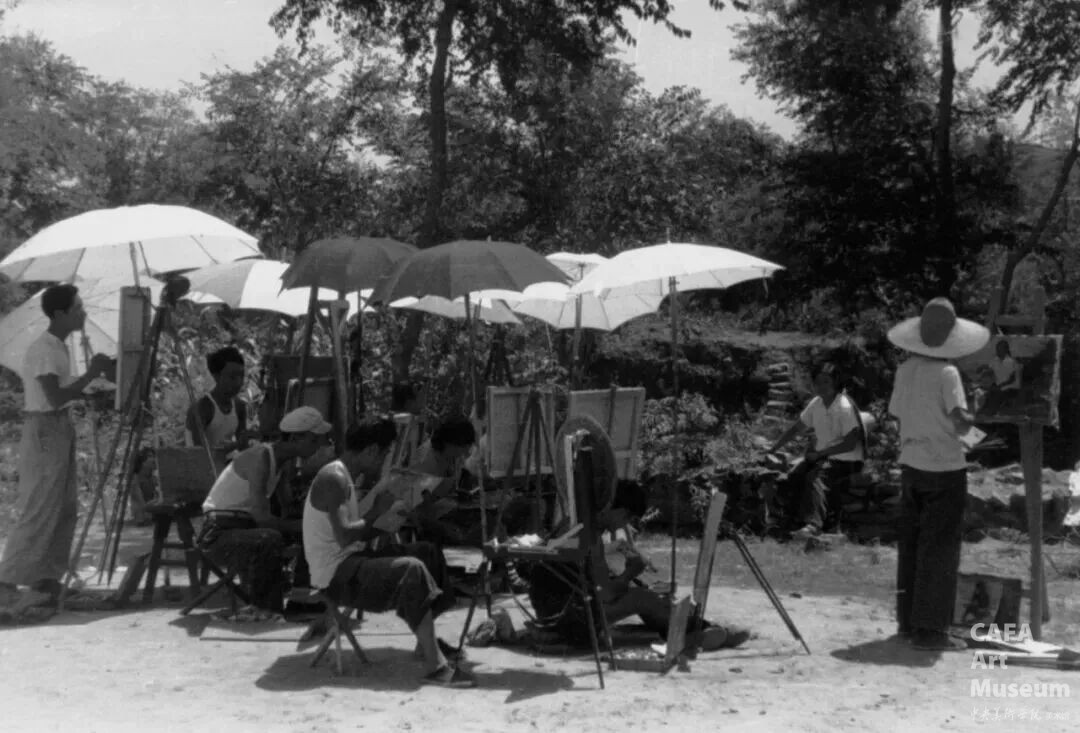

1764058147264177.jpg

In 1955, the Oil Painting Training Class conducted outdoor light painting exercises in the rural areas on the outskirts of Beijing
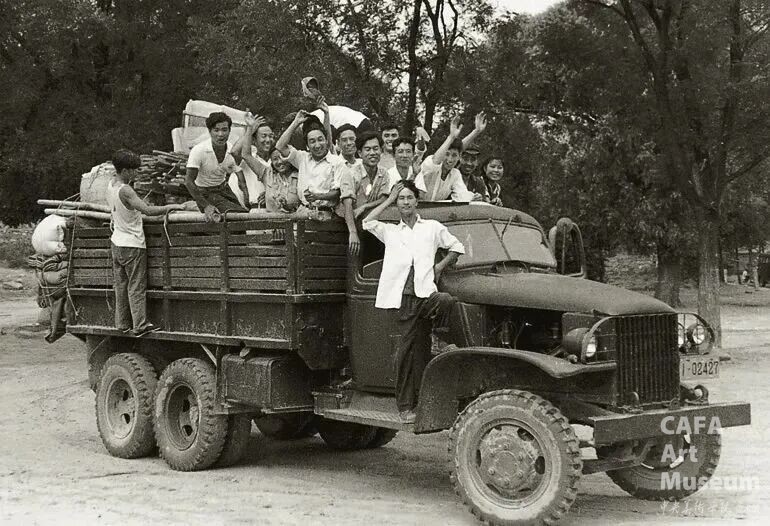

1764058235814458.jpg

In 1955, the students of the Oil Painting Training Class set off for the countryside (Preserved by Jin Shangyi)
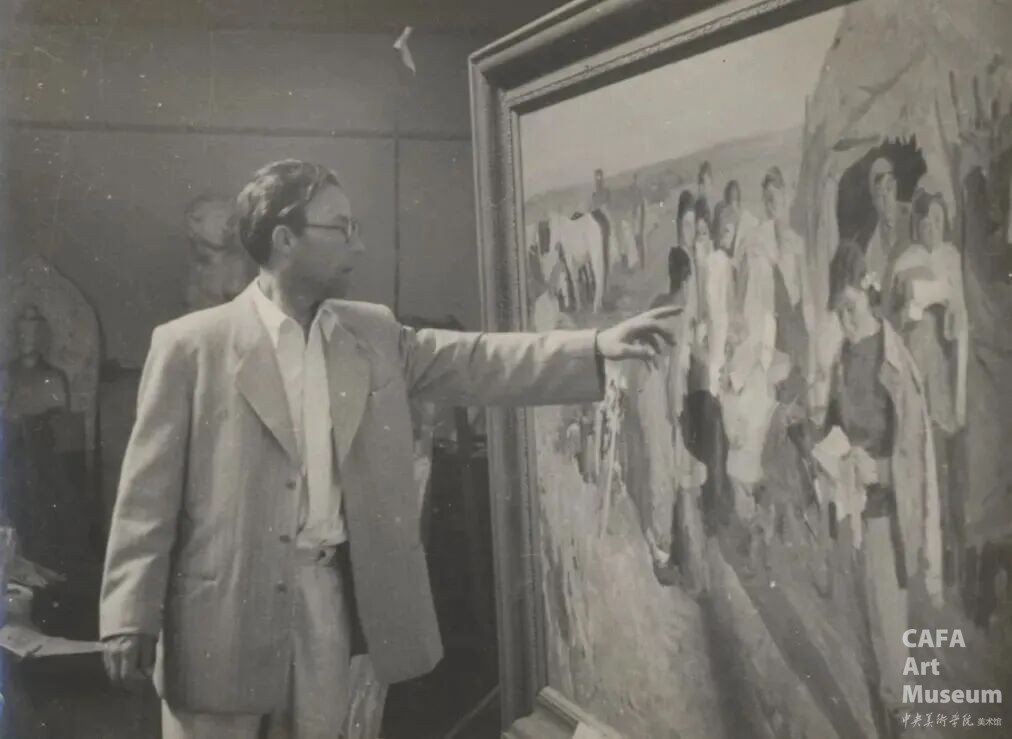
1764058300524856.jpg

In 1957, Teacher Ma reviewed Wang Chengyi's graduation work Letter during class (Preserved by Wang Chengyi)
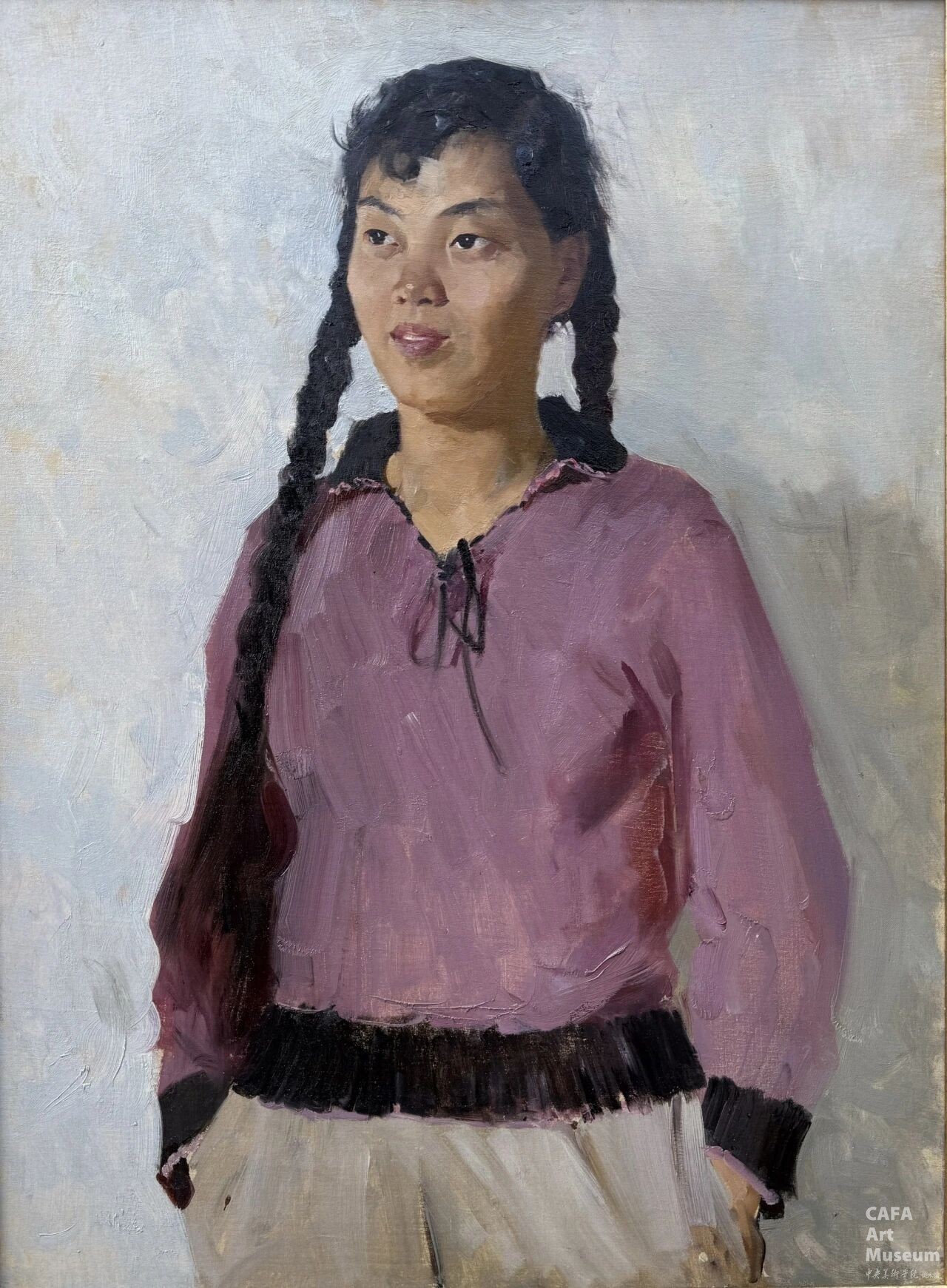

1764058349508914.jpg

Konstantin MaximovGirl in a Purple Sweater Oil on Canvas, 73×54cm, 1956, Collection of Cai Guoqiang
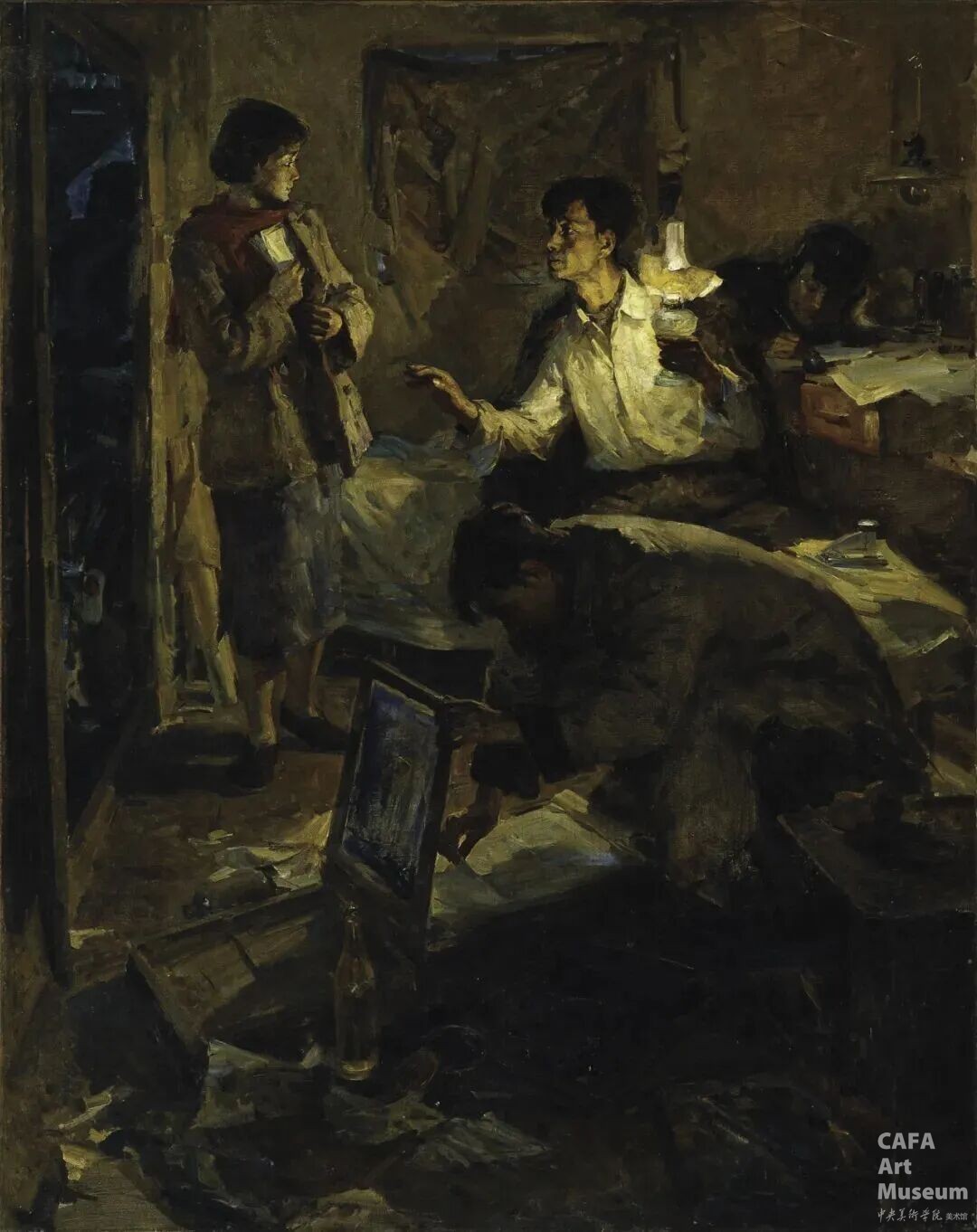
1764058777140532.jpg

Hou Yimin, Underground Worker  Oil on Canvas, 210×176cm, 1957, Collection of CAFA Art Museum
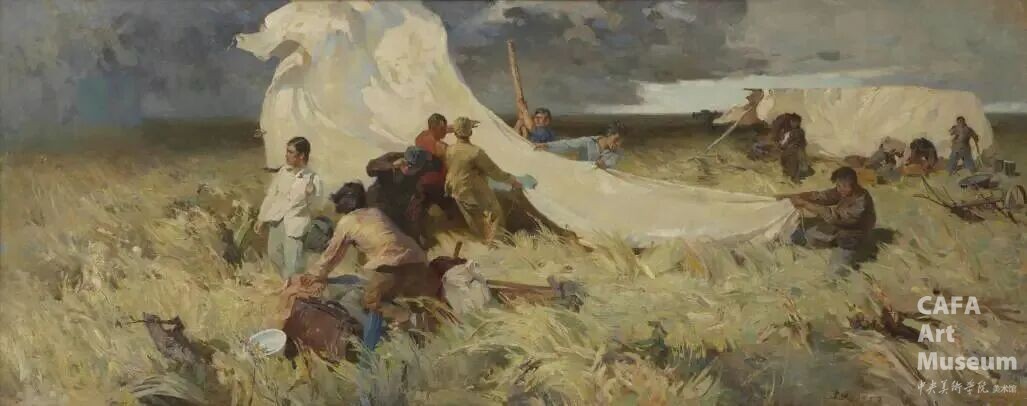
1764058843159099.jpg

Zhan Jianjun Starting Out Oil on Canvas, 140×348cm, 1957 Collection of CAFA Art Museum
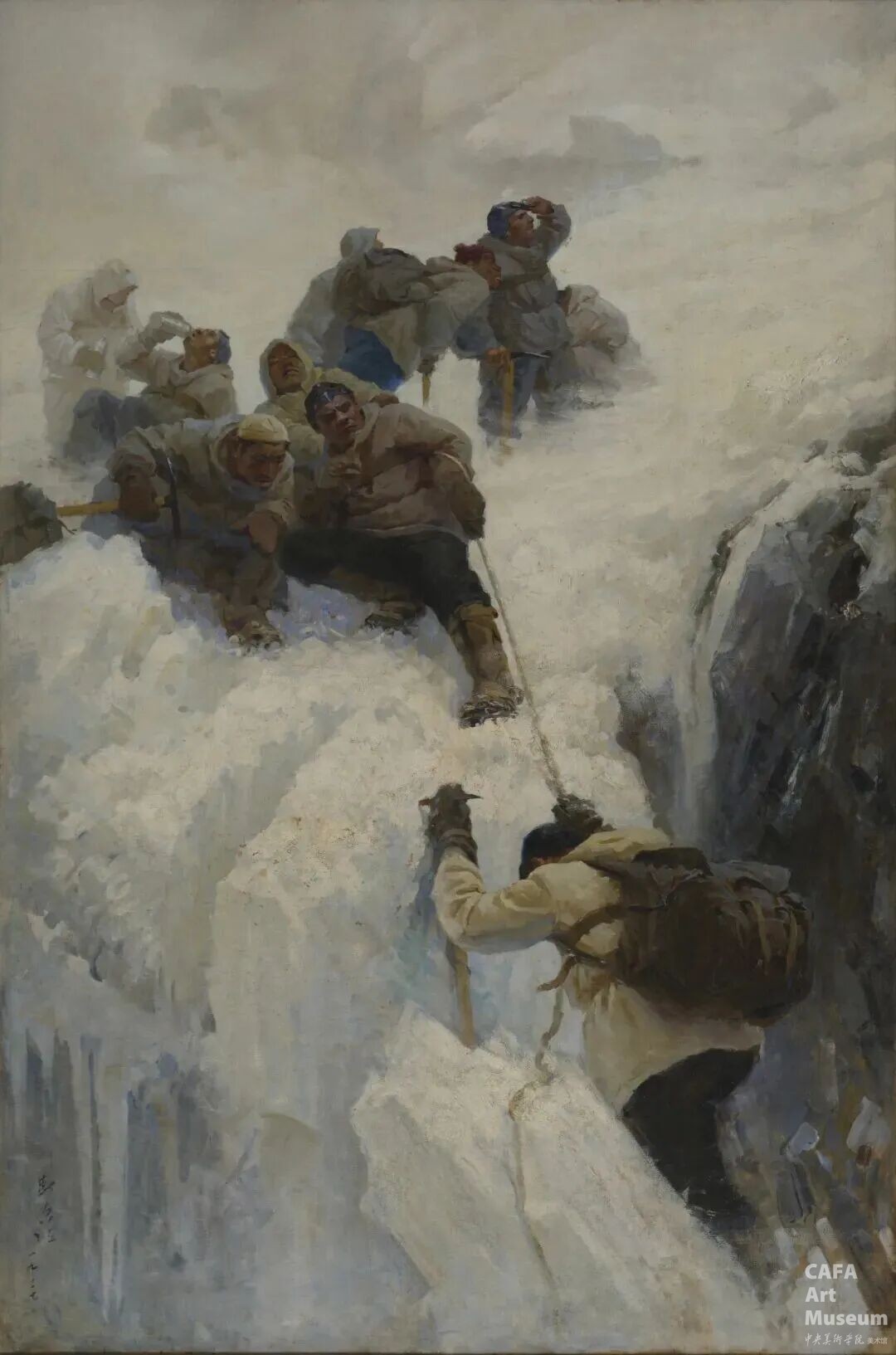
1764058865418572.jpg

Jin Shangyi Climbing Mount Muztagh Ata Oil on Canvas, 180×270cm, 1957, Institutional Collection
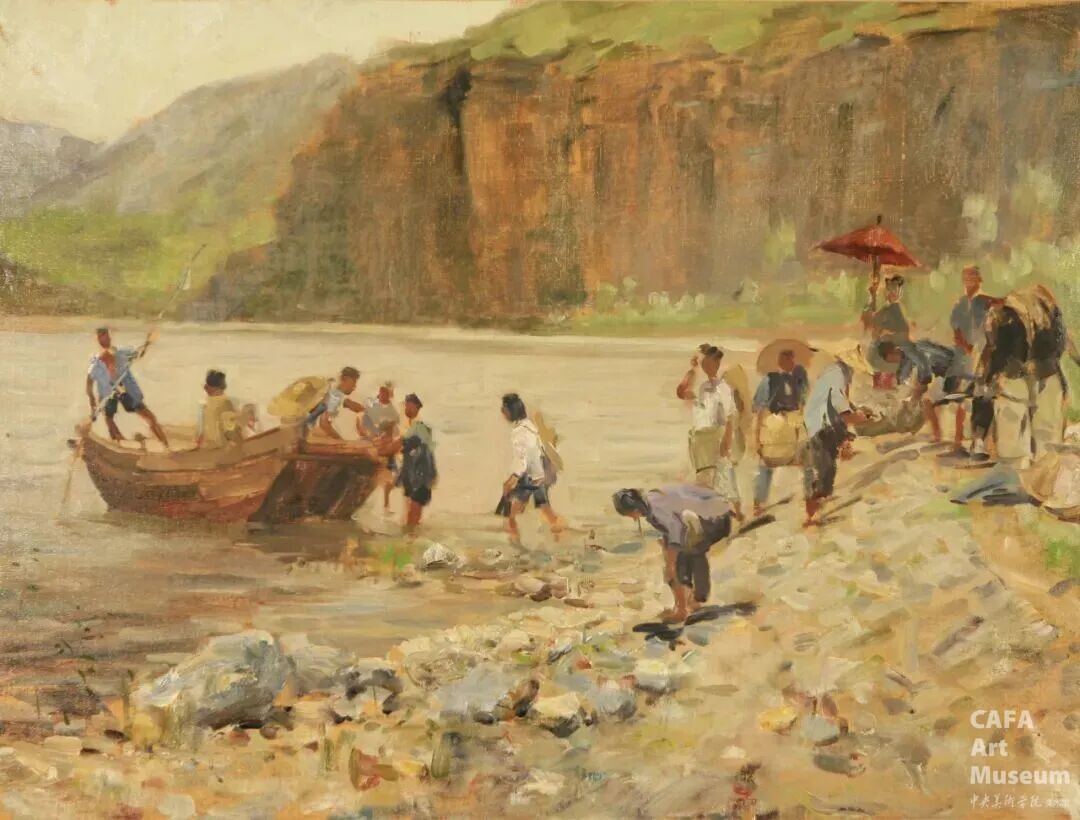
1764058894812756.jpg

Wei Chuanyi Oil Sketch (Going to Sea) Oil on Canvas, 49×65cm, 1955,Collection of CAFA Art Museum
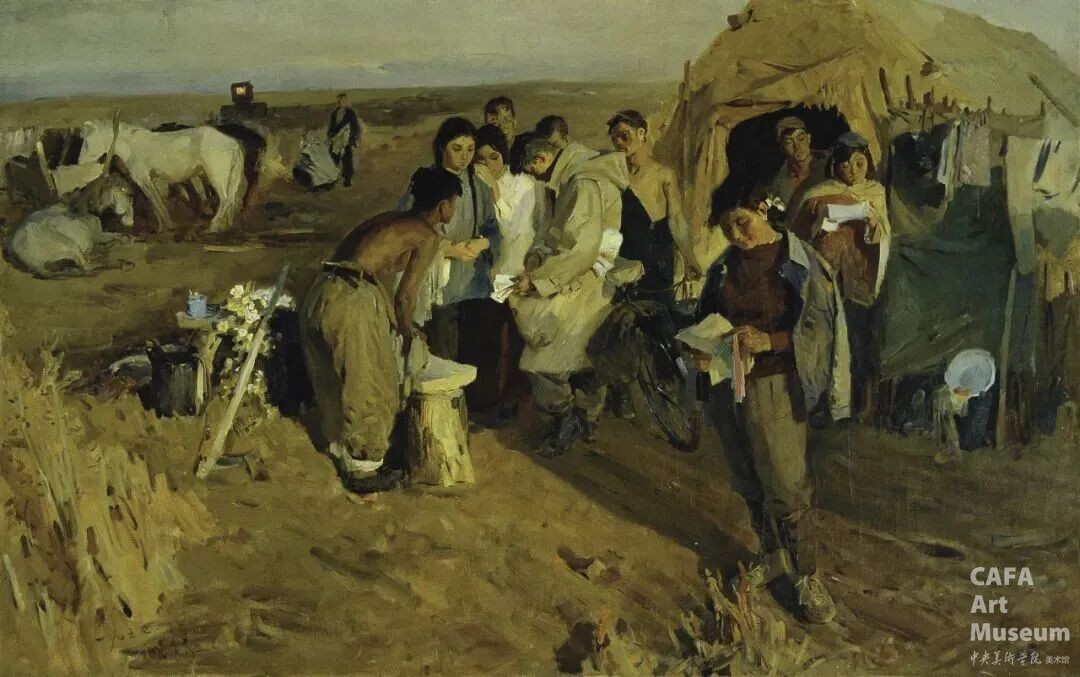
1764058917586163.jpg

Wang Chengyi A Letter from Afar Oil on Canvas, 144×228cm, 1957,Collection of CAFA Art Museum
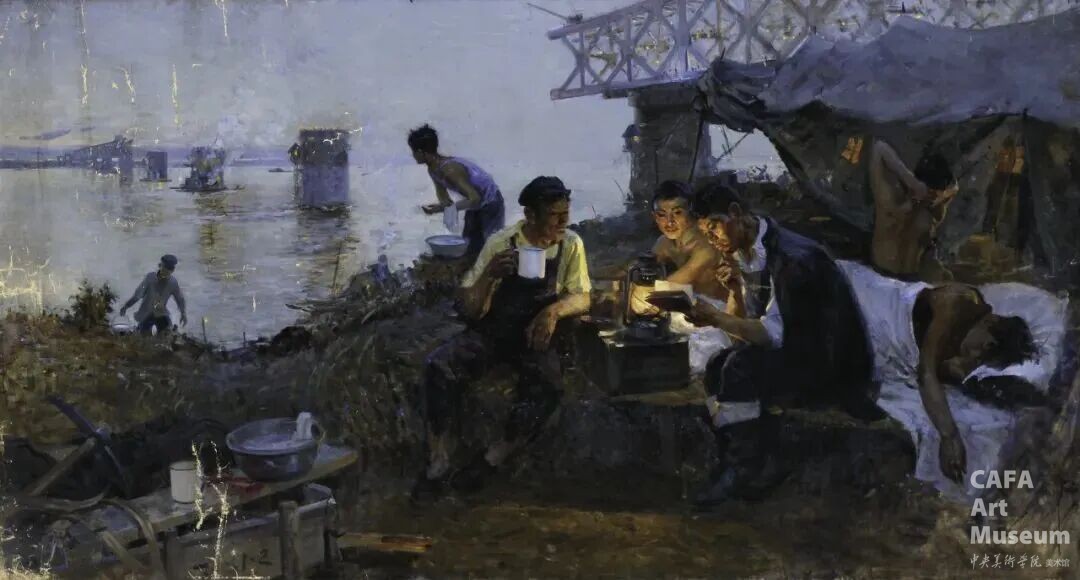
1764058964328454.jpg


Yuan Hao Dawn Over the Yangtze River Oil on Canvas, 154×283cm, 1957Collection of CAFA Art Museum
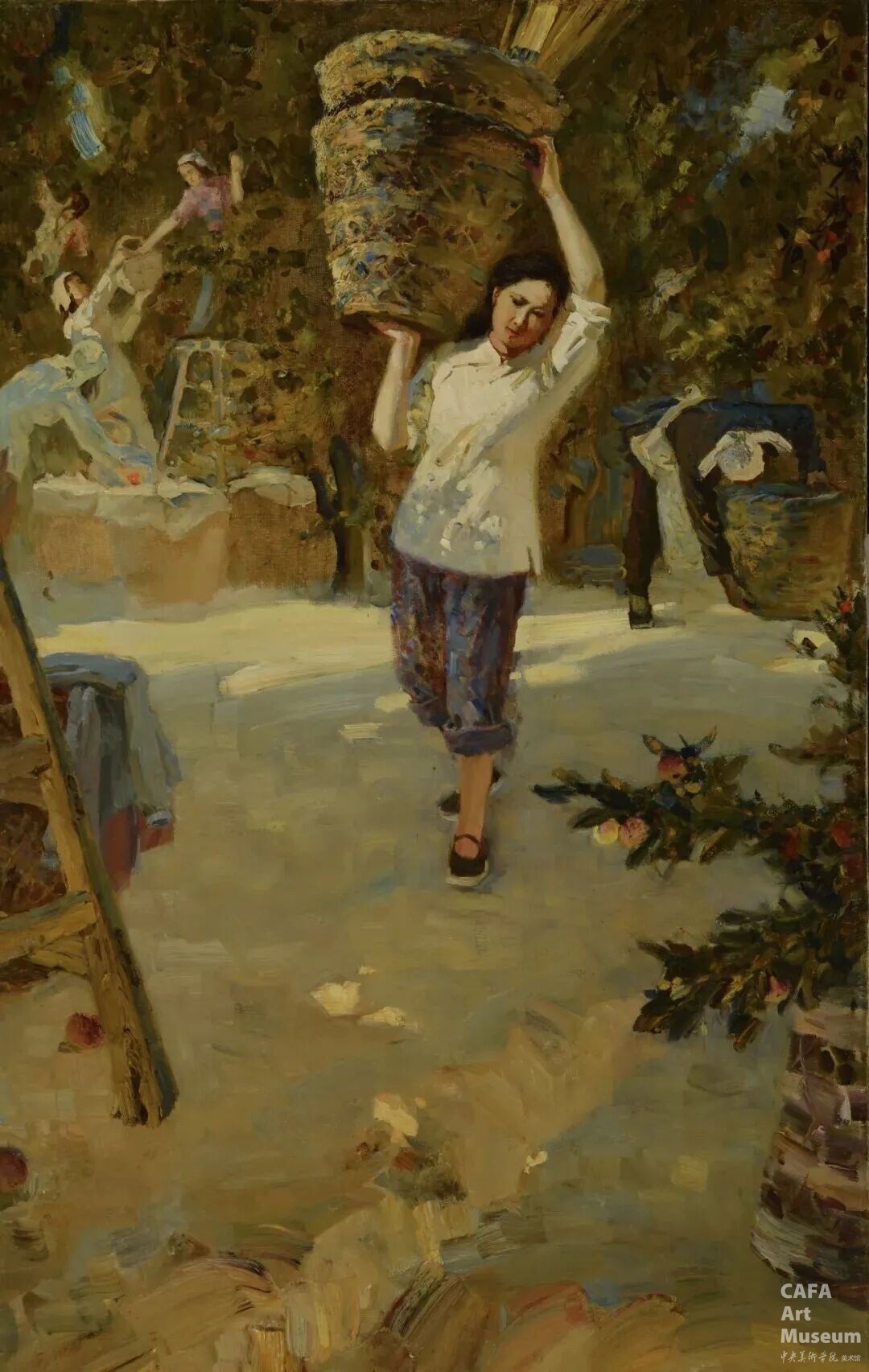
1764058991885570.jpg

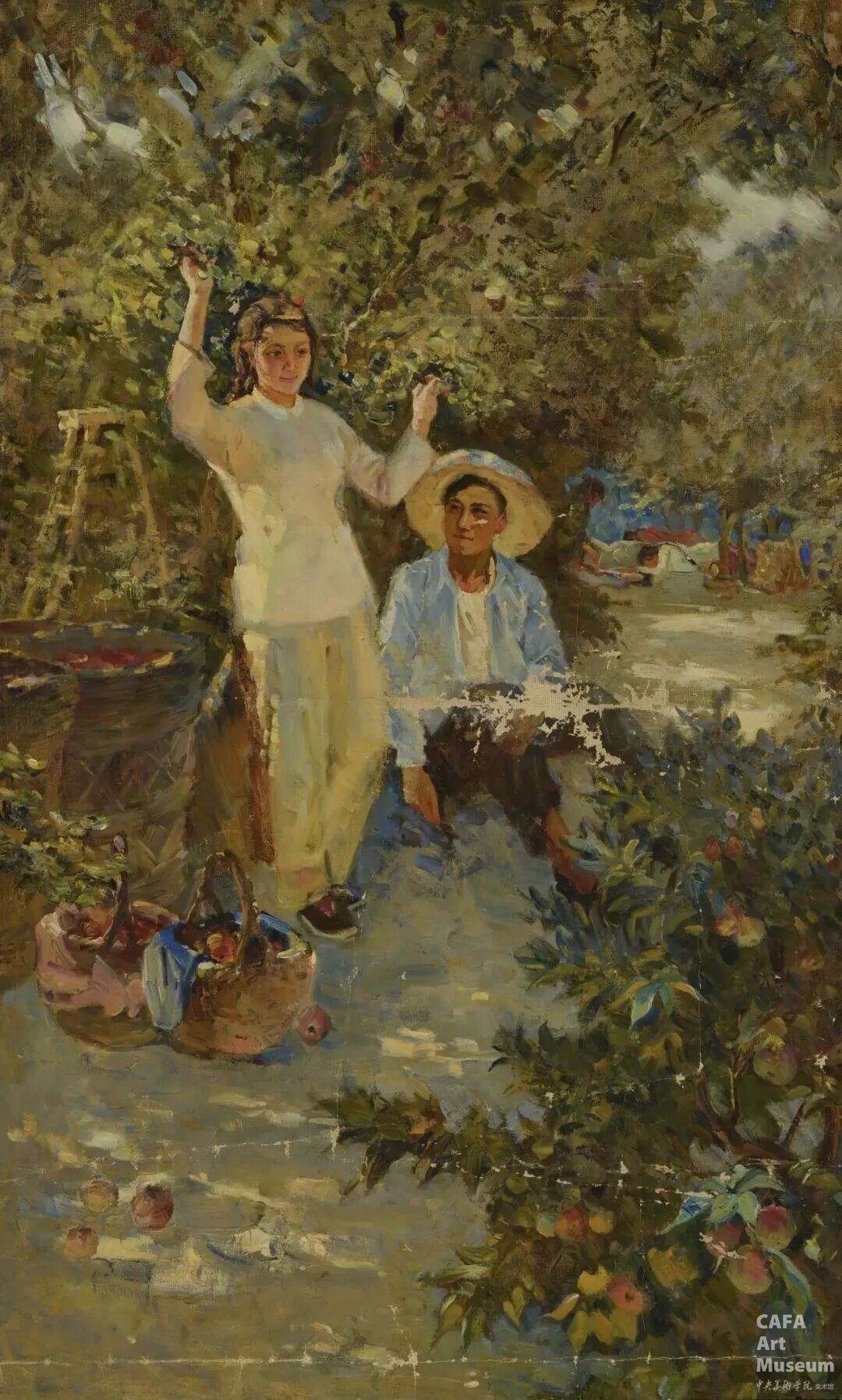
Ren Mengzhang Picking Apples (first of the triptych) Oil on Canvas, 120×115.5cm, 1957, Collection of CAFA Art Museum

1764059013283041.jpg

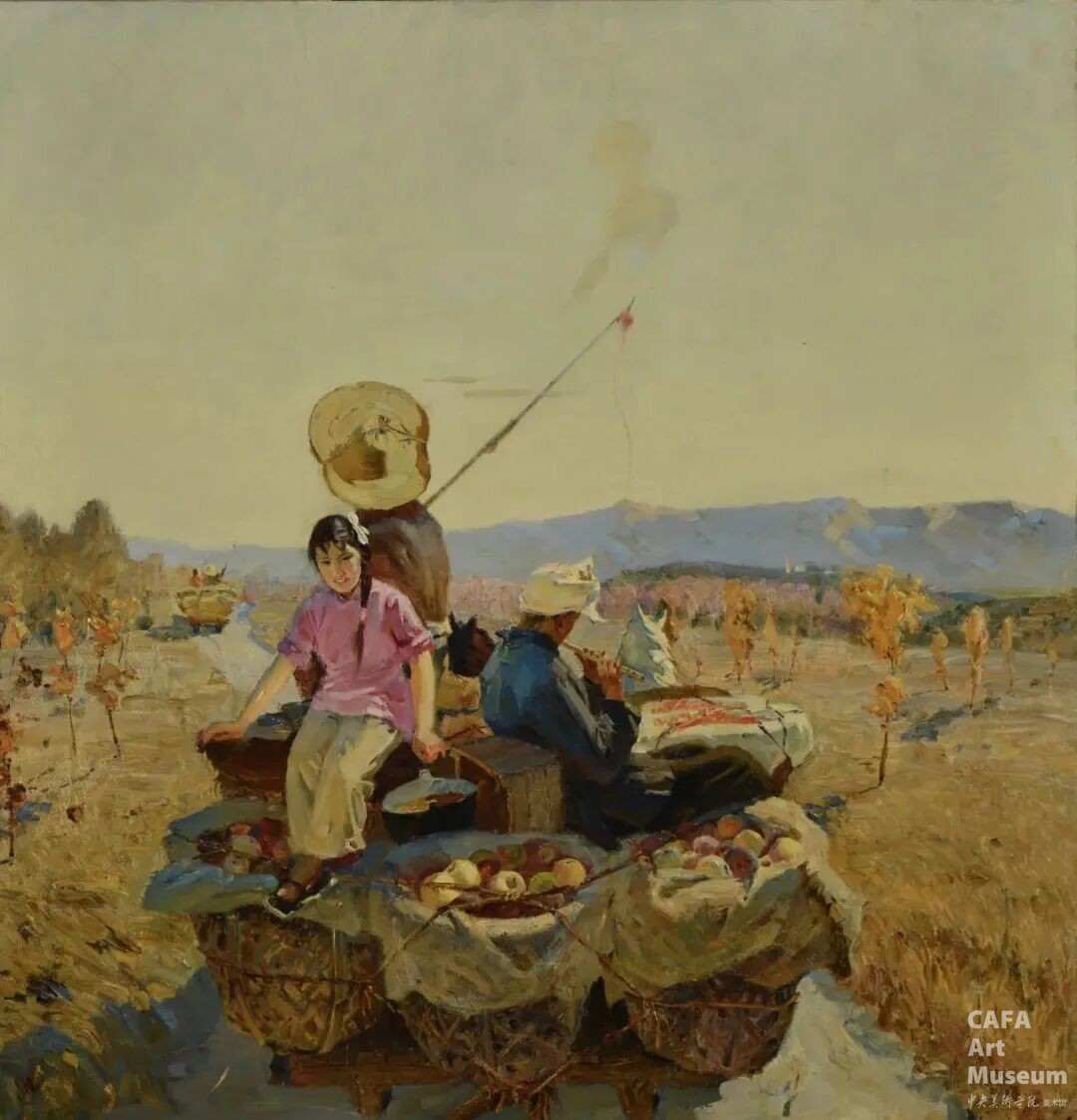
Ren Mengzhang Picking Apples (second of the triptych) Oil on Canvas, 120×115.5cm, 1957, Collection of CAFA Art Museum

1764059043828433.jpg

Ren Mengzhang Picking Apples (third of the triptych) Oil on Canvas, 120×115.5cm, 1957, Collection of CAFA Art Museum
1764059064997721.jpg

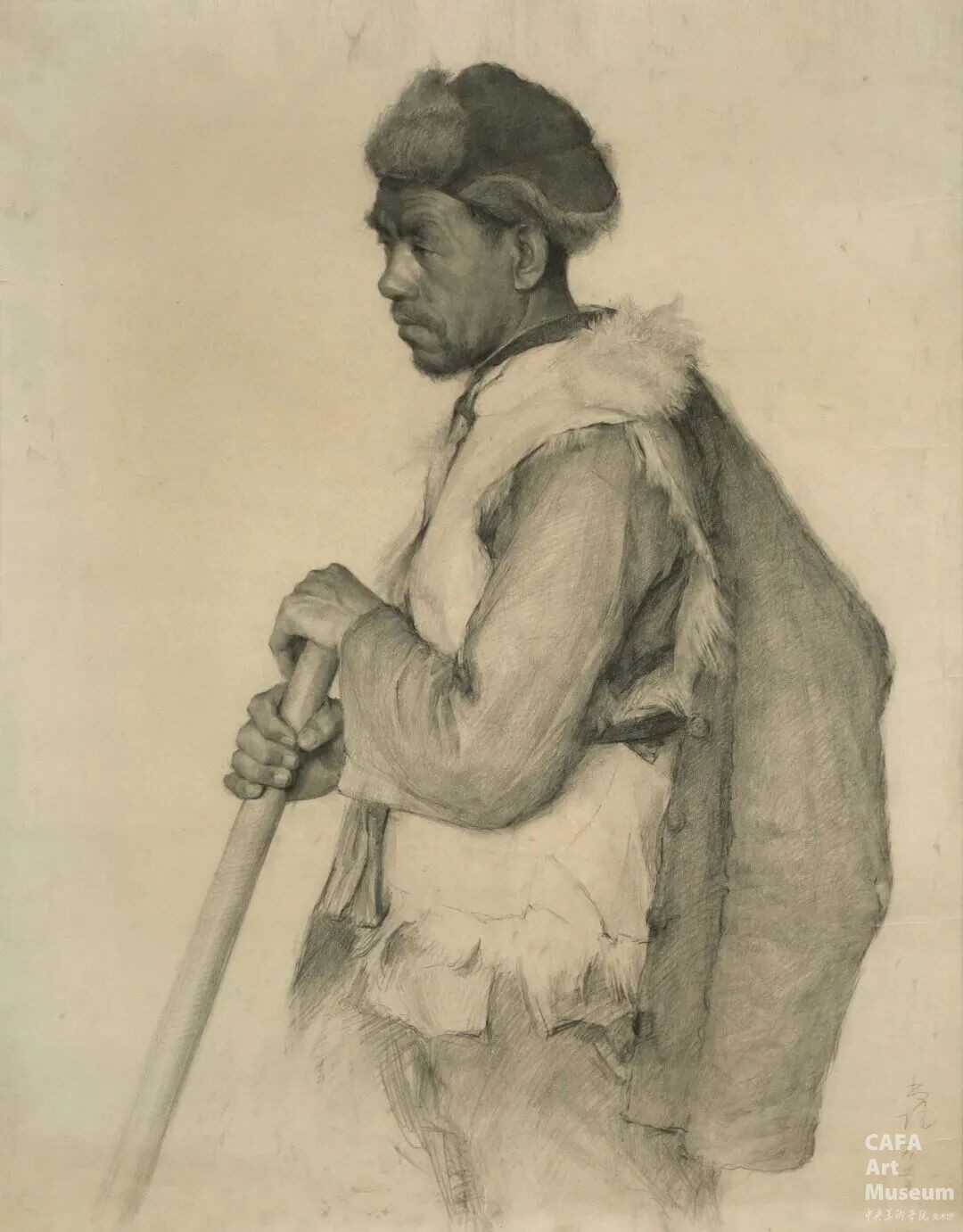
Jin Shangyi The Elder with a Walking Stick pencil on paper, 76.1×61.3cm, 1955, collection of CAFA Art Museum

1764058726865643.jpg

Imported Oil Painting-- A Retrospective Exhibition Of The Maksimov Oil Painting Training Program At CAFA(1955-1957)


Exhibition Dates: November 15, 2025 – January 3, 2026

Venue: Exhibition Halls on 1F / 3A / 4F, CAFA Art Museum


Host Institution: Central Academy of Fine Arts

Undertaking Institution: CAFA Art Museum


General Advisor: Xu Yang

Academic Director: Lin Mao

Coordinating Directors: Wang Xiaolin, Lü Pinjing, Wu Qiang, Pan Chenghui


Curators: Jin Jun, Cao Qinghui

Chief Curatorial Supervisor: Han Wenchao

Curatorial Coordinators: Gao Gao, Hai Jun

Curatorial Executives: Li Yaochen, Wang Jing

Design Director: Ji Yujie


Documentation Support: Cong Tao

Exhibition Coordination: Liu Xiyan, Yi Yue

Collection Management: Xu Yan, Dou Tianwei, Wang Chunling, Ma Liang, Cui Ranran, Li Wei, Mei Qi, Jiang Nan

Design Assistant: Min Zhiyi, He Yu, Chen Zhuo

Exhibition Management: Su Shicun, Jing Peng, Lü Zhifa

Media Promotion: He Yisha, Wu Jing, He Yifei, Du Yinzhu, Ding Yi

Public Education: Xiao Baozhen, Geng Jinghua, Wang Jun, Yao Yiqun, Liang Wen, Xi Huawei

Development & Promotion: Sun Wei, Yi Yi, Jin Jianru, Kou Lei, Liu Xingling

Administrative Support: Jiang Siyu, Yue Junyao, Zhang Qian, Guo Xu, Chen Xiaohua

Financial Affairs: Yang Liu, Men Jing

Exhibition Assistants: Luo Wanting, Huang Yaozi, Zhang Keke, Zong Wentian, Li Ze


Acknowledgments

Chen Beixin, Jin Shangyi, Gu Ancun, Feng Shiguang, Gao Tianxiong, Cai Guoqiang, Chen He, 

Hou Shanhu, Lin Lin, Luo Qunyi, Ren Hui, Song Xianzhen, Tian Xiaodong, Wang Xueqing, Wei Xingtao, 

Wu Xiaochuan, Wu Yongfan, Xu Dihua, Yang Yi, Zhang Fan, Zhan Ying, 

Maoyuan Hongzhai Culture, Chongqing Chinese Contemporary Art Museum, 

Archives of the Central Academy of Fine Arts, Library of the Central Academy of Fine Arts


Editor-in-Chief / He Yisha

Editor / Du Yinzhu


Child Public Education Reservation Form

I agree to the Group Visit Agreement and Statement Please agree to the Group Visit Agreement.
Submit

Adult Public Education Event Reservation Form

I agree to the Group Visit Agreement and Statement Please agree to the Group Visit Agreement.
Sumbit

Group Public Education Event Reservation Form

I agree to the Group Visit Agreement and Statement Please agree to the Group Visit Agreement.
Submit

Group Visit Agreement
and Statement

CAFA Art Museum Publication Authorization Agreement

I fully agree to CAFA Art Museum (CAFAM) submitting to CAFA for publication the images, pictures, texts, writings, and event products (such as works created during participation in workshops) related to me from my participation in public events (including museum member events) organized by the CAFA Art Museum Public Education Department. CAFA can publish these materials by electronic, web, or other digital means, and I hereby agree to be included in the China Knowledge Resource Bank, the CAFA Database, the CAFA Art Museum Database, and related data, documentation, and filing institutions and platforms. Regarding their use in CAFA and dissemination on the internet, I agree to make use of these rights according to the stated Rules.

CAFA Art Museum Event Safety Disclaimer

Article I

This event was organized on the principles of fairness, impartiality, and voluntary participation and withdrawal. Participants undertake all risk and liability for themselves. All events have risks, and participants must be aware of the risks related to their chosen event.

Article II

Event participants must abide by the laws and regulations of the People’s Republic of China, as well as moral and ethical norms. All participants must demonstrate good character, respect for others, friendship, and a willingness to help others.

Article III

Event participants should be adults (people 18 years or older with full civil legal capacity). Underage persons must be accompanied by an adult.

Article IV

Event participants undertake all liability for their personal safety during the event, and event participants are encouraged to purchase personal safety insurance. Should an accident occur during an event, persons not involved in the accident and the museum do not undertake any liability for the accident, but both have the obligation to provide assistance. Event participants should actively organize and implement rescue efforts, but do not undertake any legal or economic liability for the accident itself. The museum does not undertake civil or joint liability for the personal safety of event participants.

Article V

During the event, event participants should respect the order of the museum event and ensure the safety of the museum site, the artworks in displays, exhibitions, and collections, and the derived products. If an event causes any degree of loss or damage to the museum site, space, artworks, or derived products due to an individual, persons not involved in the accident and the museum do not undertake any liability for losses. The event participant must negotiate and provide compensation according to the relevant legal statutes and museum rules. The museum may sue for legal and financial liability.

Article VI

Event participants will participate in the event under the guidance of museum staff and event leaders or instructors and must correctly use the painting tools, materials, equipment, and/or facilities provided for the event. If a participant causes injury or harm to him/herself or others while using the painting tools, materials, equipment, and/or facilities, or causes the damage or destruction of the tools, materials, equipment, and/or facilities, the event participant must undertake all related liability and provide compensation for the financial losses. Persons not involved in the accident and the museum do not undertake any liability for personal accidents.

CAFA Art Museum Portraiture Rights Licensing Agreement

According to The Advertising Law of the People’s Republic of China, The General Principles of the Civil Law of the People’s Republic of China, and The Provisional Opinions of the Supreme People’s Court on Some Issues Related to the Full Implementation of the General Principles of the Civil Law of the People’s Republic of China, and upon friendly negotiation, Party A and Party B have arrived at the following agreement regarding the use of works bearing Party A’s image in order to clarify the rights and obligations of the portrait licenser (Party A) and the user (Party B):

I. General Provisions

(1) Party A is the portraiture rights holder in this agreement. Party A voluntarily licenses its portraiture rights to Party B for the purposes stipulated in this agreement and permitted by law.

(2) Party B (CAFA Art Museum) is a specialized, international modern art museum. CAFA Art Museum keeps pace with the times, and works to create an open, free, and academic space and atmosphere for positive interaction with groups, corporations, institutions, artists, and visitors. With CAFA’s academic research as a foundation, the museum plans multi-disciplinary exhibitions, conferences, and public education events with participants from around the world, providing a platform for exchange, learning, and exhibition for CAFA’s students and instructors, artists from around the world, and the general public. As a public institution, the primary purposes of CAFA Art Museum’s public education events are academic and beneficial to society.

(3) Party B will photograph all CAFA Public Education Department events for Party A.

II. Content, Forms of Use, and Geographical Scope of Use

(1) Content. The content of images taken by Party B bearing Party A’s likeness include: ① CAFA Art Museum ② CAFA campus ③ All events planned or executed by the CAFAM Public Education Department.

(2) Forms of Use. For use in CAFA’s publications, products with CDs, and promotional materials.

(3) Geographical Scope of Use

The applicable geographic scope is global.

The media in which the portraiture may be used encompasses any media that does not infringe upon Party A’s portraiture rights (e.g., magazines and the internet).

III. Term of Portraiture Rights Use

Use in perpetuity.

IV. Licensing Fees

The fees for images bearing Party A’s likeness will be undertaken by Party B.

After completion, Party B does not need to pay any fees to Party A for images bearing Party A’s likeness.

Additional Terms

(1) All matters not discussed in this agreement shall be resolved through friendly negotiation between both parties. Both parties may then sign a supplementary agreement, provided it does not violate any laws or regulations.

(2) This agreement comes into effect on the date that it is signed (sealed) and the relevant boxes are selected by Party A and Party B.

(3) This agreement exists in paper and electronic forms. The paper form is made in duplicate, with Party A and Party B each retaining one copy with the same legal efficacy.

Event participants implicitly accept and undertake all the obligations stated in this agreement. Those who do not consent will be seen as abandoning the right to participate in this event. Before participating in this event, please speak to your family members to obtain their consent and inform them of this disclaimer. After participants sign/check the required box, participants and their families will be seen as having read and agreed to these terms.

I have carefully read and agree to the above provisions.

Group Visit Agreement
and Statement

CAFA Art Museum Publication Authorization Agreement

I fully agree to CAFA Art Museum (CAFAM) submitting to CAFA for publication the images, pictures, texts, writings, and event products (such as works created during participation in workshops) related to me from my participation in public events (including museum member events) organized by the CAFA Art Museum Public Education Department. CAFA can publish these materials by electronic, web, or other digital means, and I hereby agree to be included in the China Knowledge Resource Bank, the CAFA Database, the CAFA Art Museum Database, and related data, documentation, and filing institutions and platforms. Regarding their use in CAFA and dissemination on the internet, I agree to make use of these rights according to the stated Rules.

CAFA Art Museum Event Safety Disclaimer

Article I

This event was organized on the principles of fairness, impartiality, and voluntary participation and withdrawal. Participants undertake all risk and liability for themselves. All events have risks, and participants must be aware of the risks related to their chosen event.

Article II

Event participants must abide by the laws and regulations of the People’s Republic of China, as well as moral and ethical norms. All participants must demonstrate good character, respect for others, friendship, and a willingness to help others.

Article III

Event participants should be adults (people 18 years or older with full civil legal capacity). Underage persons must be accompanied by an adult.

Article IV

Event participants undertake all liability for their personal safety during the event, and event participants are encouraged to purchase personal safety insurance. Should an accident occur during an event, persons not involved in the accident and the museum do not undertake any liability for the accident, but both have the obligation to provide assistance. Event participants should actively organize and implement rescue efforts, but do not undertake any legal or economic liability for the accident itself. The museum does not undertake civil or joint liability for the personal safety of event participants.

Article V

During the event, event participants should respect the order of the museum event and ensure the safety of the museum site, the artworks in displays, exhibitions, and collections, and the derived products. If an event causes any degree of loss or damage to the museum site, space, artworks, or derived products due to an individual, persons not involved in the accident and the museum do not undertake any liability for losses. The event participant must negotiate and provide compensation according to the relevant legal statutes and museum rules. The museum may sue for legal and financial liability.

Article VI

Event participants will participate in the event under the guidance of museum staff and event leaders or instructors and must correctly use the painting tools, materials, equipment, and/or facilities provided for the event. If a participant causes injury or harm to him/herself or others while using the painting tools, materials, equipment, and/or facilities, or causes the damage or destruction of the tools, materials, equipment, and/or facilities, the event participant must undertake all related liability and provide compensation for the financial losses. Persons not involved in the accident and the museum do not undertake any liability for personal accidents.

CAFA Art Museum Portraiture Rights Licensing Agreement

According to The Advertising Law of the People’s Republic of China, The General Principles of the Civil Law of the People’s Republic of China, and The Provisional Opinions of the Supreme People’s Court on Some Issues Related to the Full Implementation of the General Principles of the Civil Law of the People’s Republic of China, and upon friendly negotiation, Party A and Party B have arrived at the following agreement regarding the use of works bearing Party A’s image in order to clarify the rights and obligations of the portrait licenser (Party A) and the user (Party B):

I. General Provisions

(1) Party A is the portraiture rights holder in this agreement. Party A voluntarily licenses its portraiture rights to Party B for the purposes stipulated in this agreement and permitted by law.

(2) Party B (CAFA Art Museum) is a specialized, international modern art museum. CAFA Art Museum keeps pace with the times, and works to create an open, free, and academic space and atmosphere for positive interaction with groups, corporations, institutions, artists, and visitors. With CAFA’s academic research as a foundation, the museum plans multi-disciplinary exhibitions, conferences, and public education events with participants from around the world, providing a platform for exchange, learning, and exhibition for CAFA’s students and instructors, artists from around the world, and the general public. As a public institution, the primary purposes of CAFA Art Museum’s public education events are academic and beneficial to society.

(3) Party B will photograph all CAFA Public Education Department events for Party A.

II. Content, Forms of Use, and Geographical Scope of Use

(1) Content. The content of images taken by Party B bearing Party A’s likeness include: ① CAFA Art Museum ② CAFA campus ③ All events planned or executed by the CAFAM Public Education Department.

(2) Forms of Use. For use in CAFA’s publications, products with CDs, and promotional materials.

(3) Geographical Scope of Use

The applicable geographic scope is global.

The media in which the portraiture may be used encompasses any media that does not infringe upon Party A’s portraiture rights (e.g., magazines and the internet).

III. Term of Portraiture Rights Use

Use in perpetuity.

IV. Licensing Fees

The fees for images bearing Party A’s likeness will be undertaken by Party B.

After completion, Party B does not need to pay any fees to Party A for images bearing Party A’s likeness.

Additional Terms

(1) All matters not discussed in this agreement shall be resolved through friendly negotiation between both parties. Both parties may then sign a supplementary agreement, provided it does not violate any laws or regulations.

(2) This agreement comes into effect on the date that it is signed (sealed) and the relevant boxes are selected by Party A and Party B.

(3) This agreement exists in paper and electronic forms. The paper form is made in duplicate, with Party A and Party B each retaining one copy with the same legal efficacy.

Event participants implicitly accept and undertake all the obligations stated in this agreement. Those who do not consent will be seen as abandoning the right to participate in this event. Before participating in this event, please speak to your family members to obtain their consent and inform them of this disclaimer. After participants sign/check the required box, participants and their families will be seen as having read and agreed to these terms.

I have carefully read and agree to the above provisions.

Group Visit Agreement
and Statement

CAFA Art Museum Publication Authorization Agreement

I fully agree to CAFA Art Museum (CAFAM) submitting to CAFA for publication the images, pictures, texts, writings, and event products (such as works created during participation in workshops) related to me from my participation in public events (including museum member events) organized by the CAFA Art Museum Public Education Department. CAFA can publish these materials by electronic, web, or other digital means, and I hereby agree to be included in the China Knowledge Resource Bank, the CAFA Database, the CAFA Art Museum Database, and related data, documentation, and filing institutions and platforms. Regarding their use in CAFA and dissemination on the internet, I agree to make use of these rights according to the stated Rules.

CAFA Art Museum Event Safety Disclaimer

Article I

This event was organized on the principles of fairness, impartiality, and voluntary participation and withdrawal. Participants undertake all risk and liability for themselves. All events have risks, and participants must be aware of the risks related to their chosen event.

Article II

Event participants must abide by the laws and regulations of the People’s Republic of China, as well as moral and ethical norms. All participants must demonstrate good character, respect for others, friendship, and a willingness to help others.

Article III

Event participants should be adults (people 18 years or older with full civil legal capacity). Underage persons must be accompanied by an adult.

Article IV

Event participants undertake all liability for their personal safety during the event, and event participants are encouraged to purchase personal safety insurance. Should an accident occur during an event, persons not involved in the accident and the museum do not undertake any liability for the accident, but both have the obligation to provide assistance. Event participants should actively organize and implement rescue efforts, but do not undertake any legal or economic liability for the accident itself. The museum does not undertake civil or joint liability for the personal safety of event participants.

Article V

During the event, event participants should respect the order of the museum event and ensure the safety of the museum site, the artworks in displays, exhibitions, and collections, and the derived products. If an event causes any degree of loss or damage to the museum site, space, artworks, or derived products due to an individual, persons not involved in the accident and the museum do not undertake any liability for losses. The event participant must negotiate and provide compensation according to the relevant legal statutes and museum rules. The museum may sue for legal and financial liability.

Article VI

Event participants will participate in the event under the guidance of museum staff and event leaders or instructors and must correctly use the painting tools, materials, equipment, and/or facilities provided for the event. If a participant causes injury or harm to him/herself or others while using the painting tools, materials, equipment, and/or facilities, or causes the damage or destruction of the tools, materials, equipment, and/or facilities, the event participant must undertake all related liability and provide compensation for the financial losses. Persons not involved in the accident and the museum do not undertake any liability for personal accidents.

CAFA Art Museum Portraiture Rights Licensing Agreement

According to The Advertising Law of the People’s Republic of China, The General Principles of the Civil Law of the People’s Republic of China, and The Provisional Opinions of the Supreme People’s Court on Some Issues Related to the Full Implementation of the General Principles of the Civil Law of the People’s Republic of China, and upon friendly negotiation, Party A and Party B have arrived at the following agreement regarding the use of works bearing Party A’s image in order to clarify the rights and obligations of the portrait licenser (Party A) and the user (Party B):

I. General Provisions

(1) Party A is the portraiture rights holder in this agreement. Party A voluntarily licenses its portraiture rights to Party B for the purposes stipulated in this agreement and permitted by law.

(2) Party B (CAFA Art Museum) is a specialized, international modern art museum. CAFA Art Museum keeps pace with the times, and works to create an open, free, and academic space and atmosphere for positive interaction with groups, corporations, institutions, artists, and visitors. With CAFA’s academic research as a foundation, the museum plans multi-disciplinary exhibitions, conferences, and public education events with participants from around the world, providing a platform for exchange, learning, and exhibition for CAFA’s students and instructors, artists from around the world, and the general public. As a public institution, the primary purposes of CAFA Art Museum’s public education events are academic and beneficial to society.

(3) Party B will photograph all CAFA Public Education Department events for Party A.

II. Content, Forms of Use, and Geographical Scope of Use

(1) Content. The content of images taken by Party B bearing Party A’s likeness include: ① CAFA Art Museum ② CAFA campus ③ All events planned or executed by the CAFAM Public Education Department.

(2) Forms of Use. For use in CAFA’s publications, products with CDs, and promotional materials.

(3) Geographical Scope of Use

The applicable geographic scope is global.

The media in which the portraiture may be used encompasses any media that does not infringe upon Party A’s portraiture rights (e.g., magazines and the internet).

III. Term of Portraiture Rights Use

Use in perpetuity.

IV. Licensing Fees

The fees for images bearing Party A’s likeness will be undertaken by Party B.

After completion, Party B does not need to pay any fees to Party A for images bearing Party A’s likeness.

Additional Terms

(1) All matters not discussed in this agreement shall be resolved through friendly negotiation between both parties. Both parties may then sign a supplementary agreement, provided it does not violate any laws or regulations.

(2) This agreement comes into effect on the date that it is signed (sealed) and the relevant boxes are selected by Party A and Party B.

(3) This agreement exists in paper and electronic forms. The paper form is made in duplicate, with Party A and Party B each retaining one copy with the same legal efficacy.

Event participants implicitly accept and undertake all the obligations stated in this agreement. Those who do not consent will be seen as abandoning the right to participate in this event. Before participating in this event, please speak to your family members to obtain their consent and inform them of this disclaimer. After participants sign/check the required box, participants and their families will be seen as having read and agreed to these terms.

I have carefully read and agree to the above provisions.

Event Booking Form

Name:
Gender
Phone:
Valid Certificate: Identity Card
ID Number:
Email:

Reminder:

Hello! Thank you for participating in our public education event and we are looking forward to seeing you! If you cannot attend the event on time, please send a text message to 13261936837 (Liang) to cancel the booking. Please be aware that your eligibility for using the quick booking may be affected If you cancel the booking more than three times. Thank you for your understanding!
Quick loginAccount login
  • Mobile phone number will be your login ID
  •  
Use Artron membership to login