
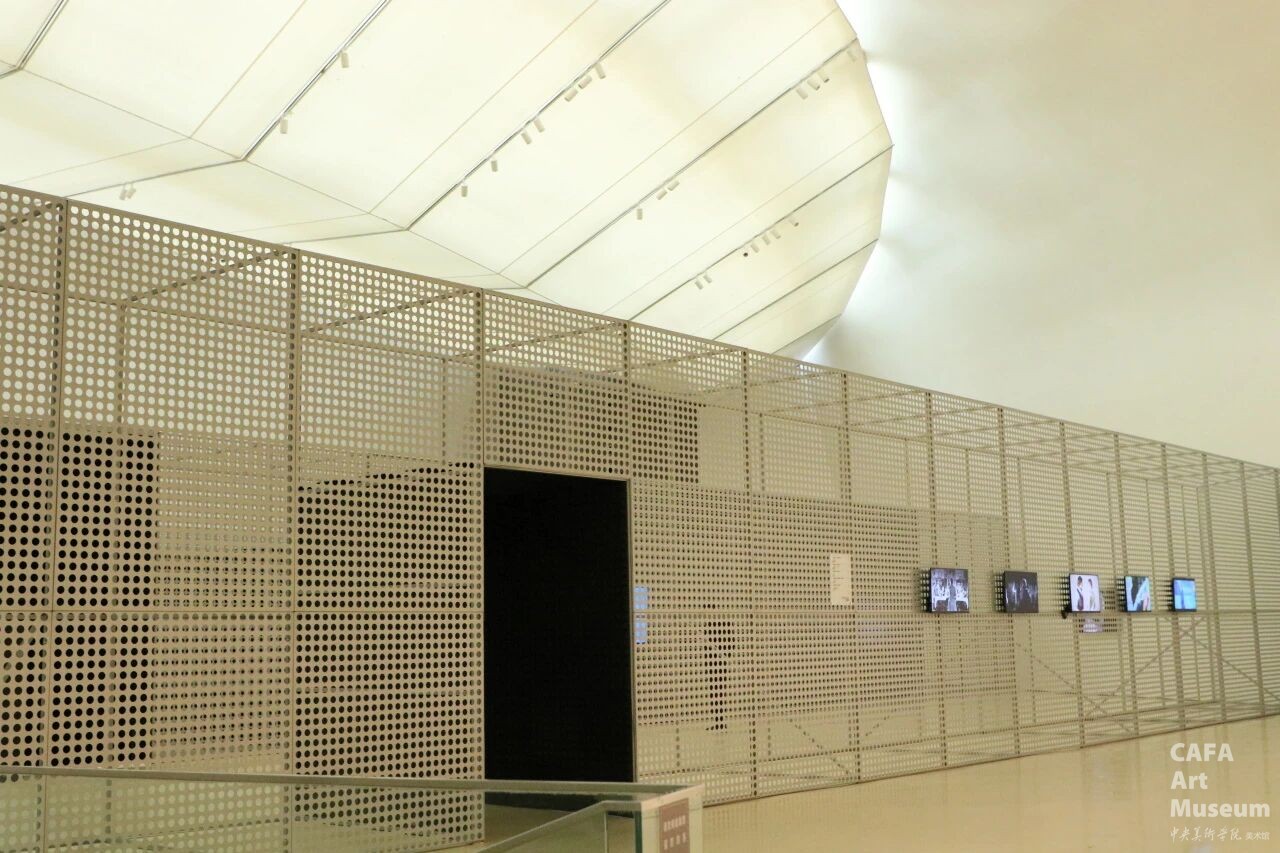
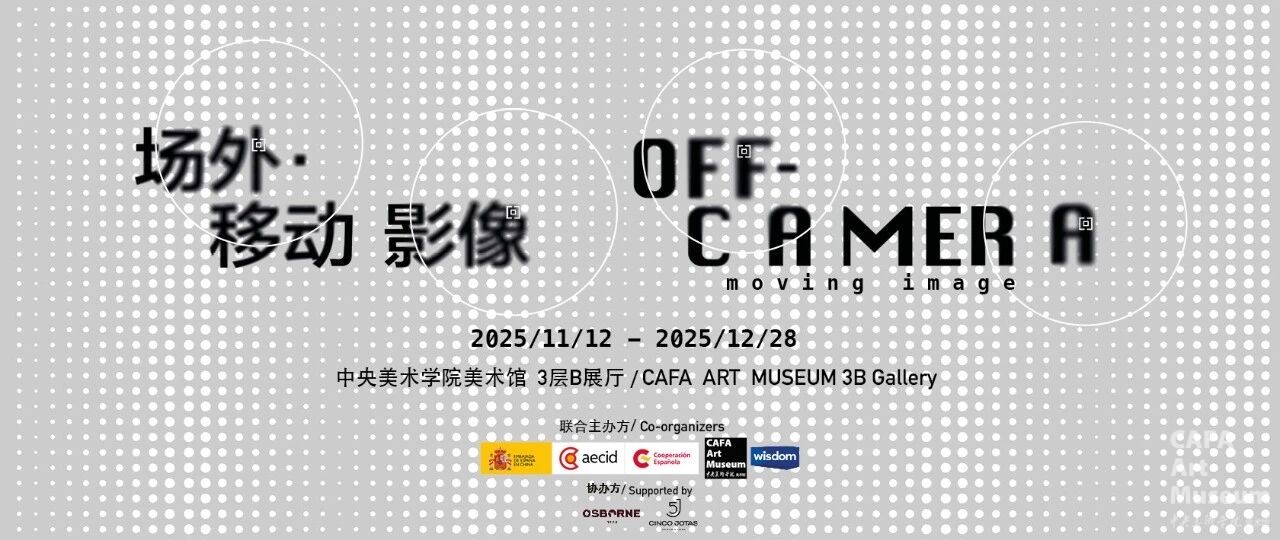
From November 12 to December 28, 2025, the exhibition "Off - Camera: Moving Image" will be on display at 3B Gallery of the CAFA Art Museum. This exhibition is co-hosted by the Spanish Ministry of Foreign Affairs, European Union and Cooperation, the Spanish Agency for International Development Cooperation, the Embassy of Spain in China, the CAFA Art Museum, and Shenzhen Wenze Chuangzhan Cultural Tourism Development Co., Ltd.
Curated by contemporary art researcher Susanna Sanz, the exhibition brings together twelve Spanish artists, aiming to offer a brand-new interpretative perspective on Spanish cinema and contemporary art.
展览现场
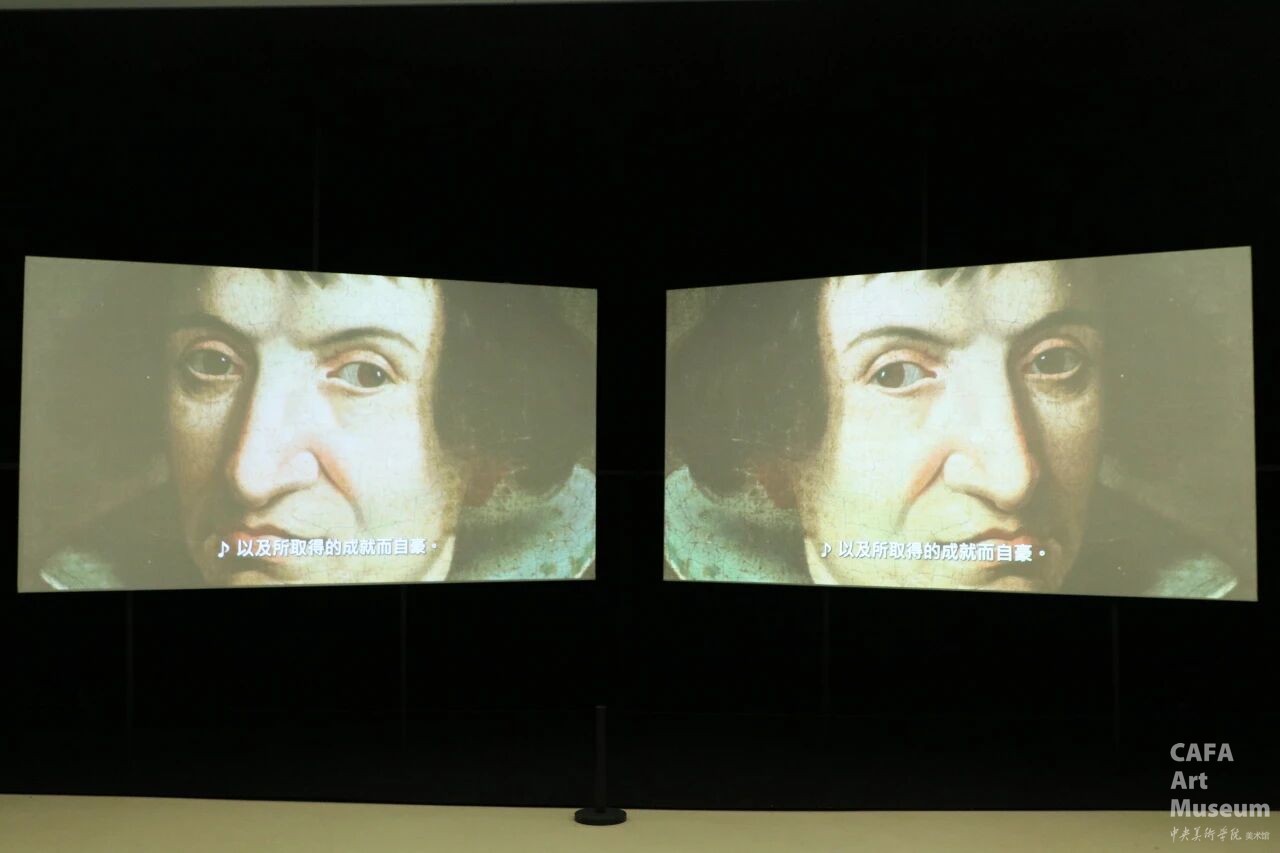
展览现场
Moving images no longer depend on dark screening rooms to exist. Images have escaped the confines of the cinema, projected onto walls, bodies, and the very fabric of the world. Today, images can fold in on themselves, be installed as immersive works, and be projected onto architectural surfaces; they become objects, they become events. With this expansion, what lies "off-site" also takes on new forms and finds new audiences. The works gathered here reveal to us that "Off-site" is not merely a technique, but a form of visual politics: a gesture that allows the marginalized or the spectral to find representation.
03
2025.11.12-12.28
————————————————
Covert Identities: Moving Images as Manifestos
"Off-site" determines not only what is visible, but also the creators of images and the subjects being viewed within them. In Chapter Three, the works of several artists jointly interrogate the representational mechanisms that shape the narratives of visual identity.
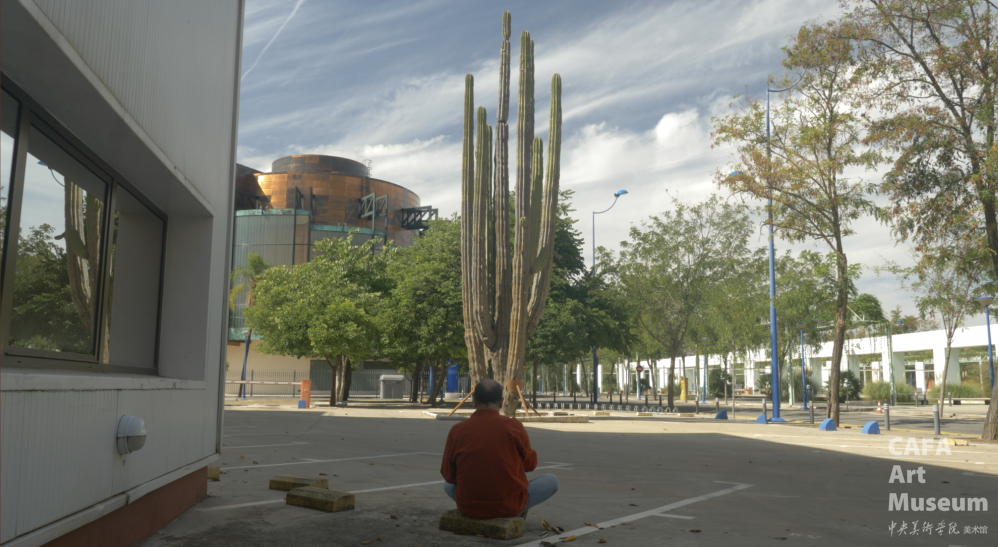
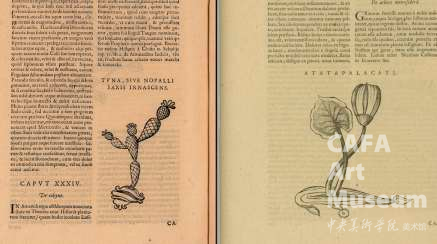
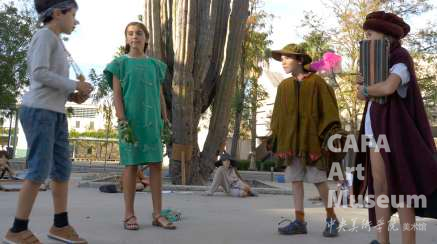
帕特里夏·埃斯基维亚斯,《卡尔东·卡迪纳尔》,2020,38’
In Cartón Cardinal (2020), Patricia Esquivias treats the archive as a living, reconfigurable document. She weaves images into an oral narrative unfolding over time, weaving together anecdotes and history. Her voice often serves as an "off-site" voiceover, acting as a thread of thought that deconstructs the power structures embedded in the collective memory of communities. This voice, like a critical intuition, pries open cracks. The narrator does not merely explain; she converses with and questions the content presented. In this way, the hidden things outside the framework of history return to the scene with a force that demands recognition.
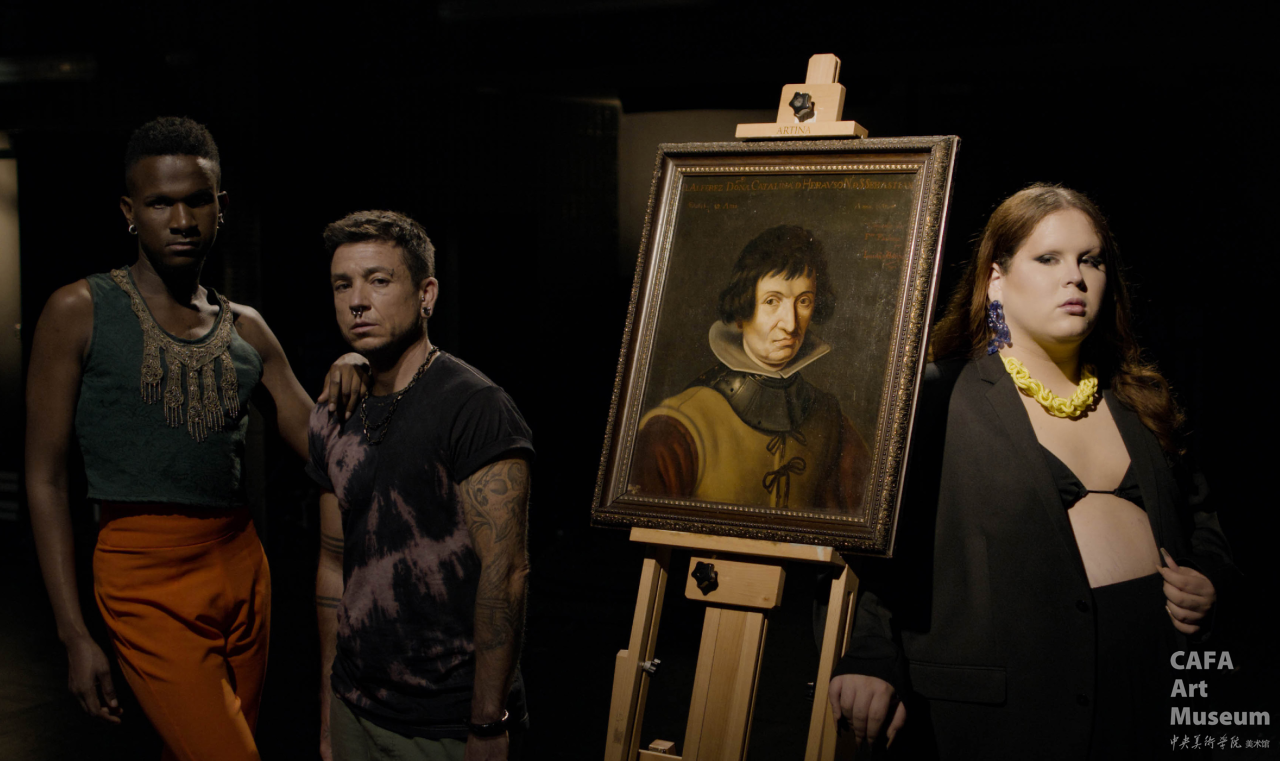
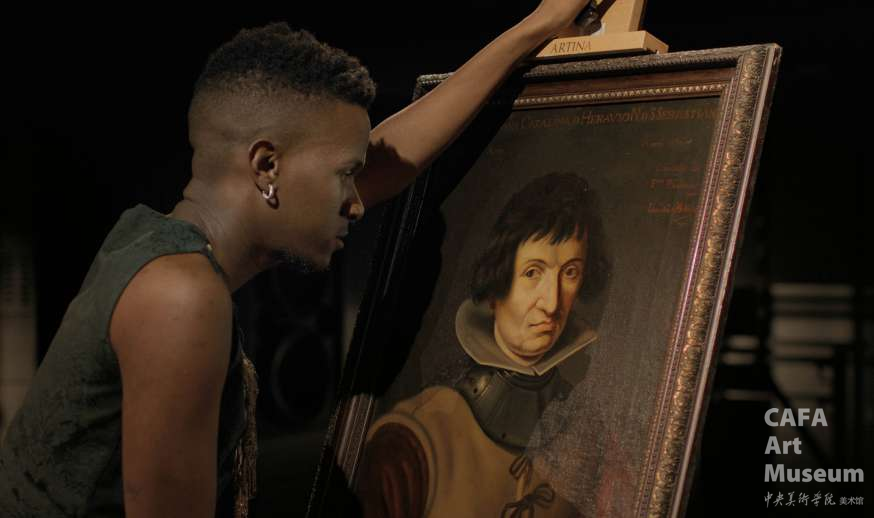
卡贝略/卡塞勒,《为埃劳索而发声·跨性别时代的尾声》,2021-2022,4K视频转换为高清格式,双通道视频装置,28’15’
Since the 1990s, the artistic duo Cabello/Carceller has interrogated the normative representational structures of the body, gender, and identity. In Speaking for Elvira: Epilogue to the Transgender Era (2021–2022), moving images serve as a stage for reclamation: voices silenced by history are now multiplied. Their stance on visual politics is unequivocal: they continuously subvert conventions of gender and representation until the paradigms themselves are forced to acknowledge the multiplicity of voices. In this way, Cabello/Carceller transform "Off-site" into a tool of liberation.
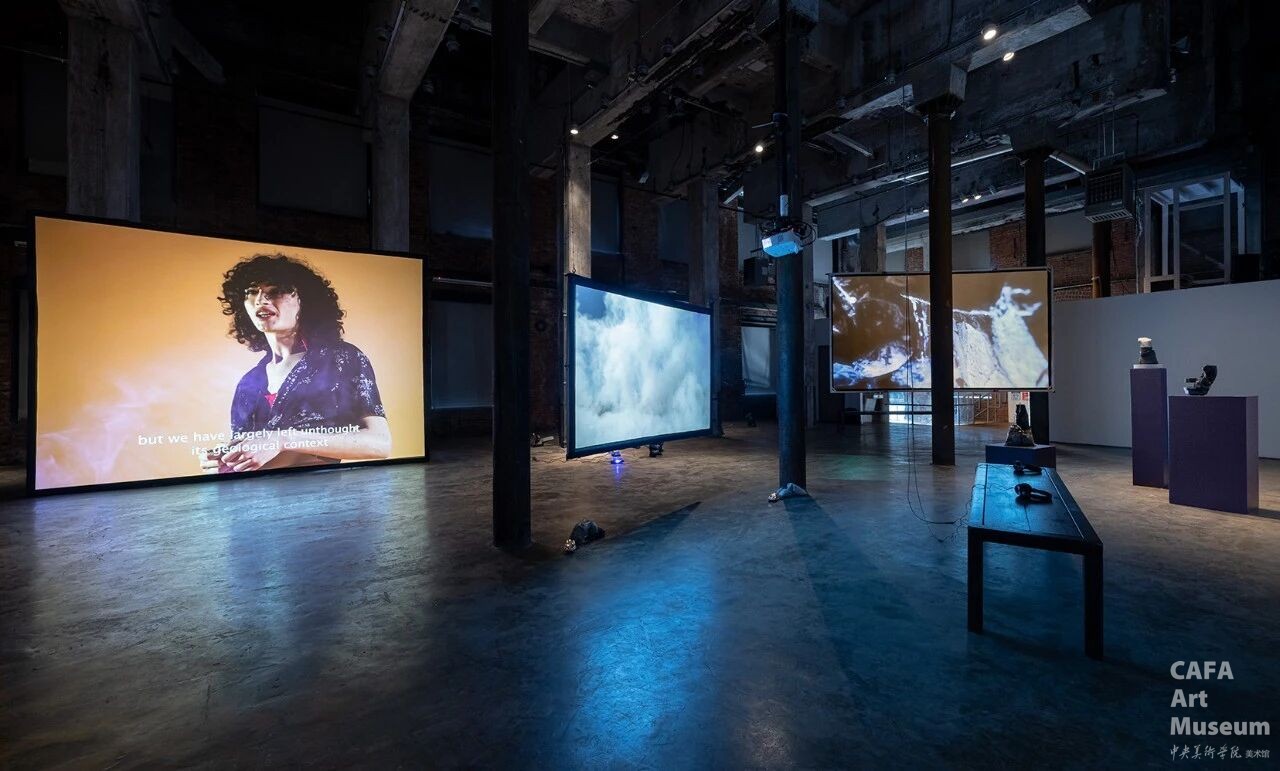
伊茨亚尔·巴里奥,《ROBOTA MML》,2023,4K视频,62’
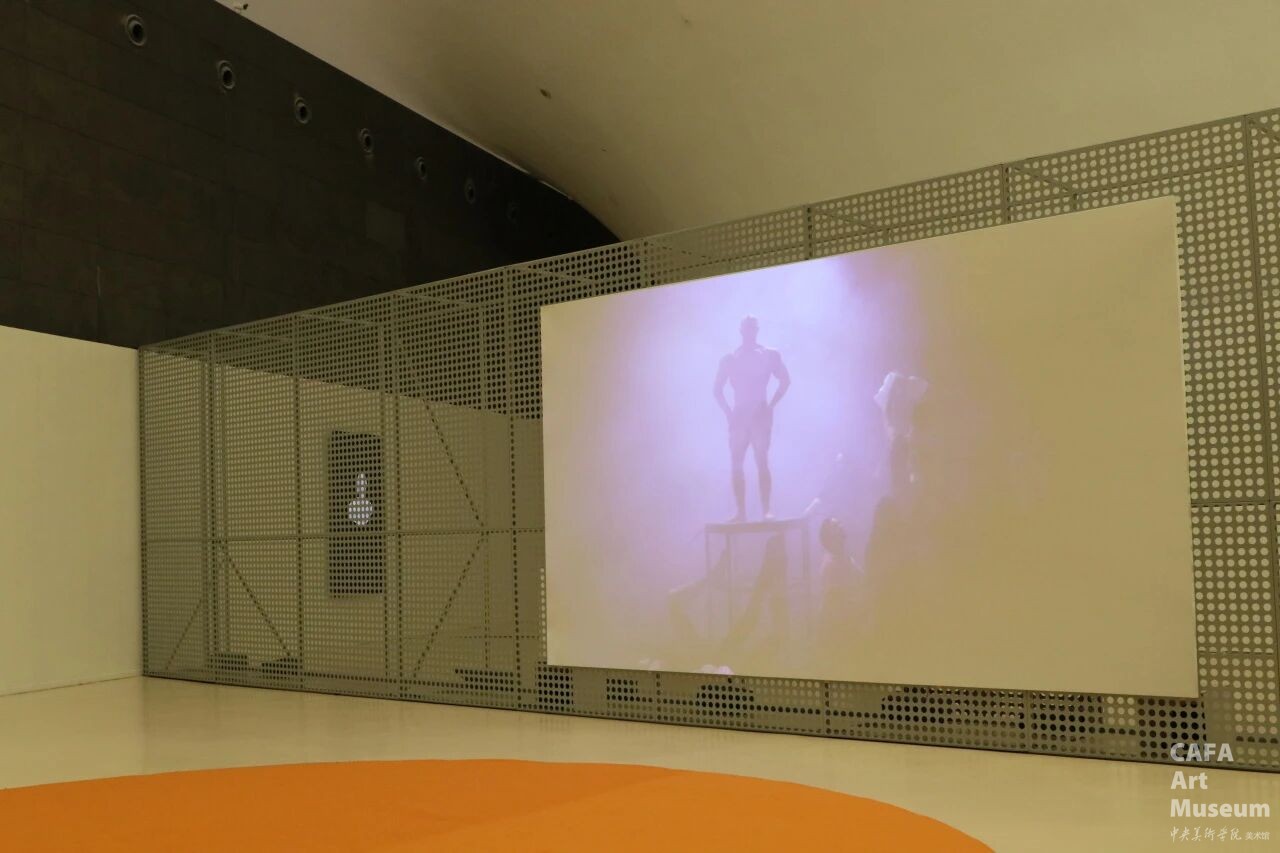
展览现场
Itsiar Barrio focuses on the conditions of image production: how technology, economy and society shape not only the content presented, but also the modes of presentation. In ROBOTA MML (2019–), she combines performance, installation and film to interpret the tension between body worship and machinery. Her long-term projects and multi-party collaborations construct networks of meaning, in which every element—gesture, sound, screen—is a component that sustains the system of visibility.
04
2025.11.12-12.28
——————————————
The Future of Moving Image: Image as an Artistic Material
Contemporary interpretations of "Off-site" cannot evade questions about technology. The hybrid coexistence of pixels and painting, algorithms and sculpture has reshaped the very way images are constituted. The artists in this exhibition explore this transformation from their respective perspectives—perspectives that are distinct yet share common ground. Technology does not alienate us from human experience; instead, it reconstructs it. Daniel Canogar and Ampro Sáldez are working precisely within this threshold, where images are no longer merely surface appearances but have been transformed into tangible entities.
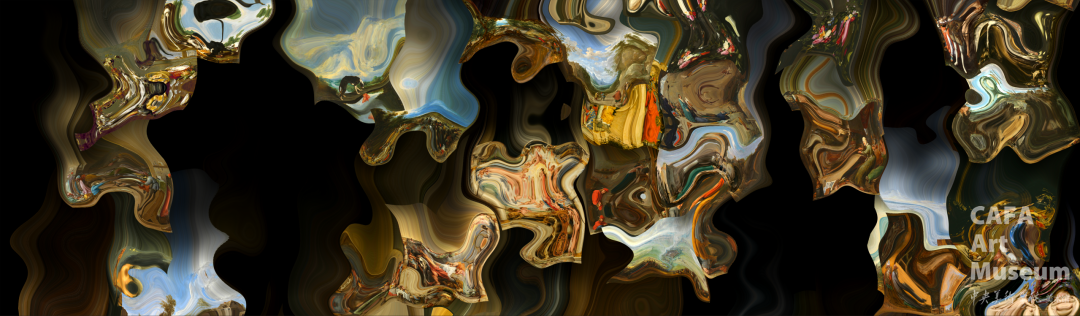
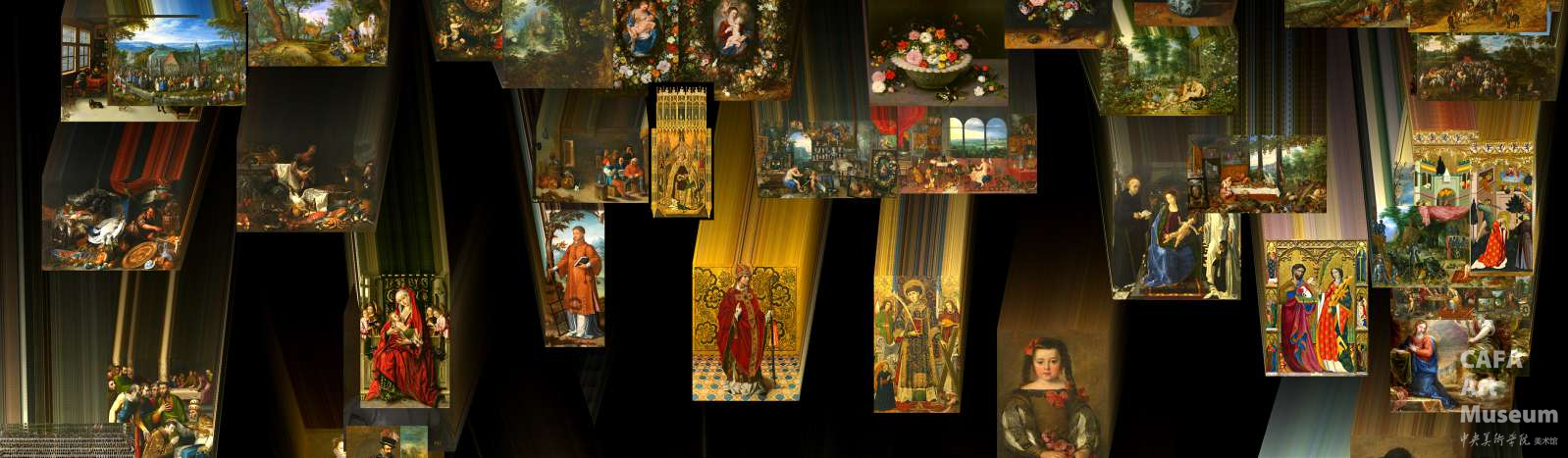
丹尼尔·卡诺加尔,《阿马尔加玛·普拉多》,2019,生成式视频投影
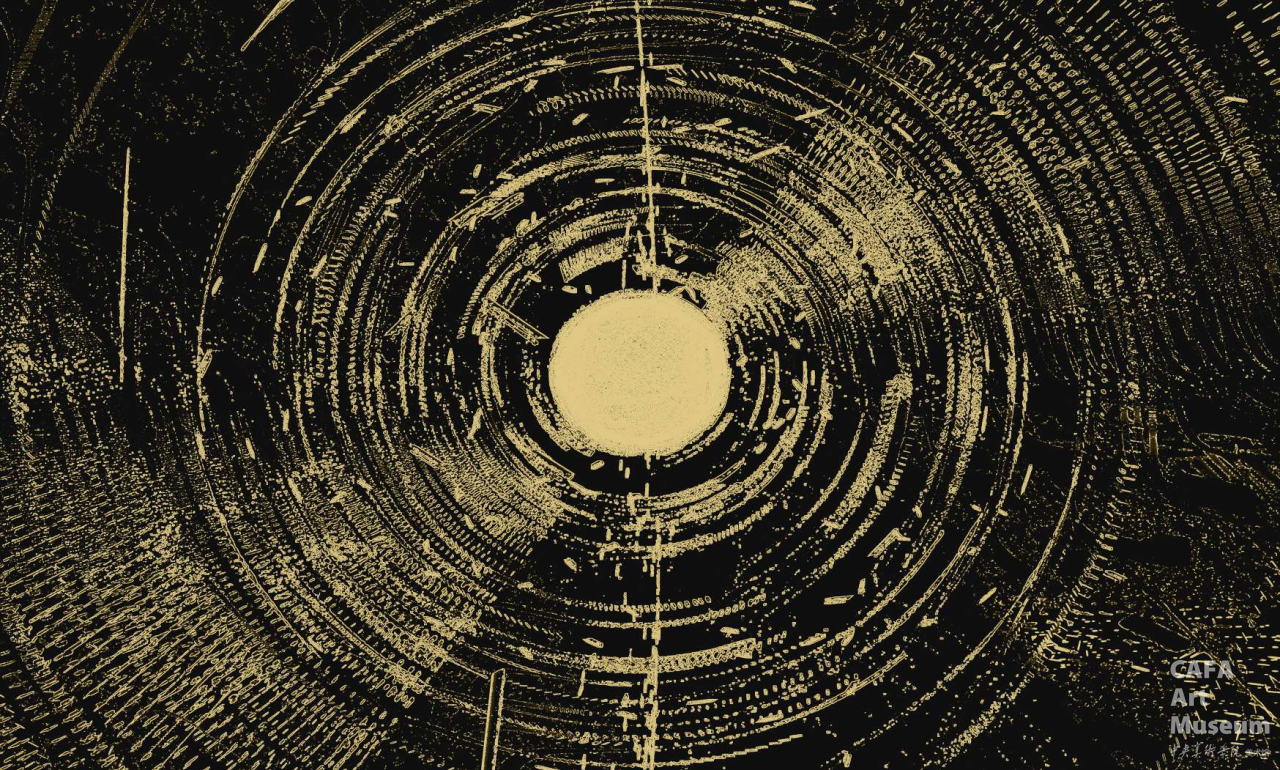
丹尼尔 ·卡诺加尔,《轨道》,2025,4K屏幕,生成式软件,实时数据
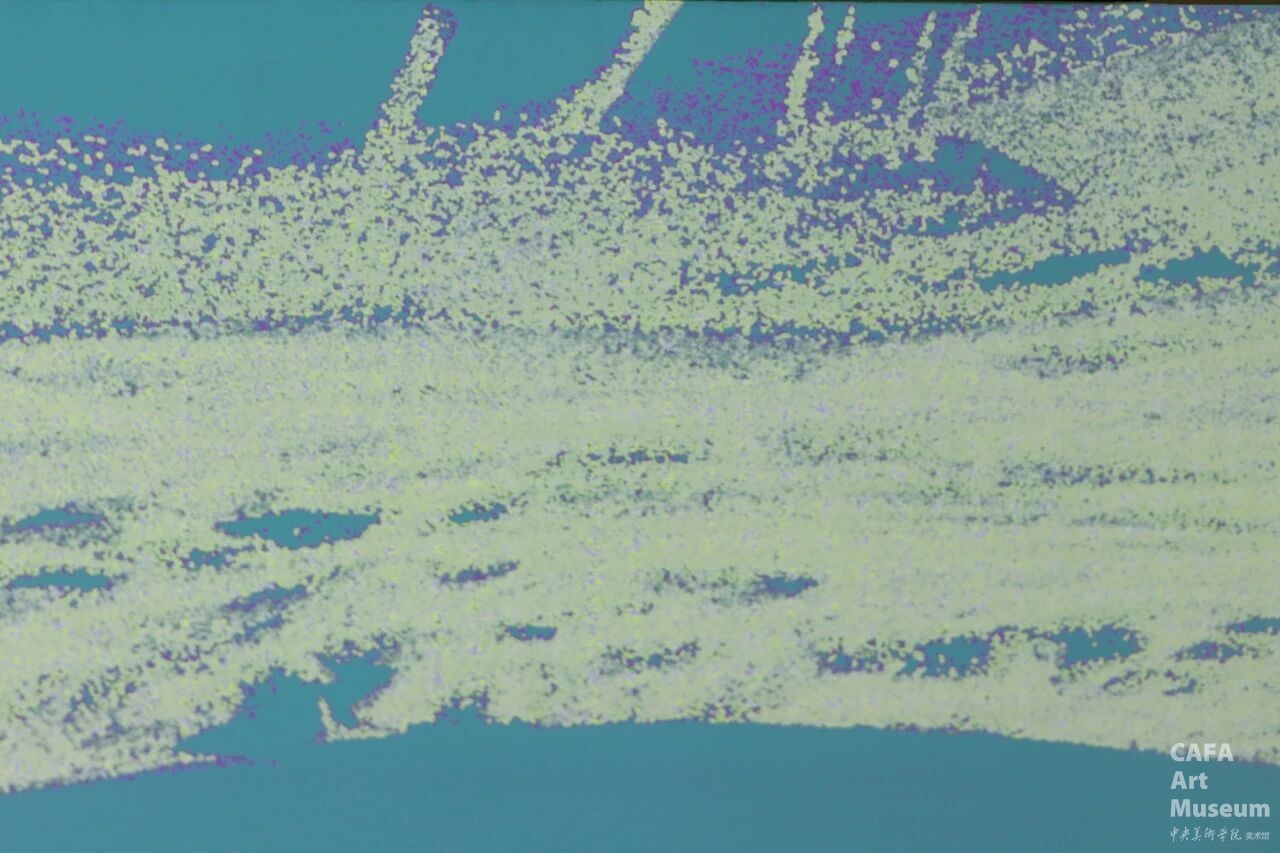
展览现场
Daniel Canogar regards the screen as a living fabric. His generative works, such as Amalgama Prado (2019) and Orbit (2025), are real-time evolving light systems driven by pulses and data. The images within flow, adapt, and respond to the environment like digital rivers. Rooted in the traditions of kinetic art, abstract expressionism, and installation art, Canogar creates works that interact with architecture and public spaces. The screen is not merely a technological ornament, but an organism—reminding us that data has a physical form and information has a pulse.
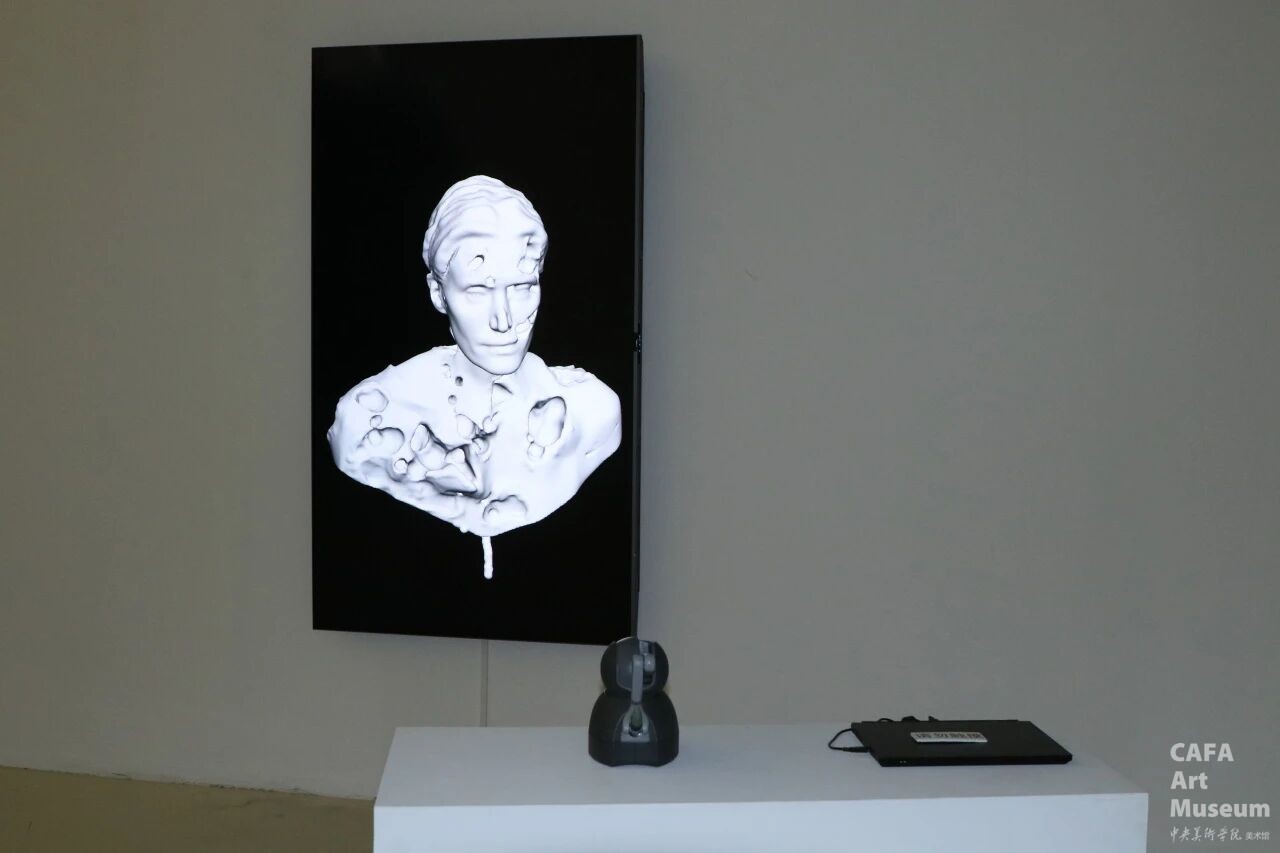
展览现场
Ampro Sáldez starts from the material world and moves toward the digital realm. Her works navigate the boundaries between the body and the screen, gesture and programming. In her recent projects, she explores artificial intelligence as a tool for extending perception, rather than a substitute for human sensitivity. Tactile Self-Portrait (2021) poses a core question: Can images be touched? Can they feel or be felt? Sáldez answers through her perforated sculptures. In her installations and moving images, emptiness takes center stage—every hole is an echo of touch, a tremor that transforms technology into skin.
Beyond the frame lies that which precisely sustains the image: the silence that renders sound audible, the shadows that make light visible. In this exhibition, every artist engages with this tension—between the visible and the invisible, between form and its extensions. Brought together, the works form a cartography of contemporary vision: at "Off-Camera: Moving Images," cinema is no longer merely an art of projection, but an art of existence; the audience becomes inhabitants, and images transform into territories. The exhibition forges a dialogue between cinema, moving image art, and installation, inviting viewers to reflect on the expansive nature of images in contemporary society: they no longer belong solely to the screen, but have merged into space, memory, and the viewers themselves.
Curator.
Susanna Sanz
拥有马德里康普顿斯大学当代艺术史博士学位,以及北京清华大学艺术学理论硕士学位。她曾在巴黎卢浮宫工作,2010年获ICO基金会奖学金赴北京大学进修,由此开启了在北京长达十年的职业发展历程。在北京期间,她担任塞万提斯学院文化协调员,并兼任中央美术学院客座讲师,讲授西班牙艺术史。自2016年起,她担任马德里西班牙动态影像节艺术总监。2020年,她返回西班牙,加入索菲亚王后国家艺术中心博物馆,担任文化活动协调员。目前她是西班牙文化部博物馆策展团队成员。
She holds a PhD in Contemporary Art History from Complutense University of Madrid and a Master's degree in Art Theory from Tsinghua University in Beijing. She has worked at the Louvre Museum in Paris. In 2010, she received a scholarship from the ICO Foundation to pursue further studies at Peking University, which marked the beginning of her decade-long career development in Beijing. During her time in Beijing, she served as the Cultural Coordinator at the Cervantes Institute and also worked as a visiting lecturer at the Central Academy of Fine Arts, teaching Spanish Art History. Since 2016, she has been the Artistic Director of the Spanish Moving Image Festival in Madrid. In 2020, she returned to Spain and joined the Museo Nacional Centro de Arte Reina Sofía as a Cultural Activities Coordinator. Currently, she is a member of the curatorial team at the Museums under the Spanish Ministry of Culture.
场外 · 移动影像
展览时间:2025年11月12日-12月28日
展览地点:中央美术学院美术馆三层B展厅
主办机构:
西班牙外交、欧盟与合作部
西班牙国际合作发展署
西班牙驻华大使馆
中央美术学院美术馆
深圳文泽创展文旅发展有限公司
主编 / 何一沙
责编 / 杜隐珠
编辑 / 晏宇希

