
A light touch of your fingertips, and art is at hand
CAFAM Gift Shop Mini Program
Officially launched today
No need to travel far, let beauty be with you


Here, what you encounter is not just cultural and creative products,
but also an extension of the art museum's exhibitions and collections.
Start your exclusive art journey right away,
and integrate artistic inspiration into the warmth of daily life.
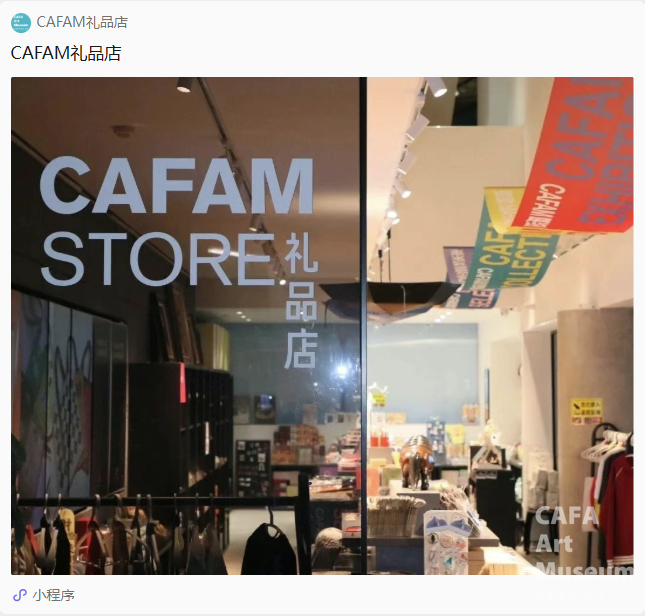
CAFAM brand cultural and creative products
01
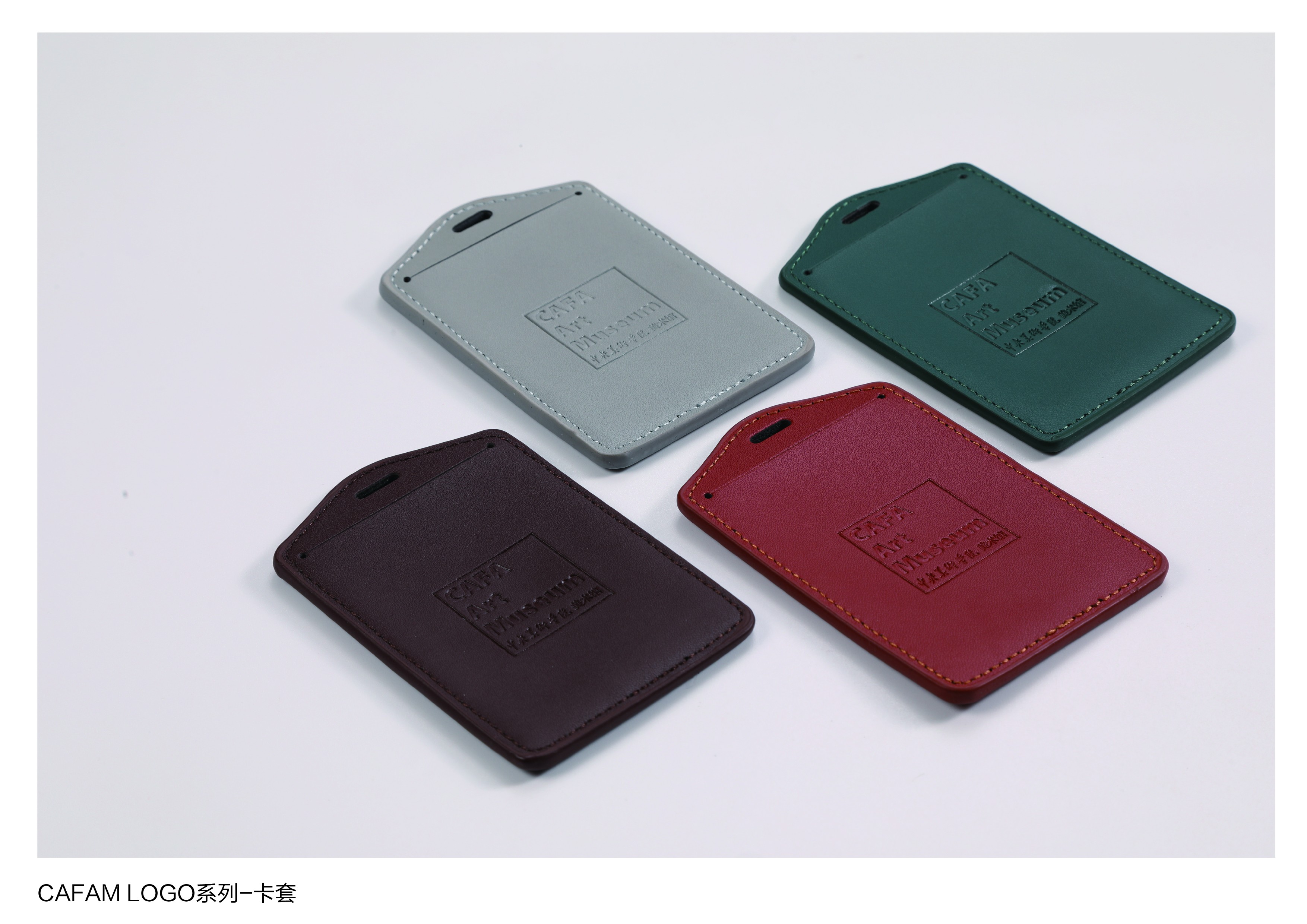
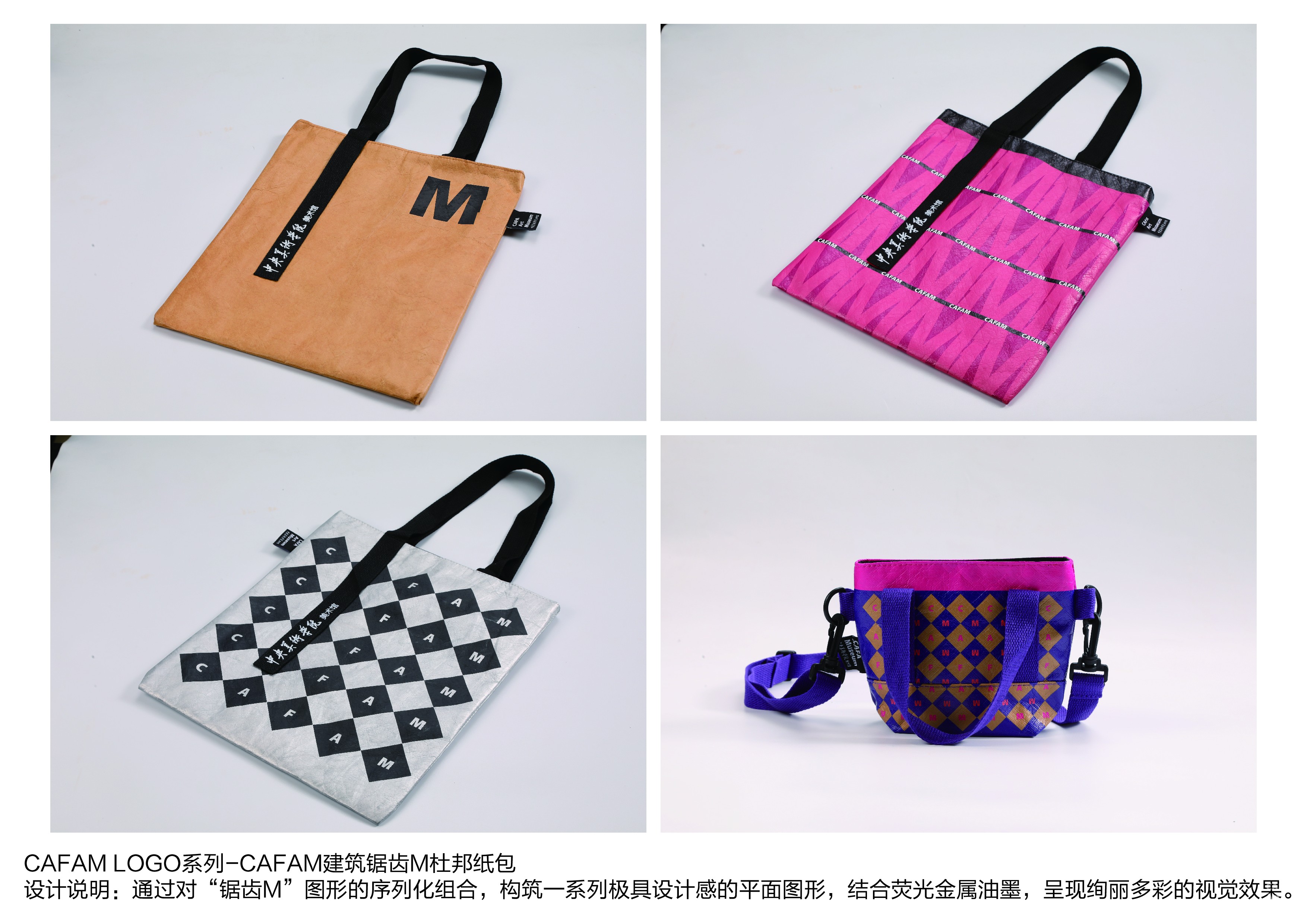
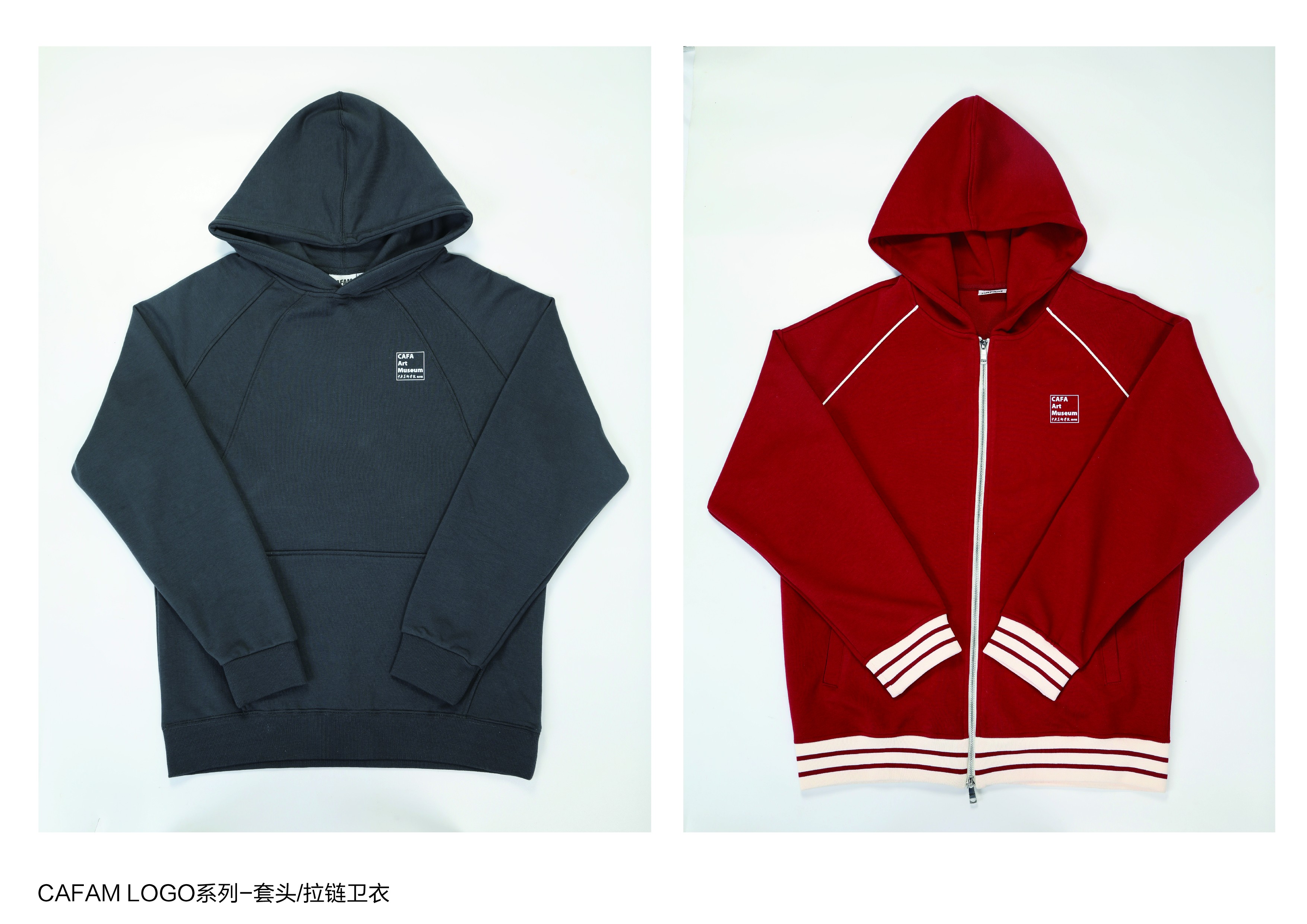
CAFAM LOGO Series Products
Contemporary Translation of Minimalist Letters
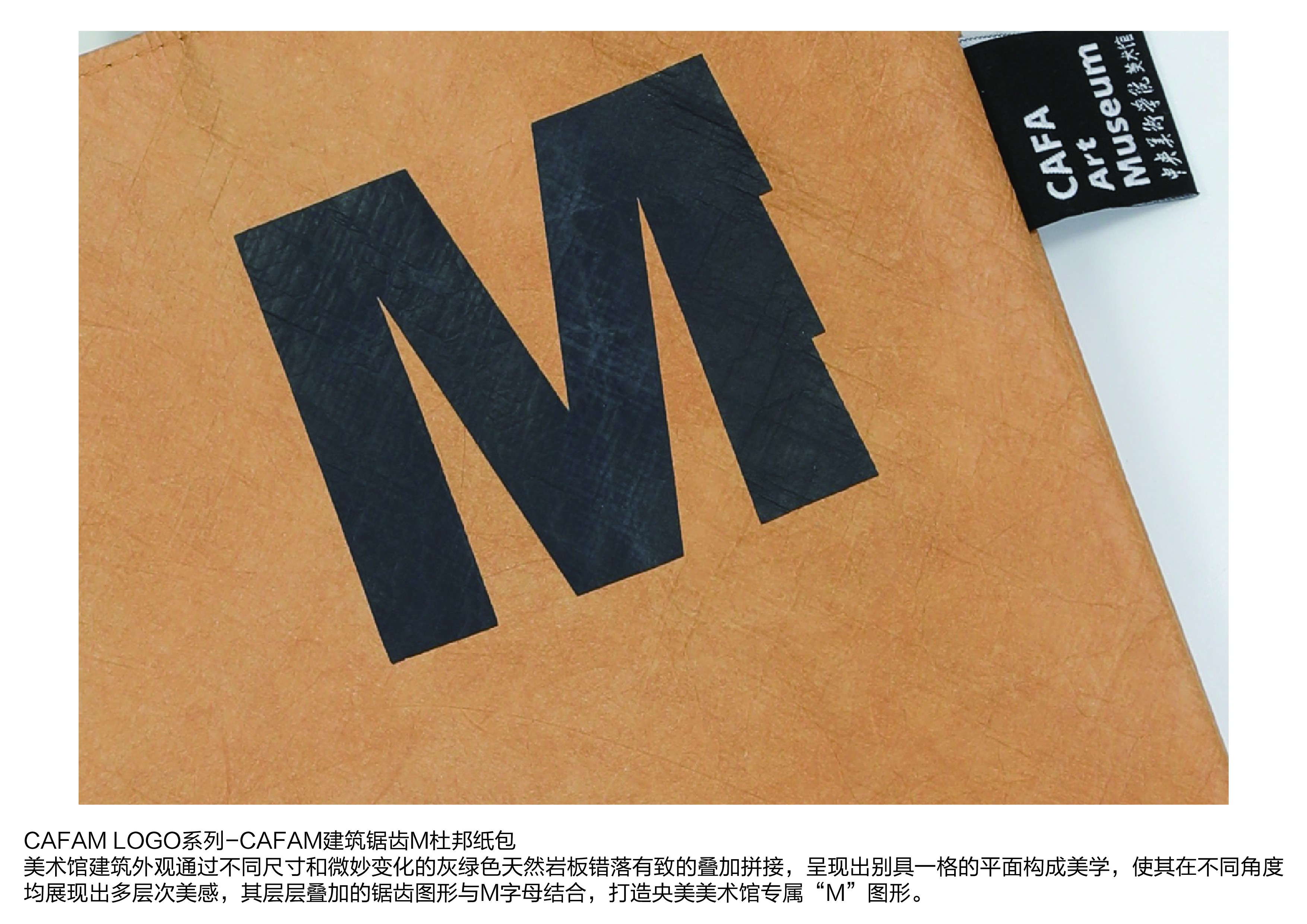
"CAFAM" is not just a logo, but a set of design elements that can be disassembled and reassembled. The design inspiration for the "serrated M" graphic comes from the exterior facade of the art museum building. Rock slabs of different sizes are stacked and joined in an orderly yet staggered manner, presenting a unique planar compositional aesthetic. This allows it to exhibit a multi-layered beauty from different angles. The serrated shape,with its layered stacking, is combined with the letter M to create an exclusive graphic for the CAFA Art Museum. The CAFAM LOGO product series, with minimalism and functionalism at its core, transforms the letters from a two-dimensional logo into three-dimensional, usable objects. Each use strengthens the interactive relationship between the brand and users, endowing the brand symbol with a new practical significance.

02
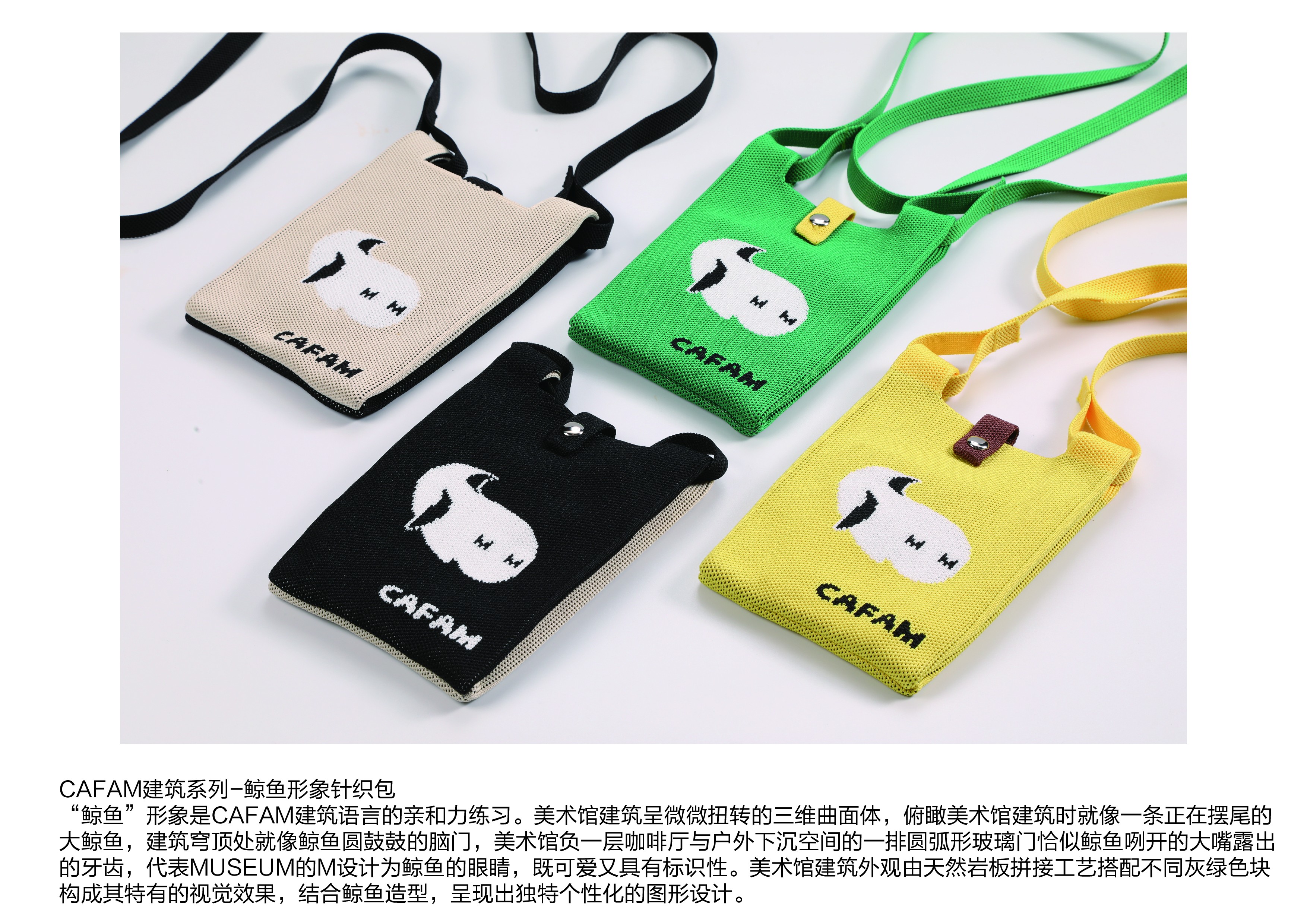
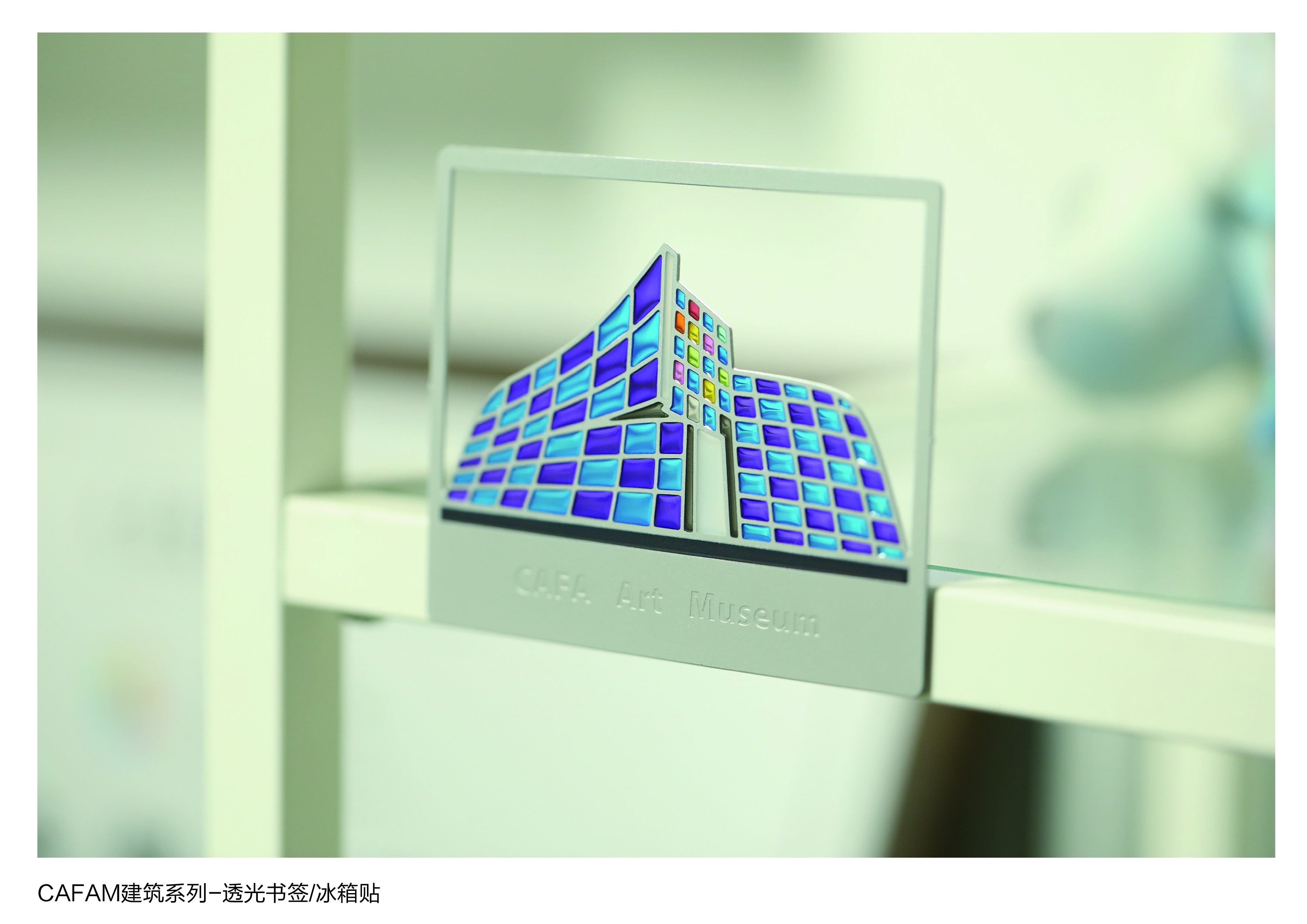
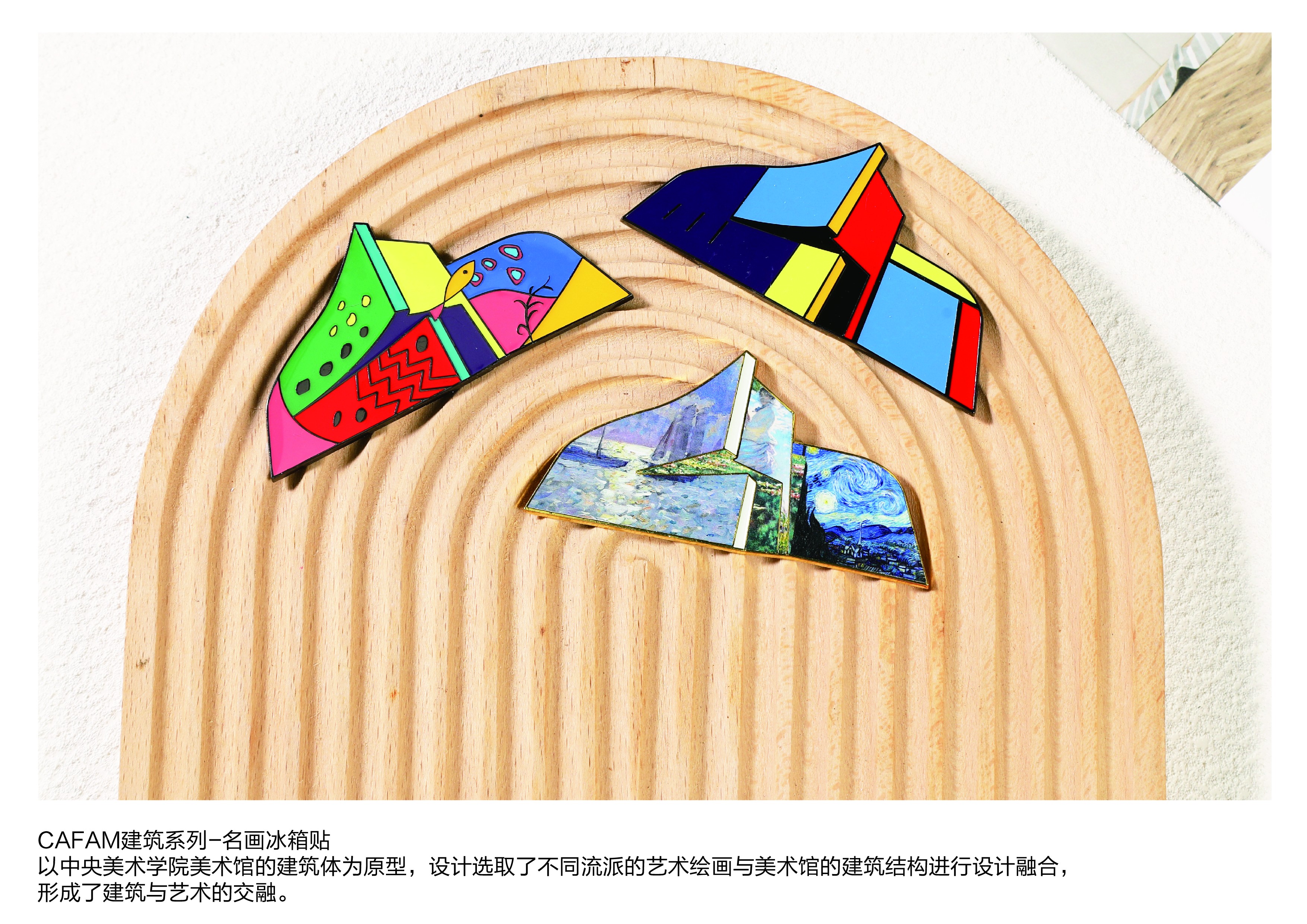
CAFAM Architectural Series Products
Architectural art adorns life
The iconic three-dimensional curved architectural language of CAFAM has been abstractly translated into a variety of product materials. As a classic and timeless architectural artwork, the CAFAM building was designed by renowned Japanese architect Arata Isozaki. It is not only an artistic landmark in Beijing but also a classic case in the history of world architecture. Based on the unique structural form of the CAFAM building, through redesigns such as cartoon-style modeling, hollowed-out geometries, or combinations with famous paintings, its iconic geometric forms are recreated. These forms integrate with different design styles, creating a fusion of architecture and art. This symbolizes the convergence and presentation of artworks of different styles, concepts, and schools at CAFAM, fully expressing the museum's attribute as an "art container."
03
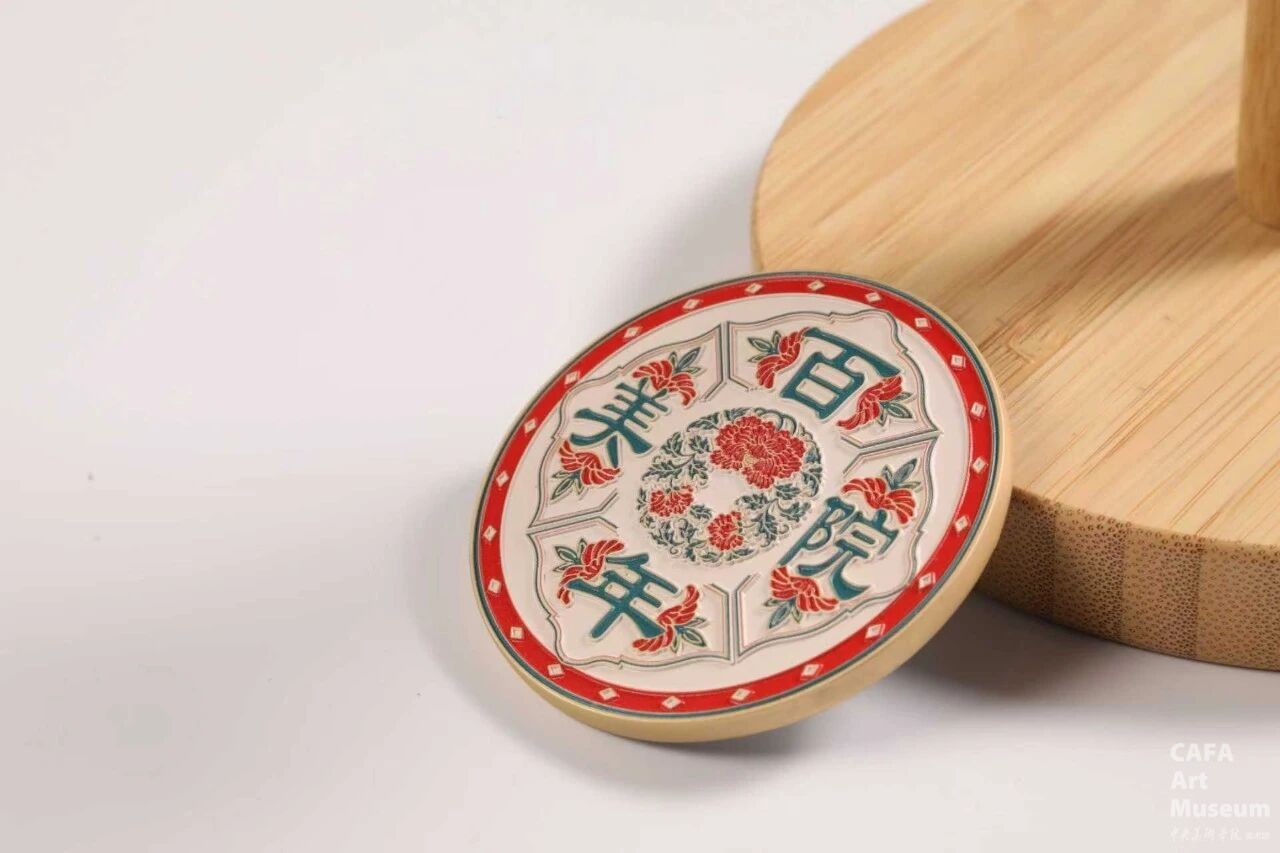
CAFAM Centennial Academy of Fine Arts Pocket Mirror
The elegance of the Academy of Fine Arts is hidden in a small space
The "Centennial Academy of Fine Arts" pattern is one of the "Centennial Academy of Fine Arts, Centennial Glory" patterns designed by designers for CAFA Art Museum during the centennial celebration of CAFA in 2018. It is still displayed on both sides of the entrance to the museum to this day. The decorative borders around the pattern are extracted from the architectural shape of the main entrance of the auditorium of the National Beijing School of Fine Arts on Jingji Dao before 1918. Inside the borders are scrolling grass and lotus patterns, which form an interlocking branch effect with the characters "Centennial Academy of Fine Arts". At the center of the pattern is a peony round flower pattern, symbolizing harmony, happiness, prosperity and thriving.
CAFAM Collection Cultural and Creative Products
01
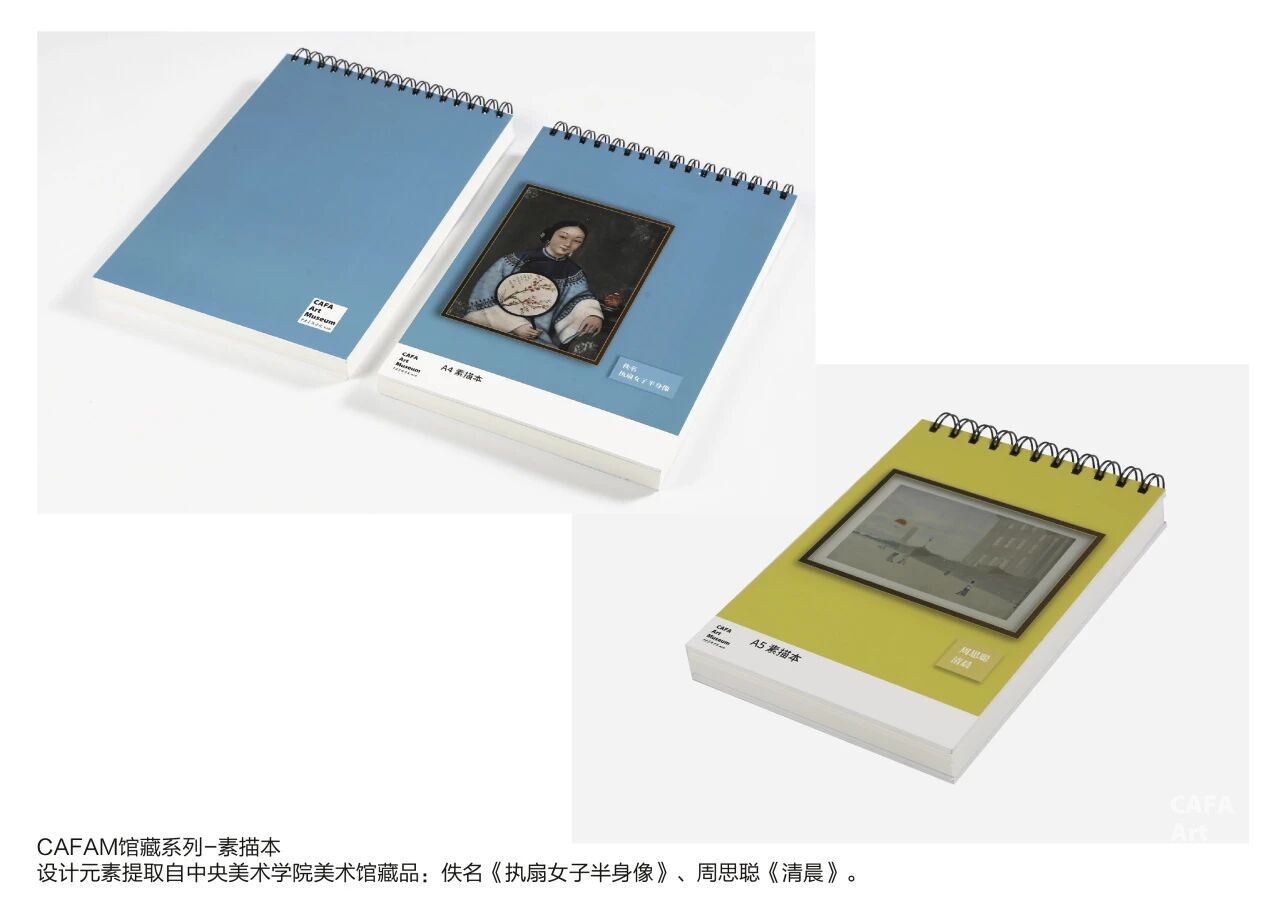
Collection Series Products - Sketchbook
"The 'exhibition wall' is in place; creation is exhibition"
Drawing inspiration from the collection of the CAFA Art Museum, in terms of design concept, the cover of the sketchbook is transformed into a "portable museum exhibition wall". Selected masterpieces of different styles and periods from the collection are chosen to ensure that each work presents the best viewing effect on the "exhibition wall".
02
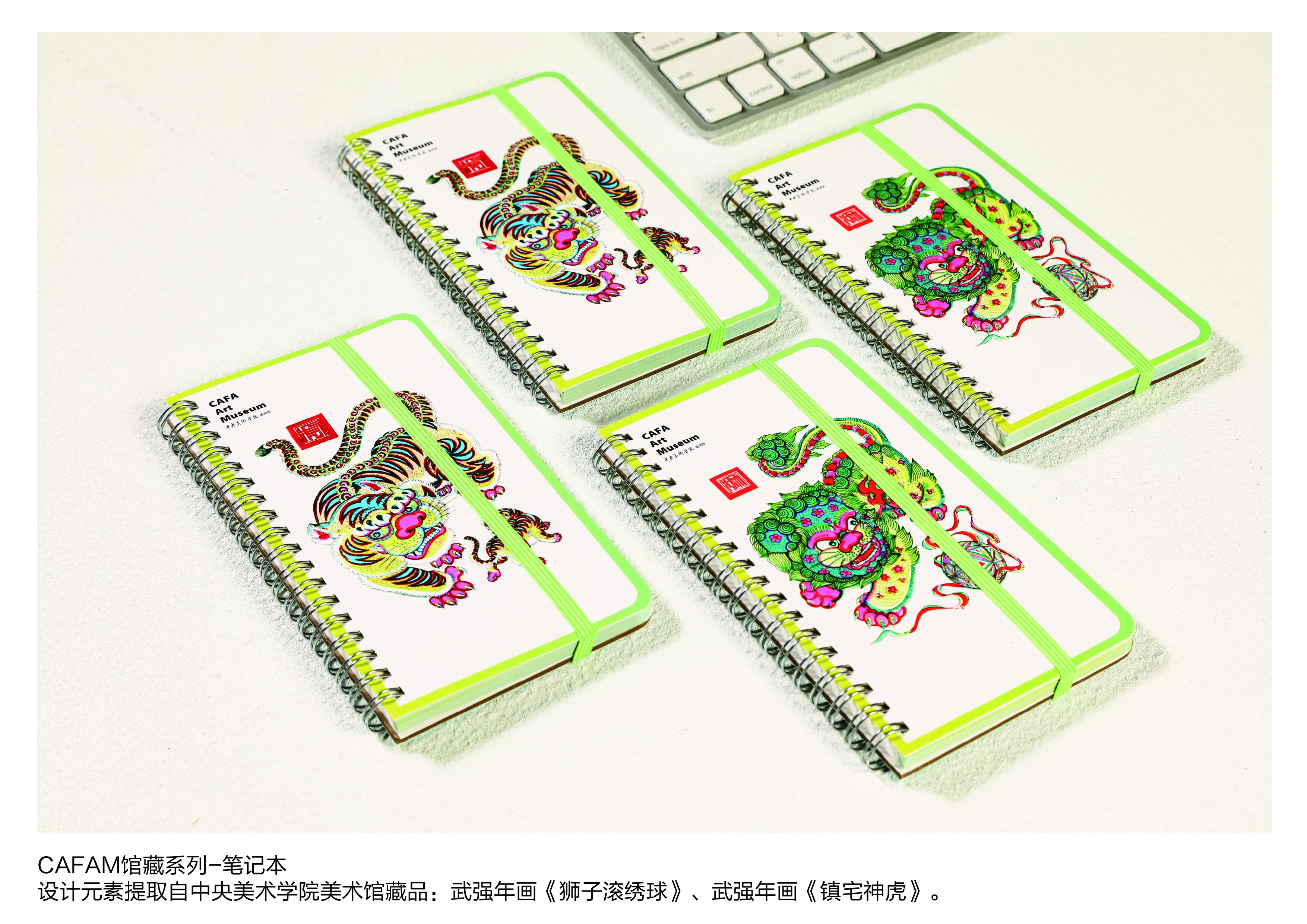
Collection Series Products - Notebook
Modern Translation of Folk Art Elements
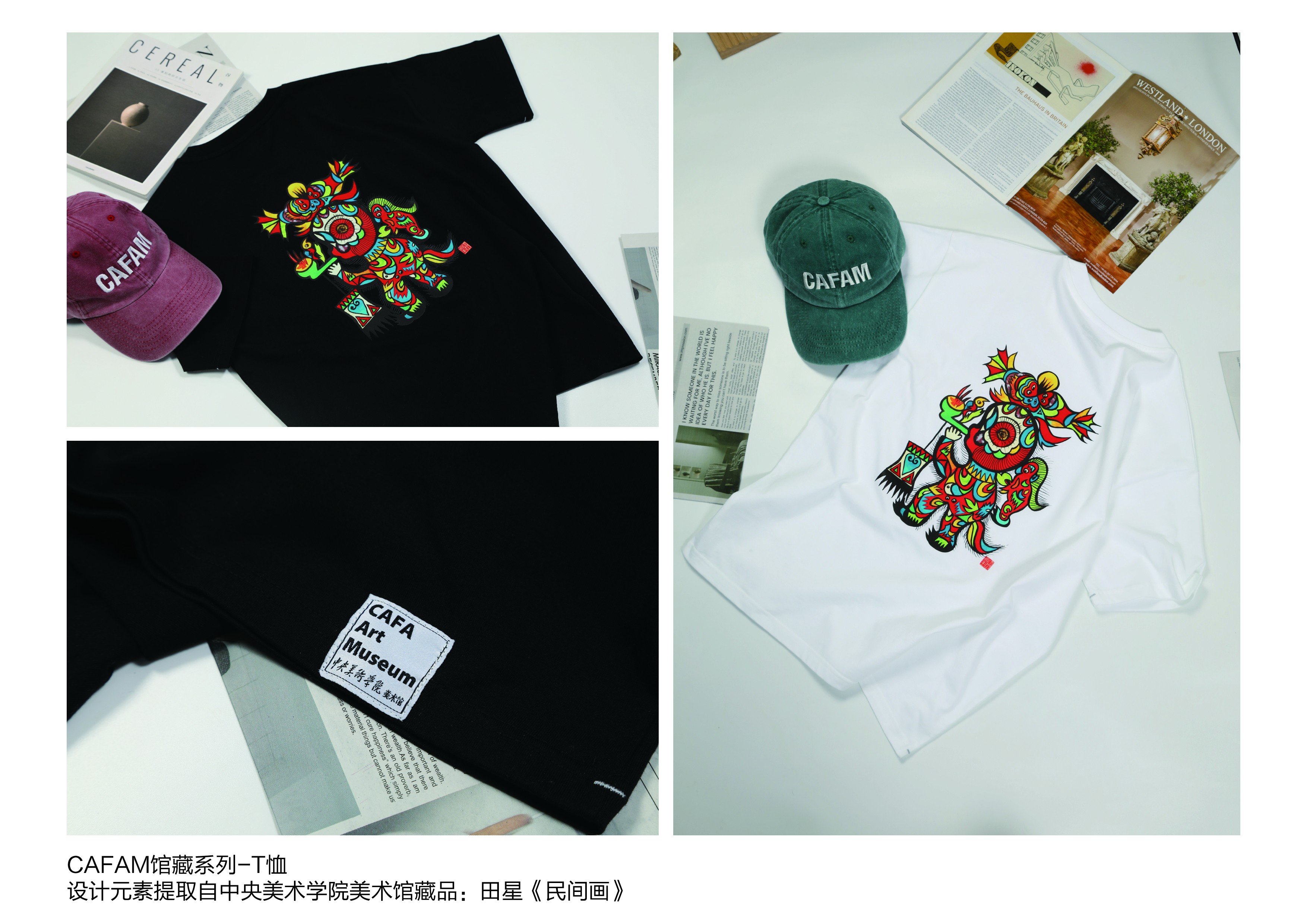
Traditional visual elements such as lions and tigers are extracted from the collected folk art works, and combined with gradient colors and modern graphic design language to form a integration of classical images and contemporary writing tools. This revitalizes ancient New Year paintings in daily stationery, making them a cultural carrier connecting traditional art and modern life, and sustaining the vitality of folk art visual elements in the context of contemporary design.
03
CAFAM Collection of Famous Paintings Series Products
Treasures in the Palm, Walking with Art
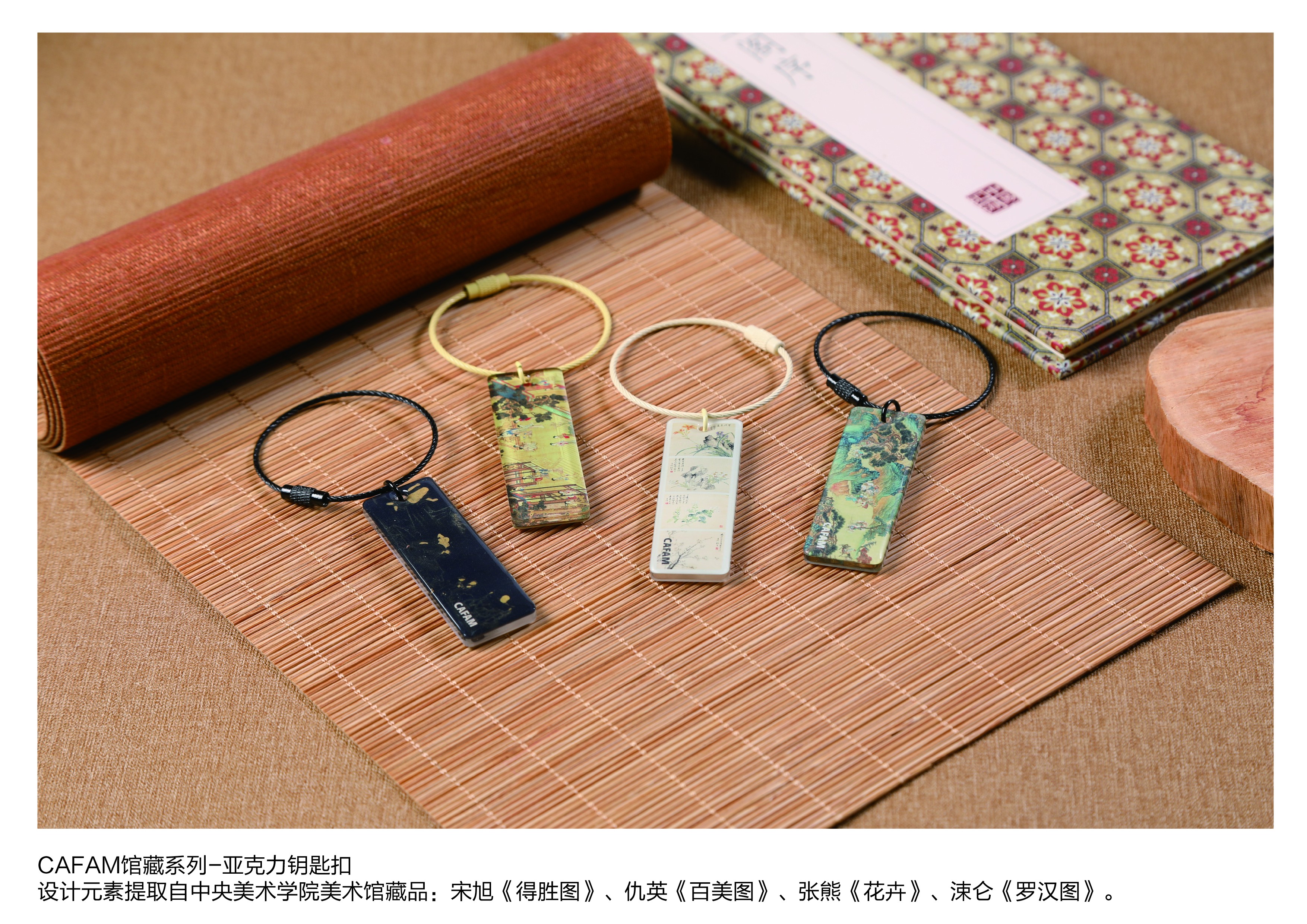
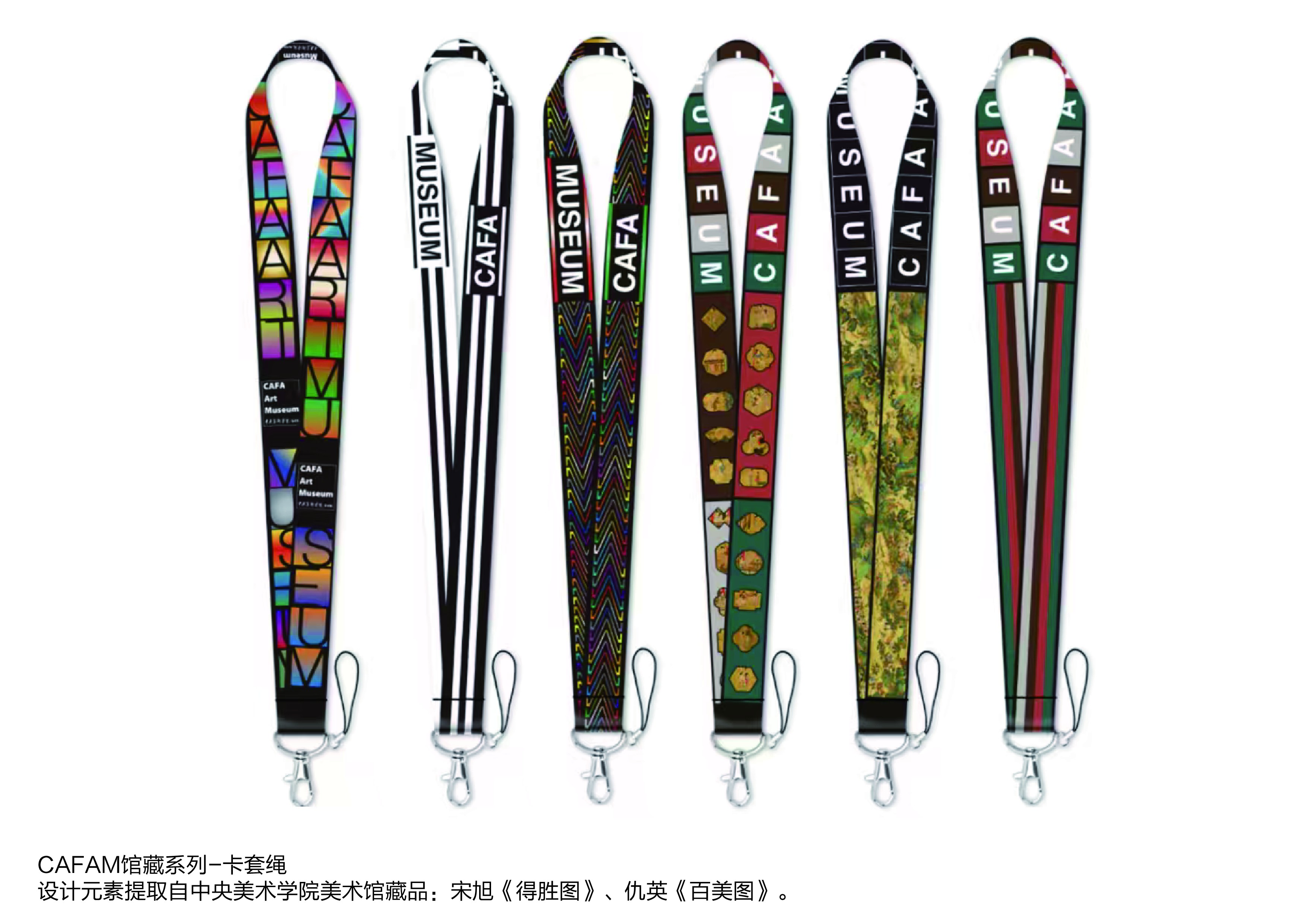
The brush and ink artistic conception, composition and color, philosophical connotations, as well as inscriptions and seals in ancient Chinese paintings are all unique traditional cultural symbols. By extracting and redesigning the visual elements from the ancient Chinese paintings in the CAFAM collection, we continuously activate the vitality of cultural relics, build a new bridge for the public to dialogue with traditional culture, and integrate the aesthetic elements and cultural implications of classical art into contemporary life through creative transformation.


CAFAM Exhibition
Limited Edition Cultural and Creative Products
Carry the time of the exhibition hall and continue the artistic touch
Put the exhibition "into" your pocket, and everywhere you go is an art museum
The overall positioning of the cultural and creative product design for the Horse Training Class Exhibition is based on the Sino-Soviet design style of the 1950s. Whether it is the fonts, colors, or patterns, they all embody a strong Soviet-style aesthetics integrated with Chinese design aesthetics of the 1950s. All pattern designs are inspired by traditional Sino-Soviet patterns. With warm colors matched with gold craftsmanship, the brilliant sunshine of that era is transformed into today's accessible daily objects, which possess both a sense of historical heaviness and contemporary aesthetic appeal.
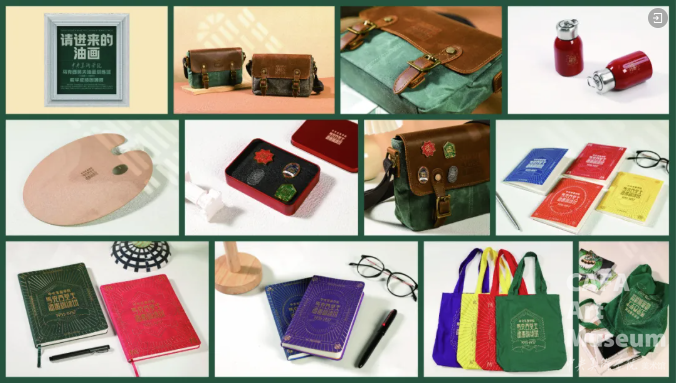
Cultural and Creative Products of the Maksimov Oil Painting Training Class at the Central Academy of Fine Arts (1955-1957)
Design Keywords: 1950s × Soviet Style × Sunshine × Splendor
Art is inherently fluid,
It has always been in life, being used and understood.
With objects as a medium,
CAFAM cultural and creative products connect art with the present.
Editor-in-Chief / He Yisha
Responsible Editor / Du Yinzhu
Contributors / Yi Yi, Bu Wenhan
Editor / Yan Yuxi

