

Memories Of The "The Maksimov Training Program"
By Gao Hong
The two-odd years from 1955 to 1957, when I studied at the Oil Painting Training Class of the Central Academy of Fine Arts, were a truly fortunate and delightful chapter in my life.
I had originally gone on a business trip to the newly liberated Dachen Islands to complete a creative assignment. Barely four or five days into my stay on the island, which had been left devastated and in ruins after the enemy’s retreat and before I could even start working, I received an order to return to Beijing immediately. As I boarded the train at Hangzhou Railway Station for the trip back, I chanced upon six or seven young painters carrying their art supplies, who were also heading to Beijing on the same train. When I got back to my work unit and made inquiries, I learned that I had been assigned a new task: the Ministry of Culture had invited a Soviet expert to run an oil painting training class at the Central Academy of Fine Arts, and the Cultural Department of the General Political Department had selected He Kongde and me to sit for the entrance examination at the academy. With time pressing, I was told to make preparations at once.
Needless to say, this was an unexpected and great joy for me. Such a golden opportunity felt nothing short of a godsend.
The works I submitted for the examination were as follows: Dong Cunrui Blowing Up the Bunker, an oil painting created in 1948 for the Northeast Revolutionary Martyrs Memorial Hall (published by the People’s Fine Arts Publishing House); the 1954 propaganda poster We Must Liberate Taiwan (published by the People’s Fine Arts Publishing House); and sketches and quick drawings done on the Korean battlefield in 1952 (published by the People’s Fine Arts Publishing House and featured in People’s Daily). During the interview, teachers including Wang Shikuo, Luo Gongliu, Dong Xiwen, and Li Zongjin put forward questions one after another. I answered each one earnestly, and by and large, my responses met with their approval. After passing the examination, I set about going through the admission procedures.

A Life Of Study
——————————————
Once admitted to the Oil Painting Training Class, we began our life as students.
The trainees of this class were not ordinary freshmen newly admitted to the university. Among us were graduate students staying on at the academy, young teachers from art colleges elsewhere, and on-the-job cadres from cultural institutions of the military and local governments. The oldest among us was Professor Feng Fasi, who was elected class monitor; he was formerly the Chairman of the Oil Painting Department of the Central Academy of Fine Arts. I was 29 years old when I enrolled. Some of my fellow students were younger than me, while others were older. Hailing from all walks of life, we gathered closely under one roof, forming a lively and cheerful dynamic all of our own.
As official trainees, we were now part of the academy family, just like the faculty, staff and students of other classes. We cared for one another in perfect harmony.
We moved into the second floor of the grey-brick student dormitory building in the southwest corner of the academy campus. He Kongde, Yuan Hao, Wang Xuzhu and I shared a room facing north. The room contained one desk and two sets of bunk beds. He Kongde and I took the upper bunks, while the other two—who had come from the Central and Southern China College of Fine Arts—were given the lower bunks. Across the corridor from us lived three others: Feng Fasi, Wang Liuqiu and Qin Zheng, who were the leading members of the Party branch of the Oil Painting Training Class. Despite living so close by, we rarely visited each other, as everyone was preoccupied with their own work. Next door to our west was the Peace Restaurant of Dong'an Market, and we often heard music drifting over from its dance hall. None of us ever went there, though.
What truly made us feel like a group of students was participating in the mass demonstration on International Workers' Day. We were assigned to take turns carrying large slogan boards as we marched past Tiananmen Square. On the day when Indonesian Prime Minister Sastroamidjojo visited Beijing, we were stationed in a long line on the north side of the road, just east of the three-arched gate next to the Working People's Cultural Palace, to cheer the visiting dignitary along the route. That was a rare chance for us to see Premier Zhou Enlai at close range.
My Graduation Work The Orphan
——————————————————————
In the second half of 1956, we discussed the creative sketches of each student in class.
At first, I wanted to paint a bright and sunny scene. I made a sketch of a Korean woman in a farm field, balancing a water jar on her head. It was the rice transplanting season, and on the ridge stood a straw basket used by local Korean villagers, along with a number of shoes belonging to Volunteer Army soldiers.
My teacher commented that this depicted a common daily-life scene, more like a regular study piece, and suggested that I should choose a theme with richer ideological connotations.
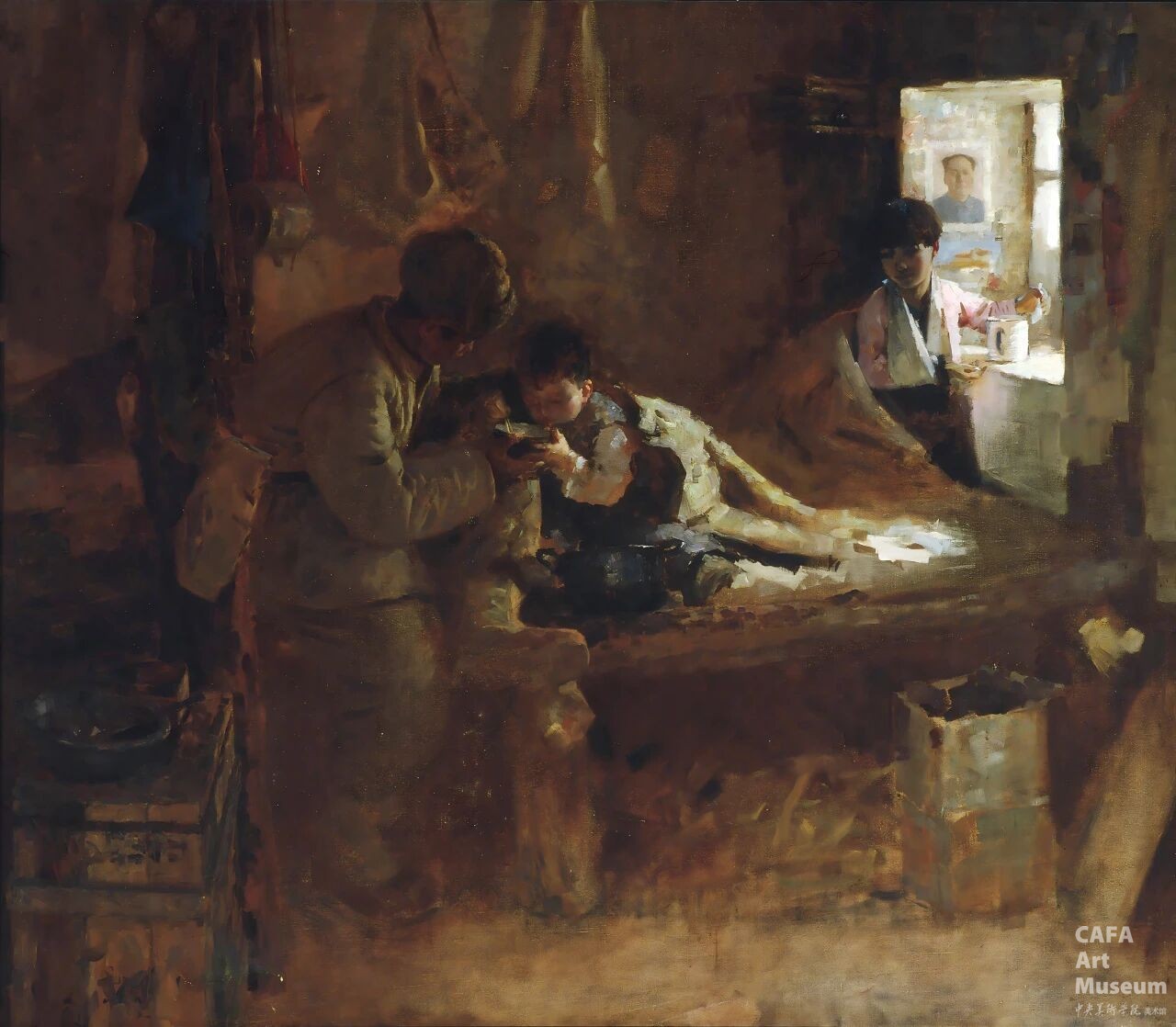
Gao Hong, "Orphan", 139×160cm, oil on canvas, 1957, collected by CAFA Art Museum
After several revisions, I chose the battlefield in North Korea as the setting, depicting Chinese People's Volunteers soldiers taking care of orphans from the Korean War. The teacher said this was good, as it embodies the warm affection of humanitarianism, as well as the compassion and mutual assistance that should exist between people. This unfortunate child who has lost his parents should receive kind care. In the future, efforts should also be made to help them go to school, enabling him (or her) to acquire knowledge and strive to build a new and better life. The composition of this painting was thus finalized.
In the first half of 1957, no more classes were arranged for the class, and the students all went their separate ways to busy themselves with their graduation creations.
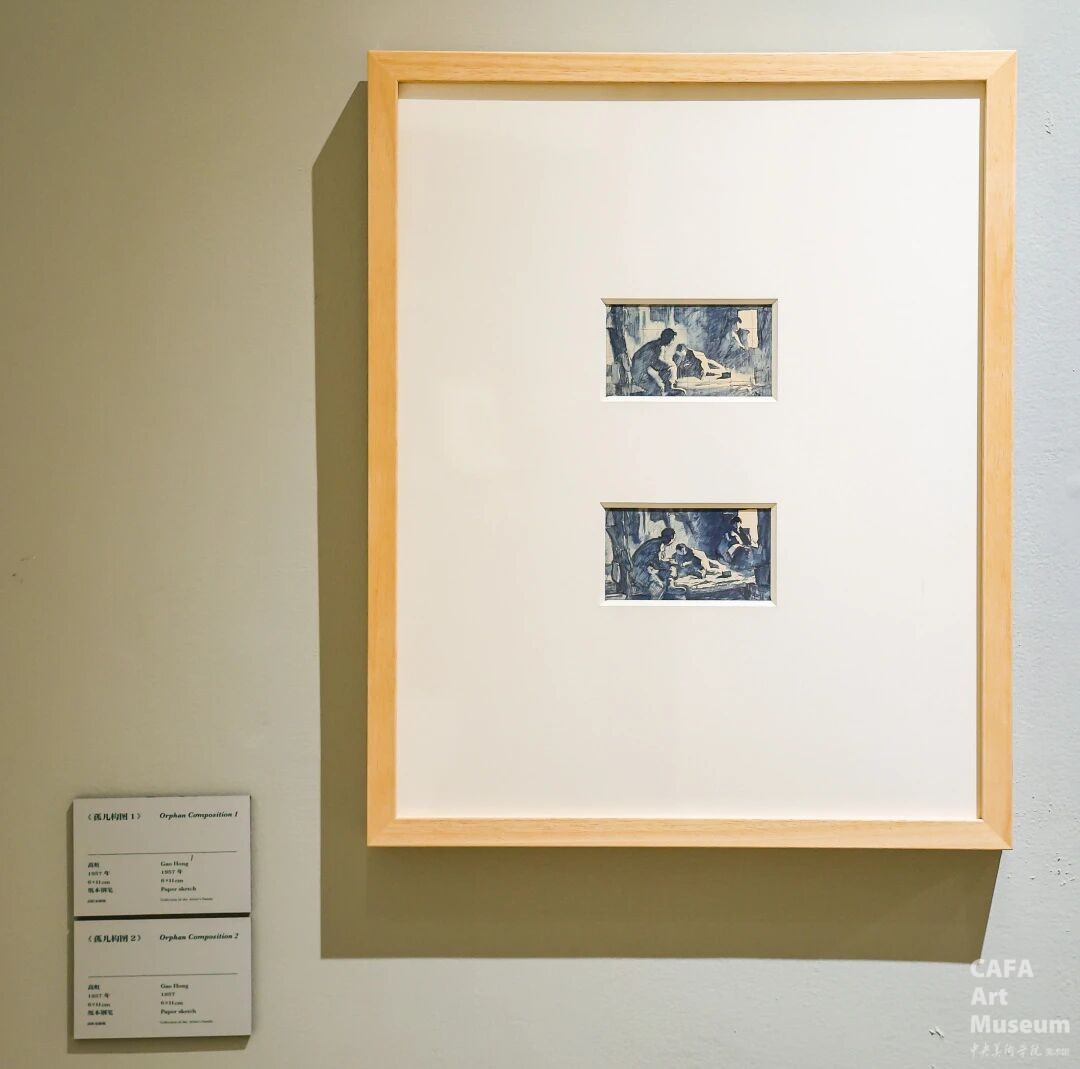
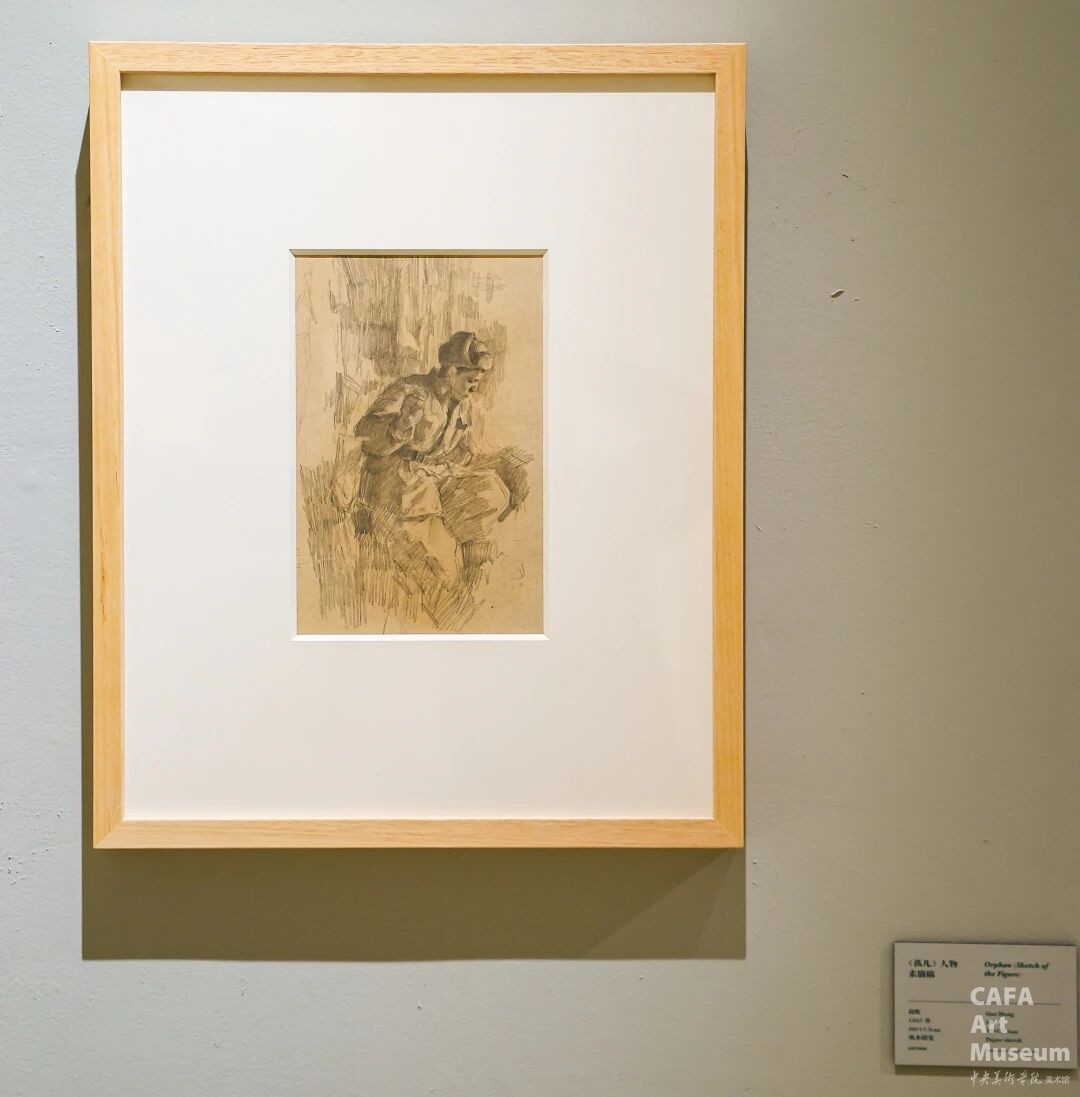
Gao Hong: Pencil Sketch of Characters for The Orphan
The school has limited space for us to work on our creations. Our General Political Department's creative studio has a painting room at Lianhuachi, so I don't have to crowd with everyone at school. I went back to Lianhuachi, which is located in the suburbs and offers many convenient conditions for painting this piece.

Gao Hong: Shajiadi Grain Station
I collected ready-made wood from my surroundings to build a dwelling for Volunteer Army soldiers.
Every prop in the painting was an authentic item used by the Volunteer Army. Faced with such a vividly realistic recreated scene, I felt a great surge of interest and confidence.
Professor Maksimov visited Lianhuachi twice, accompanied by our translator Comrade Tong Jinghan.
Naturally, the professor cared deeply about the progress of each student’s graduation project and the difficulties they encountered. Having not seen me for quite some time, he was eager to check on how my painting was coming along. So he and Tong Jinghan drove to Lianhuachi in a light blue car. At the sight of the small-windowed, semi-underground dwelling I had built—so true to the Volunteer Army’s actual quarters—the professor was very pleased. He was reassured about my work. He said that with such a realistic setting, I had a solid foundation for completing the painting. Time was pressing, he added, so I should press ahead with the work.
By the time the professor made his second visit to Lianhuachi, the painting had already taken basic shape. He told me to keep going just as I was. Perhaps to ease my regret at not being able to paint a bright, colorful scene under sunlight, he commented that while beautiful colors were certainly desirable in a painting, an indoor setting without the vivid hues of sunshine could also yield a compelling picture. He cited Surikov’s Menshikov at Berezovo as an example: its rich and subtle tones focused on revealing the characters’ inner worlds and spiritual strength, making it truly captivating. “You too can make great efforts in handling the dim indoor lighting,” he said. “Everything depends on your own hard work.”

Surikov: Menshikov at Berezovo Town
My teacher gave me a great deal of encouragement, bolstering my confidence. Time was pressing, and there was no room for overthinking. Drawing on the experiences I had gained from living on the Korean front line, I painted this piece with sincere devotion.
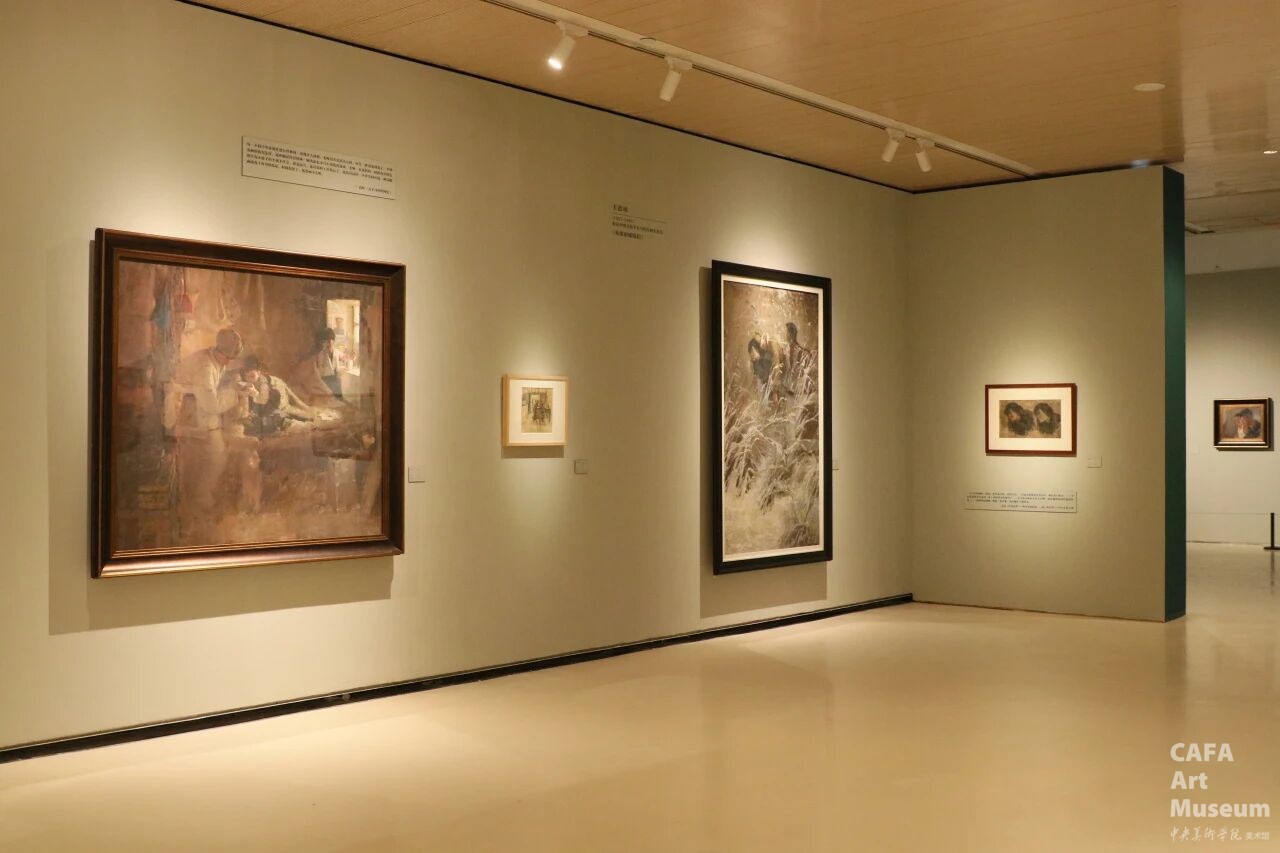
Mao Zedong in Northern Shaanxi
——————————————————————
The studio at Lianhuachi was a spacious one formed by connecting three rooms, and I was the only one using it at that time. On the eastern half of the studio, I constructed the dwelling for painting The Orphan; along the western wall, I set up a horizontal frame—1.4 meters by 2.8 meters—stretched with a blank canvas, supported by tables. When the teacher came for the second visit, the canvas was completely empty. Once the oil painting The Orphan on the eastern side was moved to the auditorium of the Central Academy of Fine Arts in the city for the graduation exhibition of the Oil Painting Training Class on May 24th, work on the horizontal oil painting on the western side started immediately. This piece, created for the Art Exhibition Celebrating the 30th Anniversary of the Founding of the Chinese People's Liberation Army, was titled Chairman Mao In Northern Shaanxi. With less than three months left until the exhibition opened on August 1st, there was no time for other considerations, and I had to press forward with the painting.
Comrades Xi Ye and Huang Pixing, who were in charge of organizing the creation for the 30th Anniversary Art Exhibition of the PLA's Founding, worked at No. 38 Langfang Toutiao outside Qianmen. I went to see them and expressed my concern that I might not finish the painting in time due to the tight schedule. They told me that the draft was excellent and urged me to hurry up, adding that I could even continue working on it during the preview if it wasn't completed by the official opening. As a matter of fact, I spent a whole day working on it during the preview held at the Cultural Palace of the Working People.
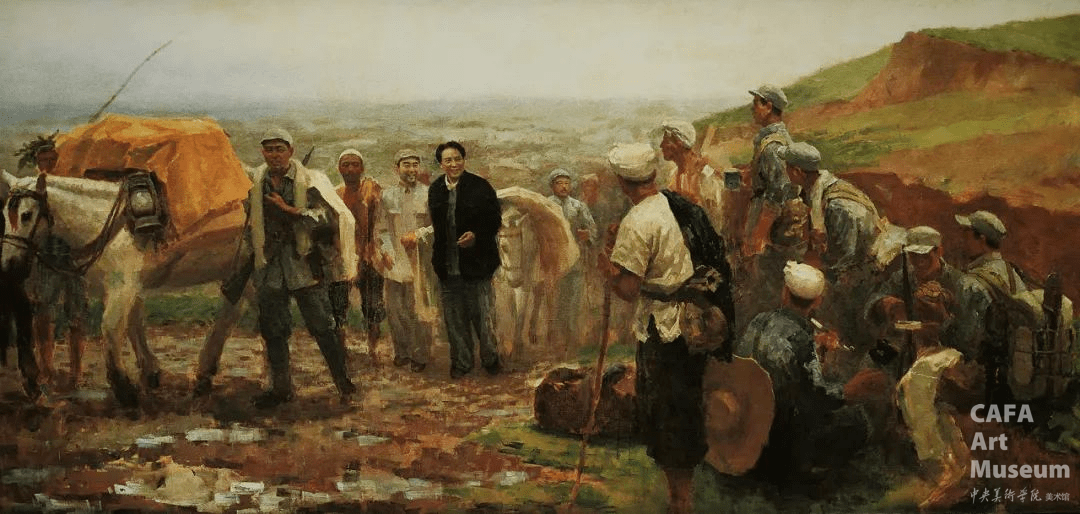
Gao Hong Chairman Mao In Northern Shaanxi
Chairman Mao In Northern Shaanxi depicts the life of the CPC Central Committee, led by Mao Zedong, who resolutely stayed in Northern Shaanxi during the most arduous and grim years of the War of Liberation. They shared joys and sorrows with the military and civilians there, united as one in the fight, and achieved a historic and great victory in the revolutionary war. I chose this period of wartime life as the subject of my painting because I had similar wartime experiences. I had visited and lived in the Mizhi and Jiaxian areas of Northern Shaanxi, through which the central authorities passed during their mobile operations, for more than two years. In 1956, I also took advantage of the summer vacation to conduct research and sketching related to this in Mizhi. Although the painting was done in a hurry, it basically conforms to the actual life of that time.
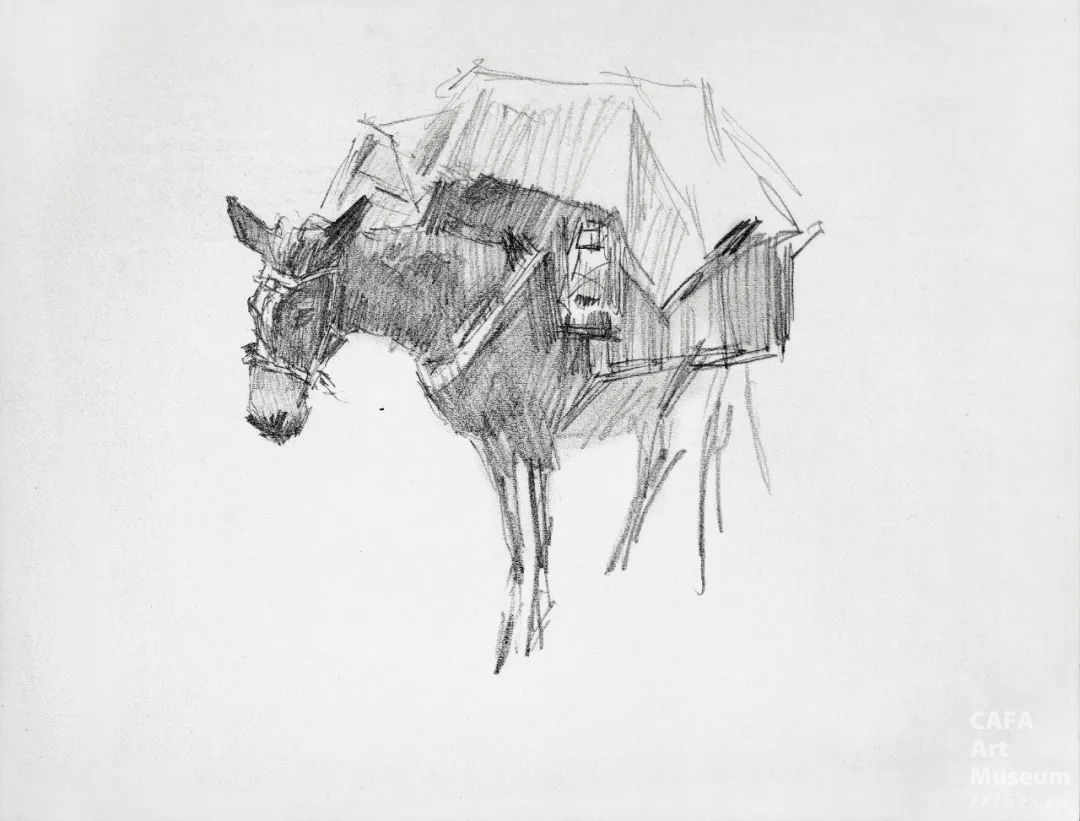
"The Donkey" 29.5x38cm Sketch on Paper 1956
On the opening day of the exhibition, this painting caught the attention of many senior central leaders who had experienced the revolutionary wars. Comrade Xi Ye accompanied and received groups of these visitors as they viewed the exhibition. He told me: Comrade Yang Shangkun, Director of the Central Office, was delighted, commenting that Chairman Mao was portrayed exceptionally well in the painting—approachable, warm, and natural, perfectly capturing his inherent demeanor and bearing.
This feedback was of great significance to me. It confirmed that my artistic judgment aligned with reality, boosting my confidence and inspiring me to keep forging ahead in my creative endeavors.
Though Chairman Mao in Northern Shanxi was not exhibited at the graduation show of the Oil Painting Training Class at the Central Academy of Fine Arts, it was a fruit of the teaching of our instructor, Konstantin Maksimov, and a testament to his achievements during his teaching tenure in China.
The Orphan was displayed at the World Festival of Youth and Students held in Moscow in 1957.
Chairman Mao in Northern Shanxi exerted a far more extensive influence than The Orphan. In the following years, this painting was reprinted numerous times in countless newspapers, periodicals, and art albums, serving to introduce this inspiring chapter of history to the public.
Teacher Maksimov
—————————————
In his lectures, Professor Maksimov placed special emphasis on students’ commitment to social progress and their solemn social responsibilities as artists, rather than indulging in unbridled self-expression in their works.
He stressed that artworks should be "compelling" and that art must win the recognition and endorsement of the people.
The extensive attention and positive acclaim garnered by Maksimov’s teaching at the Oil Painting Training Class stemmed from its perfect alignment with China’s national conditions and the aspirations of its people. For him, art was meant for the people—it was art that contributed to driving social progress forward.
Art needs a people who love, appreciate and support it; in turn, the people need art that inspires and encourages them with valuable insights.
We followed a correct path forward.
Professor Maksimov’s personal charm was truly remarkable: he was approachable, amiable, lively and witty, excelling at inspiring and guiding his students. He was truly our mentor and role model.
He urged artists to closely observe the rich and varied beauty of the magnificent natural world and to always create with passion.
He emphasized the importance of wholeheartedly immersing oneself in life—to observe, understand, experience and care about people’s fates, and to delve deep into the human psyche.
Looking back on our days of study at the Oil Painting Training Class, we extend our sincere gratitude to the four translators. They were not just linguistic facilitators—they were, in essence, our fellow classmates in art theory, and they had even taken the lead in mastering the knowledge before us.
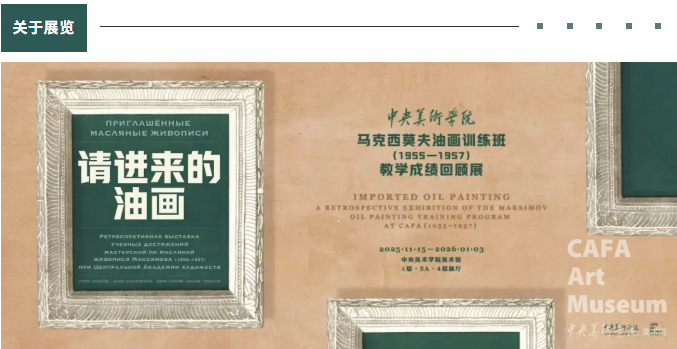
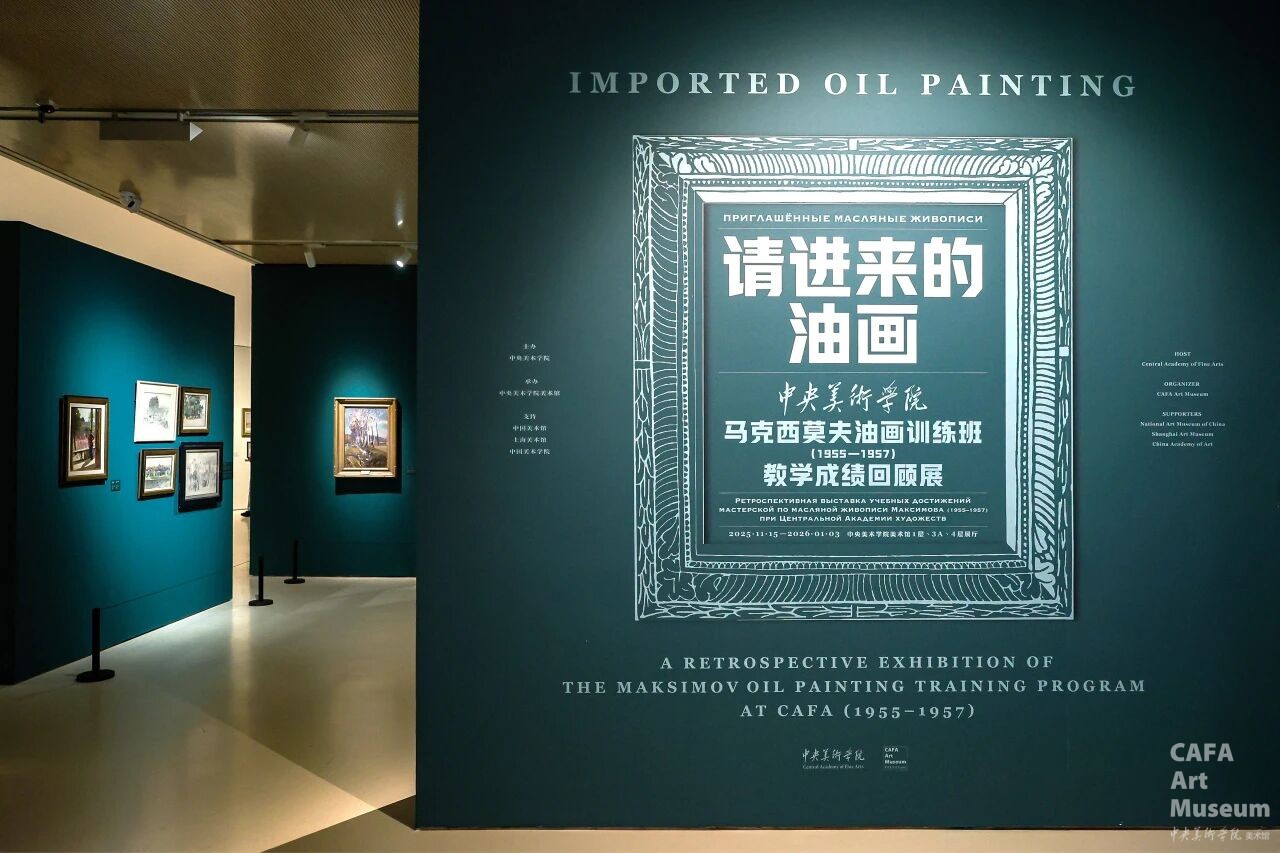
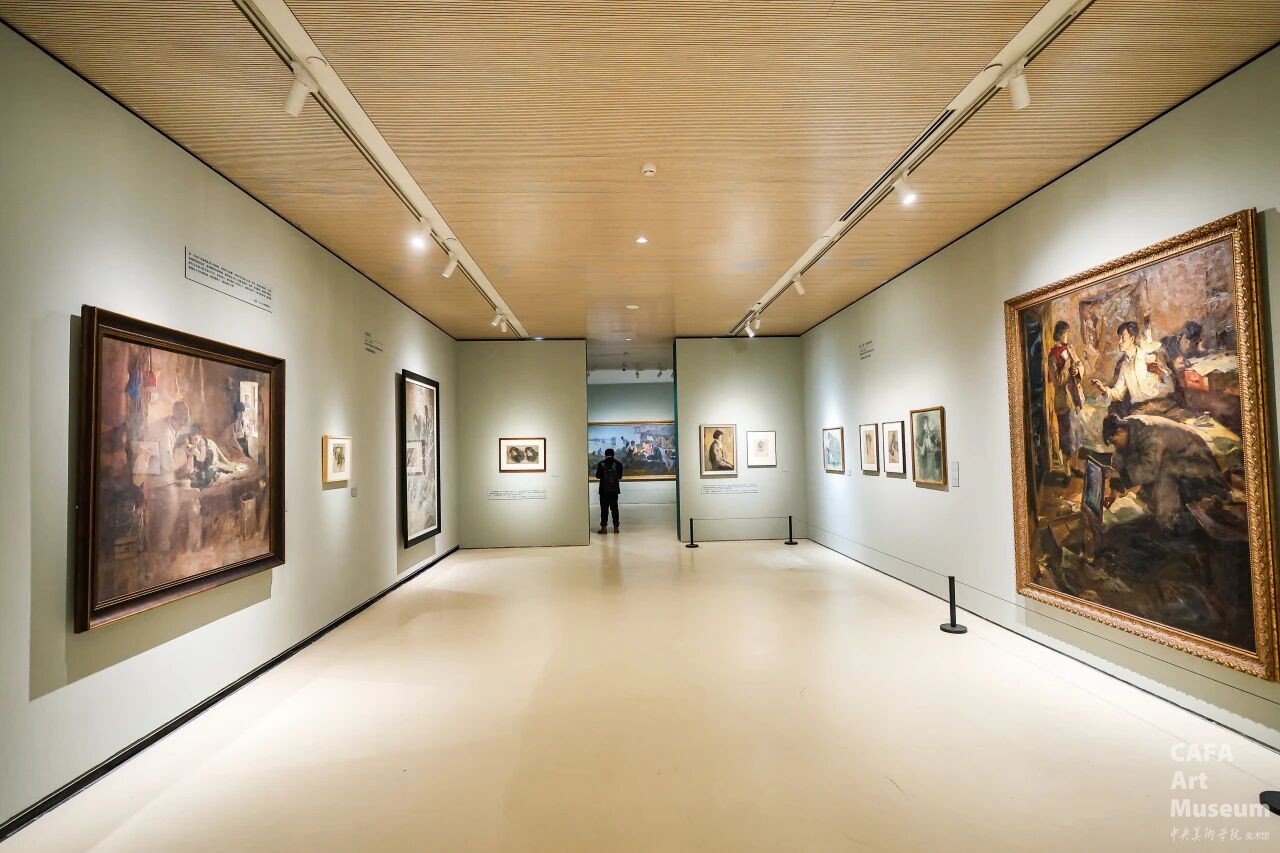
Imported Oil Paintings – A Retrospective Exhibition Of The Maksimov Oil Painting Training Program At CAFA (1955-1957)
Exhibition Dates: November 15, 2025 – January 3, 2026
Exhibition Venue: Exhibitions 1F/3A/4F, CAFA Art Museum
Editor-in-Chief / He Yisha
Editor / Du Yinzhu

