
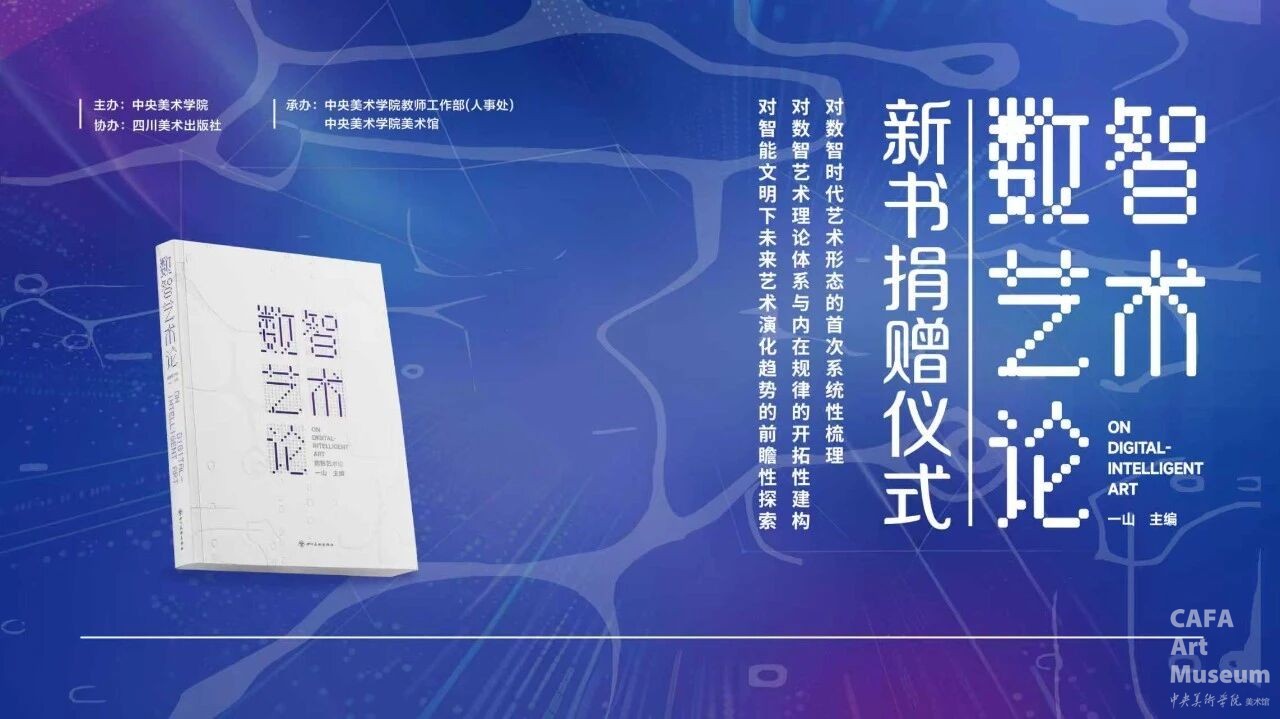
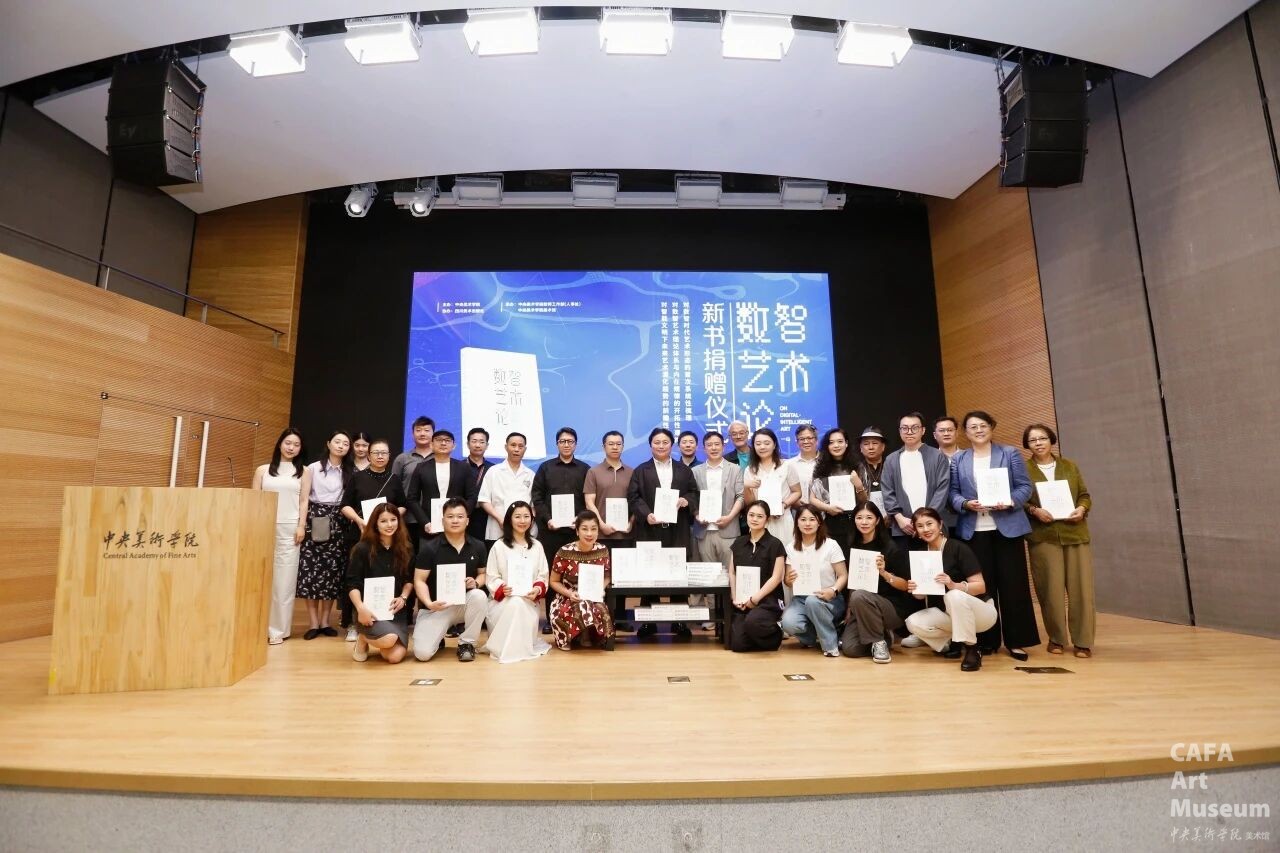
On June 16, 2026, the launch and book donation ceremony of On Digital-Intelligent Art was held in the lecture hall of CAFA Art Museum. The event was hosted by the Central Academy of Fine Arts , undertaken by the Faculty Affairs Division (Human Resources Office) and CAFA Art Museum, and co-organized by Sichuan Fine Arts Publishing House.
Entering the 21st century, digital art has developed for more than two decades. It has evolved from early computer-based creation into a diverse array of creative genres. Around 2022, artificial intelligence became deeply integrated into artistic creation. As the creative ecosystem of digital intelligent art flourished, there arose an urgent demand for systematic professional research featuring complete frameworks, profound theoretical insights, practical value and cutting-edge explorations. Riding this general trend of the times, the academic monograph On Digital- Intelligent Art officially hit the market in June 2026. Compiled by Yi Shan with support from a professional team and published by Sichuan Fine Arts Publishing House, this book marks a key theoretical achievement jointly delivered by CAFA and the Digital Intelligent Art Expo.
Distinguished guests attending the ceremony included Lin Mao, President of CAFA; Yang Jie, Director of the Faculty Affairs Division and Head of the Human Resources Office; Jin Jun, Director of CAFA Art Museum; Tang Haitao, President of Sichuan Fine Arts Publishing House; Yi Shan, Editor-in-Chief of On Digital Intelligent Art; and Luo Qun, Editor of Sichuan Fine Arts Publishing House.
.........................................................................................................................................................
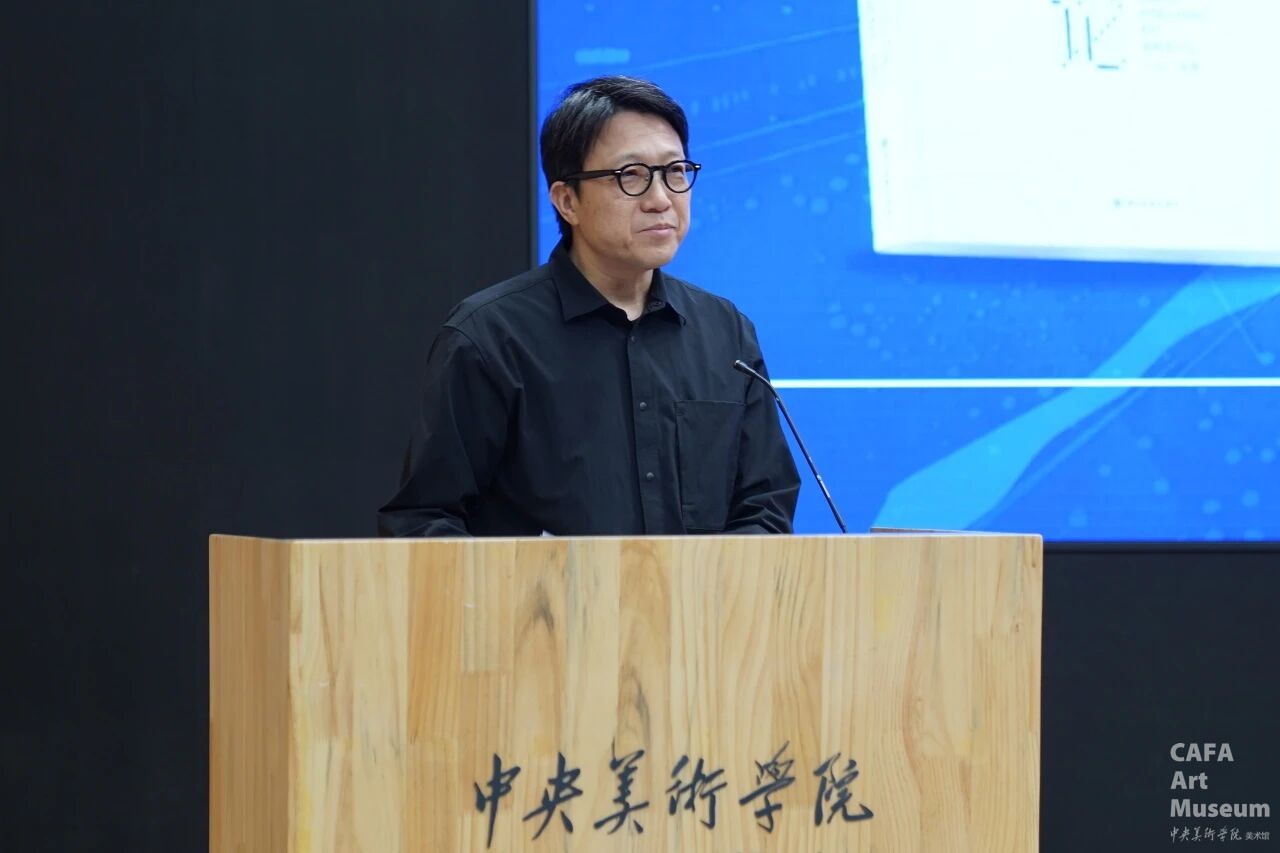
Speech by Jin Jun, Director of CAFA Art Museum
Jin Jun, Director of CAFA Art Museum, stated that amid rapid technological advancement, digital art, tech art and intelligent art have gradually taken shape. The launch and donation of the new book On Digital-Intelligent Art stands as a milestone achievement marking a pivotal stage in this field. He mentioned that information technology is profoundly reshaping people’s daily lives and working routines. The extensive integration of digitization and intelligence has given rise to new forms of digital media art, while continuously renewing humanity’s understanding, aesthetic experience and creative thinking of art. Centering on the concepts, theories and creative methodologies of digital intelligent art, On Digital-Intelligent Art lays a vital foundation for academic exchange within the industry, and provokes profound reflections on fundamental questions: Are humans the masters of technology, or are we shaped by it? Does algorithm constrain human imagination?
As a critical platform for art exhibition, communication and education, art museums are actively facilitating exchanges of emerging art theories and diverse perspectives. Contemporary art spaces are no longer confined to traditional media and physical venues; instead, they have evolved into new cultural arenas jointly constructed by data, algorithms, artificial intelligence, virtual reality, interactive experiences and online communication. For art museums, core concerns extend far beyond the questions of what works to collect and exhibit. They also grapple with how to interpret new artistic forms, establish innovative evaluation systems, and sustain the expressive power of art. He expressed his hope that the release of this book will forge closer links among artistic practice, technological innovation, cultural research and future art education. He looks forward to digital intelligent art growing into a widespread social phenomenon, a fully developed industrial system and a sizable market sector. Driven by technological progress, more people will gain access to and resonate with art and culture, thereby advancing the progressive evolution of human society.
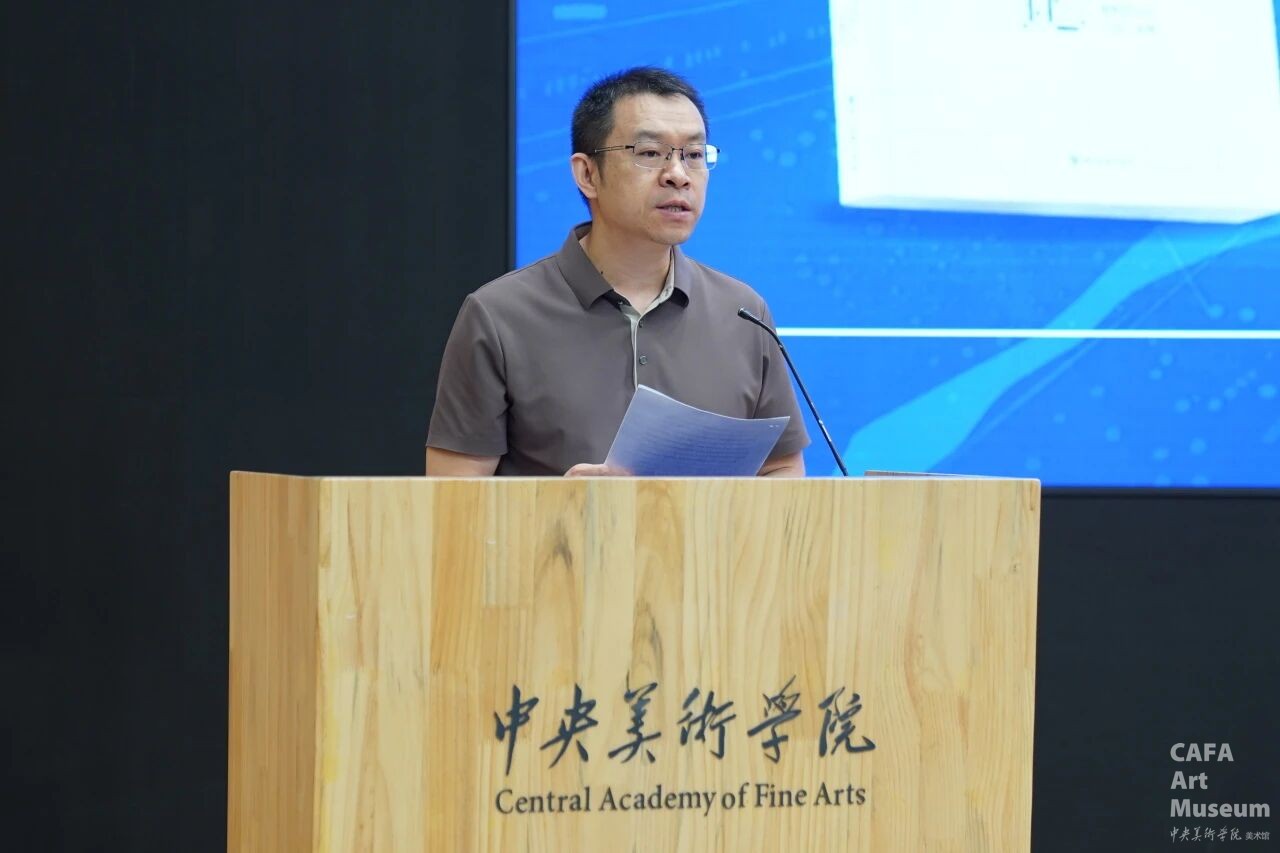
Speech by Tang Haitao, President of Sichuan Fine Arts Publishing House
Tang Haitao, President of Sichuan Fine Arts Publishing House, remarked that as artificial intelligence reshapes creative modes and digital intelligent art flourishes, the field has long suffered fragmented theories and lagging academic research. Against this backdrop, the publication of this book fills the gap in systematic domestic theoretical research on digital intelligent art. Boasting profound academic insights, practical value and forward-looking vision, it arrives at exactly the right moment. The monograph puts forward three core academic definitions. First, it clarifies that AI has transcended the role of a traditional auxiliary tool and become a transformative force that enables in-depth creation and reconstructs production logic, with human creativity, aesthetics and ideology always serving as the core guide. Second, it draws clear boundaries for creation, pointing out that human-machine collaboration represents an entirely new creative paradigm rather than mere media assistance. Third, it redefines digital art as an independent artistic form with a complete ontological system of its own. Addressing widespread confusion within the industry and consolidating its theoretical foundation, this book stands as a landmark academic work. As its publisher, the house will fully promote the overseas copyright licensing of this volume, bringing China’s research paradigm for digital intelligent art theory to the global stage. It showcases domestic research outcomes and creative reflections on digital intelligent art, facilitating in-depth exchange and mutual learning between Chinese and foreign civilizations of technology and art.
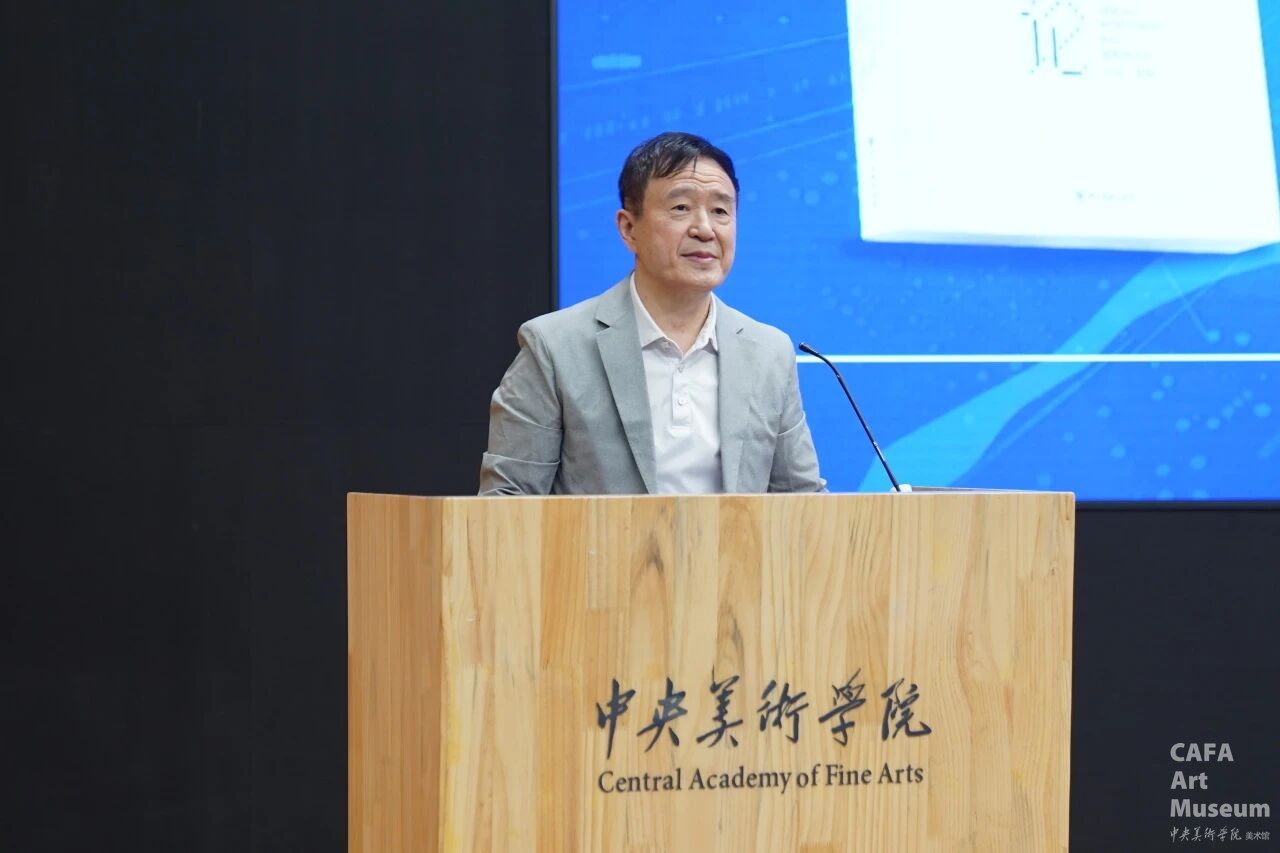
Speech by Yi Shan, Editor-in-Chief of On Digital-Intelligent Art
Yi Shan, Editor-in-Chief of On Digital-Intelligent Art, stated that the official release of this book can be attributed to three key factors. First, the forward-looking vision and interdisciplinary talent cultivation philosophy of the Central Academy of Fine Arts set a high cognitive standard for the book. It features a quantitative interpretation of the talent development framework: "50% professional expertise + 30% interdisciplinary literacy + 20% AI foundational knowledge". Second, the outline was built upon the team’s twelve years of practical experience and previously published theoretical papers. Contributors worked pro bono with diverse yet harmonious perspectives, pooling their efforts to complete the manuscript through concentrated research and writing.
Third, Sichuan Fine Arts Publishing House delivered an extraordinary publishing schedule. A five-person team spent three months finishing the 560,000-character manuscript ahead of schedule. The book marks a milestone achievement from zero to one, and further revisions will be carried out to refine its quality in the future. He pointed out that the book centers on elaborating two core relationships. The first is the integrated coexistence of traditional art and digital intelligent art: tradition nourishes digital intelligence, while digital intelligence drives the evolution of tradition, enabling mutual empowerment between the two. The second argument clarifies that digital intelligent art is never mere technical spectacle, but a synergy of artistic concepts and technology. It must uphold humanistic standing and profound conceptual thinking, rejecting superficial flashy presentation in pursuit of genuine ideas, human warmth and spiritual depth.
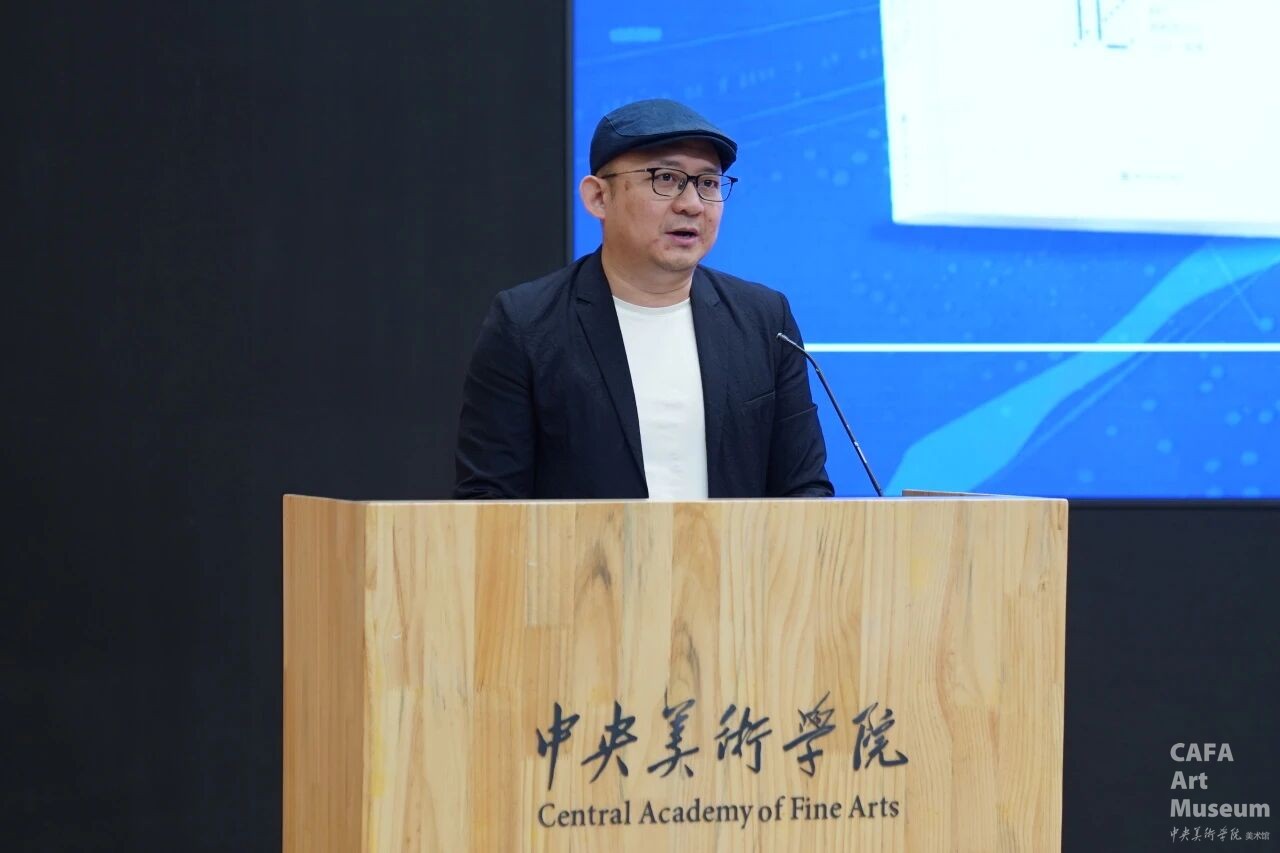
Yang Jie, Director of the Faculty Affairs Division and Human Resources Office
of the Central Academy of Fine Arts, presided over the ceremony
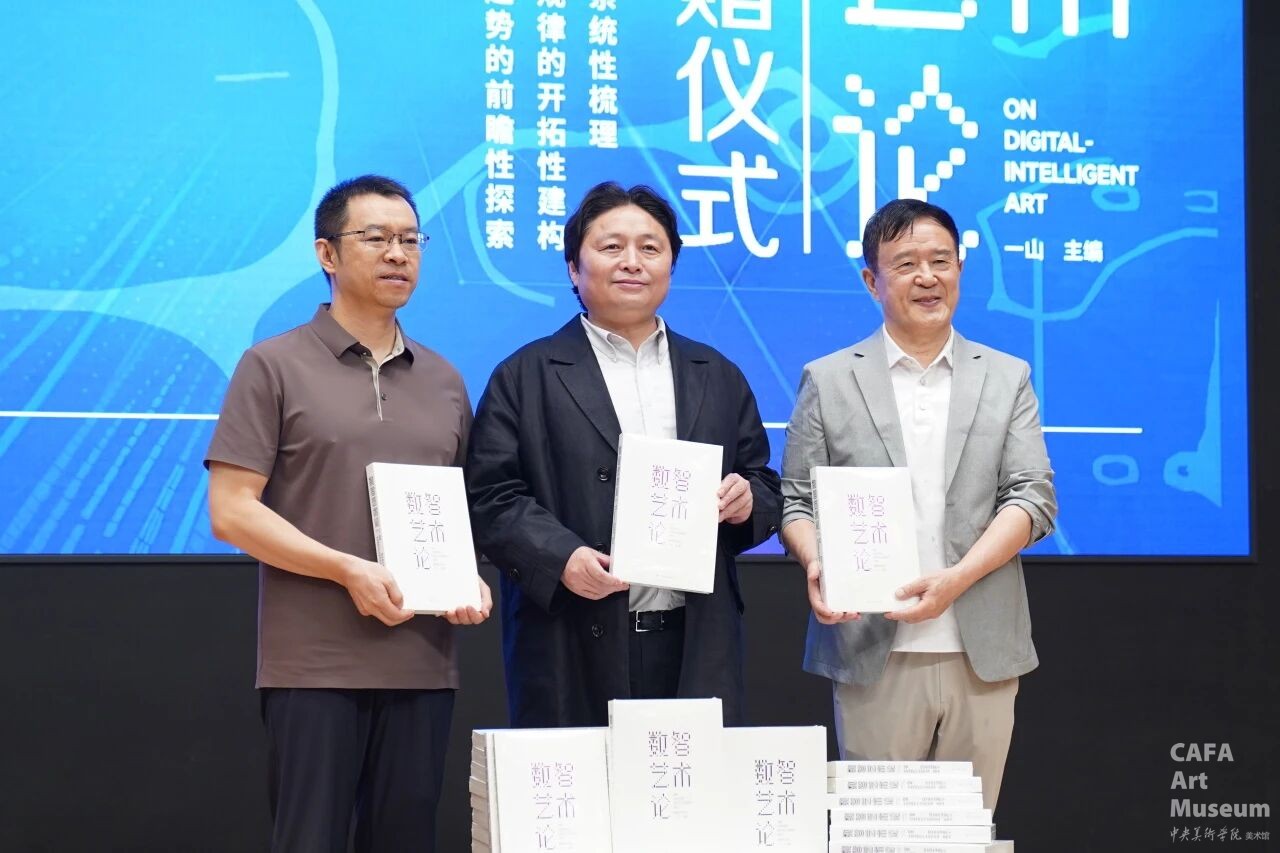
Lin Mao, President of the Central Academy of Fine Arts, accepted the donated books.
.........................................................................................................................................................
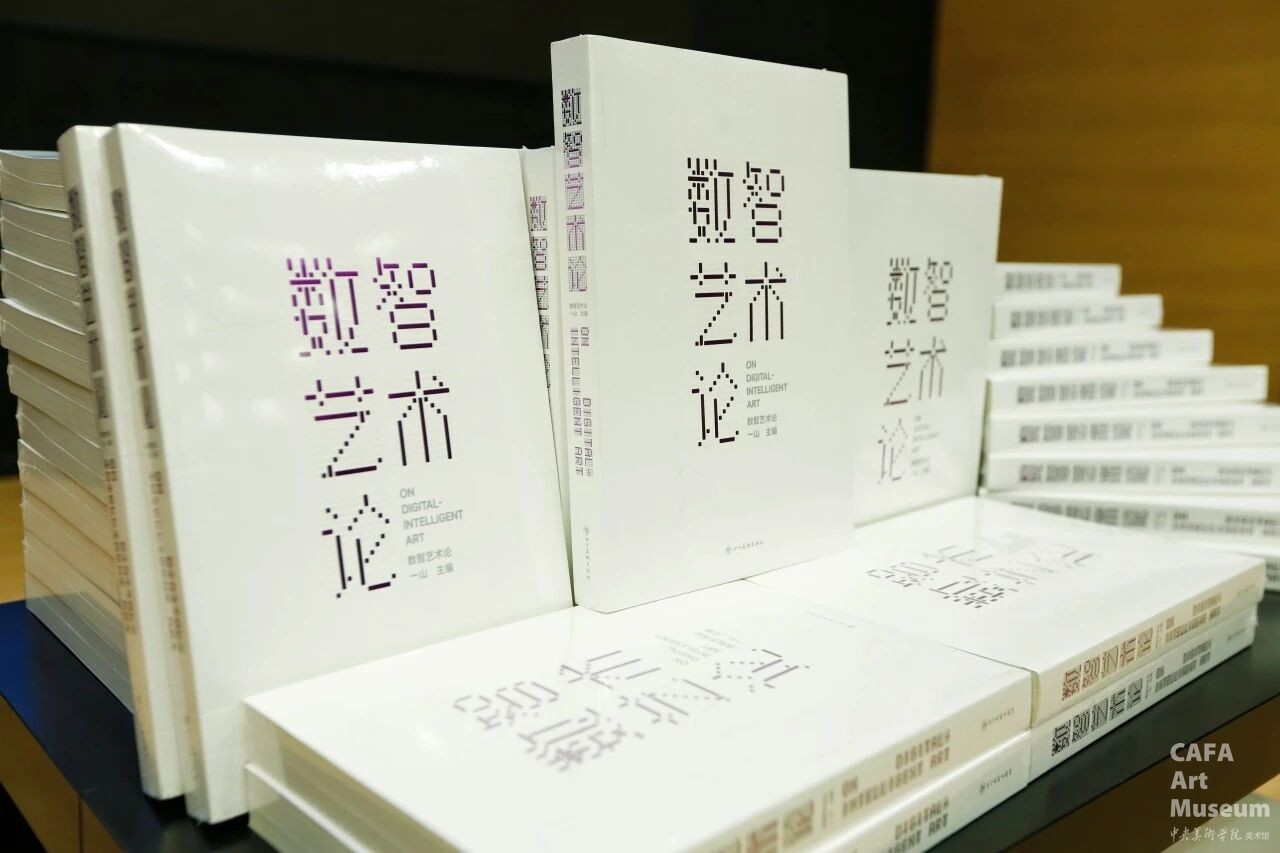
The book consists of five major sections: Epistemology, Methodology, Practice Theory, Futurology and Case Studies, covering thirteen thematic discussions with a complete and rigorous logical framework. Its publication marks the official entry of research on digital intelligent art into a new stage of systematic and professional development.
The monograph features four core highlights:
First, it traces the evolution of civilizations and establishes an original ontological system for art. The Epistemology section elaborates on evolution theory, comparative theory, ontology and relational theory, sorting out the iterative context of art spanning prehistoric, agrarian, industrial and digital-intelligent civilizations. Unlike traditional physical art forms, digital intelligent art relies heavily on virtual spaces, interactive experiences, generative creation, multimodal digital-intelligent technologies and more to forge new contexts, paradigms, artistic languages and systems. Traditional art and digital intelligent art each bear unique characteristics; they coexist and thrive alongside one another, innovating on the basis of inheritance and jointly carrying forward the lineage of human art.
Second, it distills innovative thinking and unlocks fresh approaches to artistic creation. Through sorting out blue ocean theory, path theory and classification theory, the Methodology section constructs a complete set of creative research frameworks. It serves as a key to unlock creative thinking for practitioners, broadens research horizons and intellectual guidelines for academia, and establishes logical analytical frameworks to judge and guide the development of the industry.
Third, it integrates theory with practice and grasps the inherent laws of creation. The Practice Theory section incorporates tool theory, process theory and platform theory to delve into the underlying logic of artistic production. It summarizes regular patterns of technological iteration, creative workflows and platform empowerment, enabling theories to be put into practice, elevating practical creation and optimizing the full creative pipeline to improve artwork quality.
Fourth, it looks forward to the future and explores new landscapes of human-machine collaboration. It conducts forward-looking theoretical deliberation based on symbiosis theory, ecosystem theory and industrial theory, with case studies providing supporting evidence for its academic arguments.Today, digital-intelligent technologies have reshaped creative innovation models and become essential collaborative partners for human artists. The book further extrapolates two major developmental trajectories: brain-like intelligence and embodied intelligence, and academically explores the emerging human-machine collaborative model of "dual brains and dual entities".
Digital intelligent art stands as a brand-new starting point for artistic development in the 21st century. Rooted in the new era, dedicated to emerging art forms and oriented toward the future, On Digital Intelligent Art embodies collective intellectual wisdom. It is an influential academic masterpiece for the age of digital-intelligent civilization, bearing landmark significance in the evolution of digital intelligent art and representing a new expression of artistic thought and culture of our time.
Editor-in-Chief: He Yisha
Responsible Editor: Du Yinzhu
Text Compilation: Zhang Ni
On-site Photos: He Yifei

